High School
SAT
SAT Elite 1500
SAT Tutoring
ACT
ACT Elite 33
ACT Tutoring
University
MCAT
MCAT Elite 515
Med-School Admissions
Pre-Med Tutoring
Pre-Med Plus
LSAT
LSAT Elite 170
LSAT Self-Paced
LSAT Tutoring
DAT
DAT Elite
DAT Tutoring
Log in
Get Started for Free
Acids and Bases: Strength
Related Topics
Organic Chemistry 1 Textbook > Acid/Base Chemistry & Intro to Organic Reactions
Factors Influencing Acid/Base Strength
5 Activities
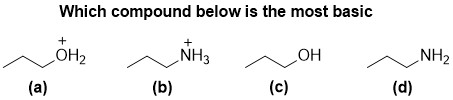
a
b
c
d
I don't know
Check Submission
More Factors Influencing Acid/Base Strength Questions:
Acids and Bases: Equilibria
Practice: Acid/Base Equilibrium
Which way does the equilibrium lie in the following reactions?
Practice: Acid/Base Equilibria,
Which way does the equilibrium lie in the following reactions?
Acids and Bases: Equilibrium
Which way does the equilibrium lie in the following reactions (right/left)?
Practice: Rank the following compounds from least acidic to most acidic: phenol, ethanol, and 4-nitrophenol. Justify your ranking using ARIO principles.
Practice: Ranking Acid Strength
For each set of molecules below, rank them in order of
increasing acidity
(from 1 = least acidic to 4 = most acidic). Provide a brief justification for your ranking, referencing the key ARIO principles (Atom, Resonance, Induction, Orbital).
Problem Set 1:
Practice: Which of the following is the strongest acid?
Practice: Ranking Acid Strength
Which of the following is the strongest acid?
A)
H₂O (pKa ≈ 15.7)
Stability of Conjugate Base
Compare the acidity of the following molecules:
Indicate (Left/Right) the species with the more acidic proton in each pair, rationalize your choice.
Species 1:
Species 2:
Indicate which direction the equilibrium lies in the following examples (Left/Right)
Example 1:
Example 2:
Acids and Bases: Equilibria
Practice: Acid/Base Equilibrium
Which way does the equilibrium lie in the following reactions?
Acids and Bases: Equilibrium
Practice: Acid/Base Equilibrium
Which way does the equilibrium lie in the following reactions (right/left)?
Acidity & Resonance
1. Compare the acidity of the highlighted H atoms:
2. Explain why the highlighted H shown in
1
is more acidic than the one shown in
2
:
Base Strength
1. Compare the basicity of the following molecules:
2.
Stability of Conjugate Base
Compare the acidity of the following molecules:
Acids and Bases
Which of the following molecules is the strongest Lewis Base?
CH
4
, BF
3
, NH
3
, NaOH
Acids and Bases
Which one is the strongest acid and why? Explain using resonance:
Base Strength & Resonance
Choose the more basic compound in each pair:
1.
2.
Acids and Bases: Acidity
Which of the following compounds has the most acidic hydrogen?
Acids and bases equilibrium
Select the answer which correctly shows the proton movement and has the correct side indicated as being favored.
Rank (numerical order 1,2,3,4,5,....) the following nitrogen anions in terms of basicity. 1 is the most basic.
A)
B)
Acids and Bases: Factors affecting strength
Rank (numerical order 1,2,3,4,5,....) the following in terms of increasing acidity. 1 is the most acidic Rationalize your ranking below.
A)
B)
Acid/Base Equilibria
Which way does the equilibrium lie in the following reactions?
Acid/Base Equilibria
Which way does the equilibrium lie in the following reactions?
pH, pKa and Acid/Base Strength
What are the predominant structures in solution of
L-glutamic acid
(shown below) at pH = 2, 7, and 12. The relevant pKas are: carboxylic acid (4) and protonated amine (10).
Acids/Bases Stength vs. pH and pKa
The pKa of a phenol functionality (Ph-OH) is approximately 10. Draw the predominant structures of
L-Tyrosine
(shown below) at pH = 2, 7 and 12. Additional relevant pKas are: carboxylic acid (4) and protonated amine (10).
Which of the following is the strongest Lewis Base?
Acids and Bases: Strength
Equilibrium: Acids and Bases/Stability
Equilibrium: Acids and Bases
Chemical reactions: Acids and Bases
Acids and Bases: Strength
Indicate (Left/Right) the species with the more acidic proton in each pair, rationalize your choice.
Species 1:
Species 2:
Equilibrium: Acids and Bases
Equilibrium: Acids and Bases
Equilibrium: Acids and Bases
Chemical reactions: Acids and Bases
Equilibrium: Acids and Bases
Acids and Bases: Strength
Indicate which direction the equilibrium lies in the following examples (Left/Right)
Example 1:
Example 2: