Wize University Chemistry Textbook > Quantum Numbers and Electron Configurations
Electron Configurations for Ions
Popular Courses
MCAT
General Course
Grade 12 Chemistry
Ontario High School
Grade 12 Chemistry
Canada High School
CHEM 1301A/B
Western University
CHEM 201
University of Calgary
General Chemistry
University Study Guides
CHEM 101
University of Alberta
CHEM 112
Queen's University
CHEM 121
University of British Columbia
High School Chemistry
US High School
Chemistry
General Course
DAT
General Course
General Chemistry
University Study Guides
CHEM 103
University of Alberta
CHEM 110
McGill University
CHEM 1E03
McMaster University
CHM135H1
University of Toronto
CHEM 120
University of Waterloo
CHEM 205
Concordia University
CHEM 121
Simon Fraser University

0:00 / 0:00
Electron Configuration of Ions of Main Group Elements
We will now look at how to write the electron configurations for ions!
Writing the electron configurations for anions (negative ions) are simple.
- Write out the electron configuration for the neutral element
- Fill in the desired number of electrons by adding electron(s) to the highest energy subshell
Writing the electron configurations for cations (positive ions) usually confuses students more, but there is a simple thing to remember to get these questions right every time!
- Write out the electron configuration for the neutral element
- Remove the desired number of electrons by first removing electrons from the highest n level and highest energy subshell!
Wize Concept
The higher the n level, the higher the energy.
Example: 2s has a higher energy than 1s
In order of increasing energy for the subshells, we write:
s < p < d < f
Example: 2p has a higher energy than 2s

What is the electron configuration for F+?
F+: [He] 2s2 2p4
Wize Tip
The most stable ions of atoms are isoelectronic with the noble gases or have filled shells.
Isoelectronic species have the same number of electrons and the same electron configuration.
The term "isoelectronic" is commonly seen on exams.
Example: F- is isoelectronic with Ne!
0:00 / 0:00
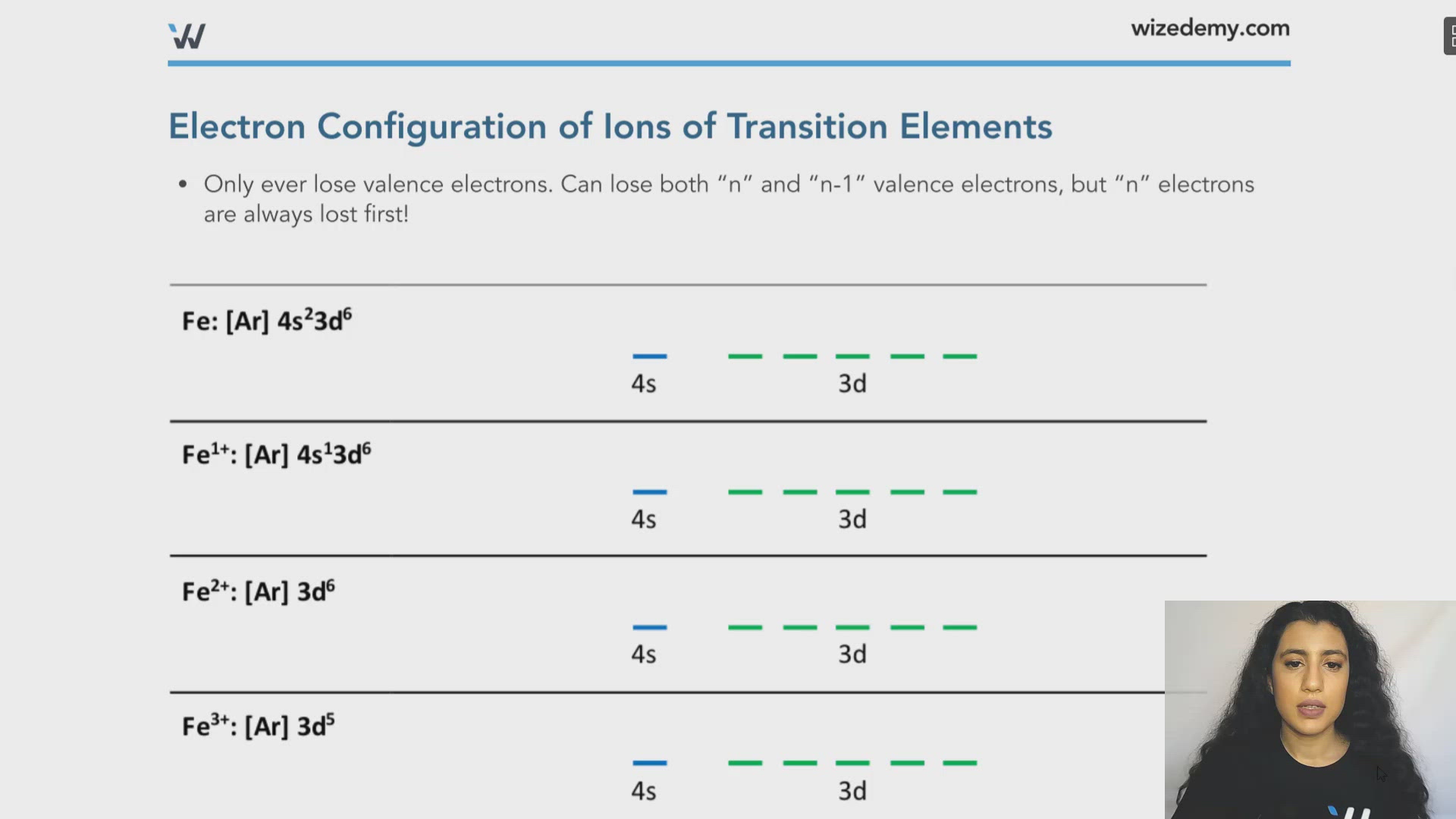
Electron Configuration of Ions of Transition Elements
The same rules that we just learned apply for transition elements as well. Note that valence electrons are only removed, never core electrons.
Watch Out!
Transition metals can lose both “n” and “n‐1” valence electrons, but “n” electrons are always lost first! Let's take a look!

Wize Tip
Always write out the electron configuration for the neutral atom first.
Then write out the electron configuration for the charged element.
This will help you avoid mistakes on the exam!

0:00 / 0:00
Example: Isoelectronic Species
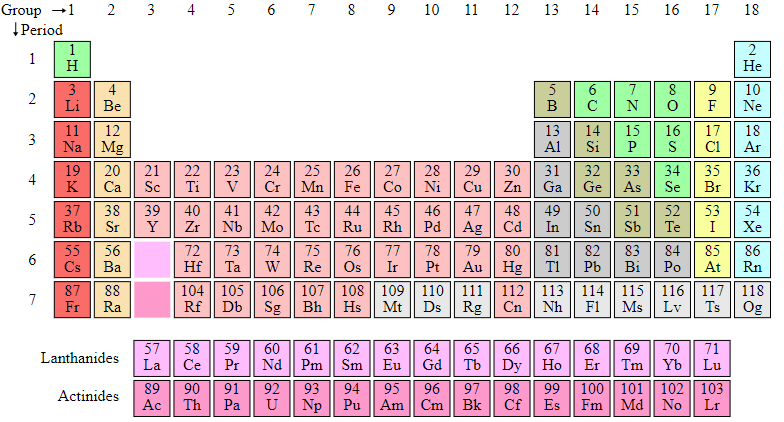
Two atoms or ions are said to be isoelectronic if the electron configuration is the same for both species. Which of the following pairs are isoelectronic?
i) N+ and C
Isoelectronic since they have the same number of electrons and electron configuration
ii) C and B+
Not isoelectronic (do not have the same electron configuration)
C: [He] 2s2 2p2
B: [He] 2s2 2p1
B+: [He] 2s2
iii) Cl- and Ar
Isoelectronic. Both have the same electron configuration.

0:00 / 0:00
Example: Writing Electron Configurations of Ions
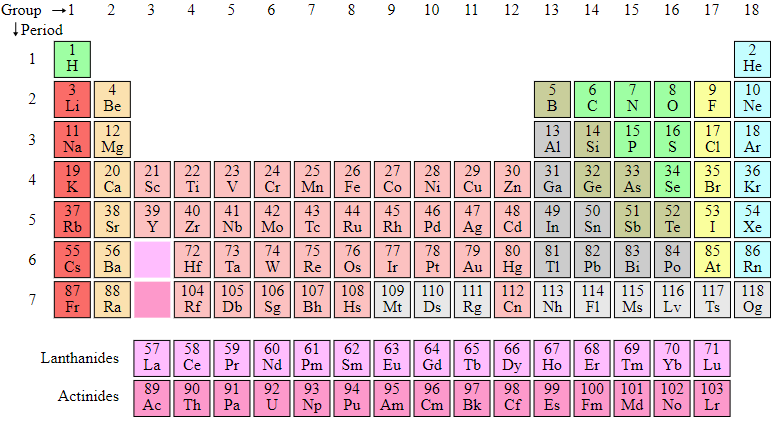
Write the electronic configuration for the following species:
a) N+
N: [He] 2s2 2p3
N+: [He] 2s2 2p2
b) Ni2+
Ni: [Ar] 4s2 3d8
Ni2+: [Ar] 3d8
c) Ge-
Ge: [Ar] 4s2 3d10 4p2
Ge-: [Ar] 4s2 3d10 4p3
Practice: Electron Configurations of Ions
For which of the atom/ions below, is the given electron configuration correct? (select all that apply)
