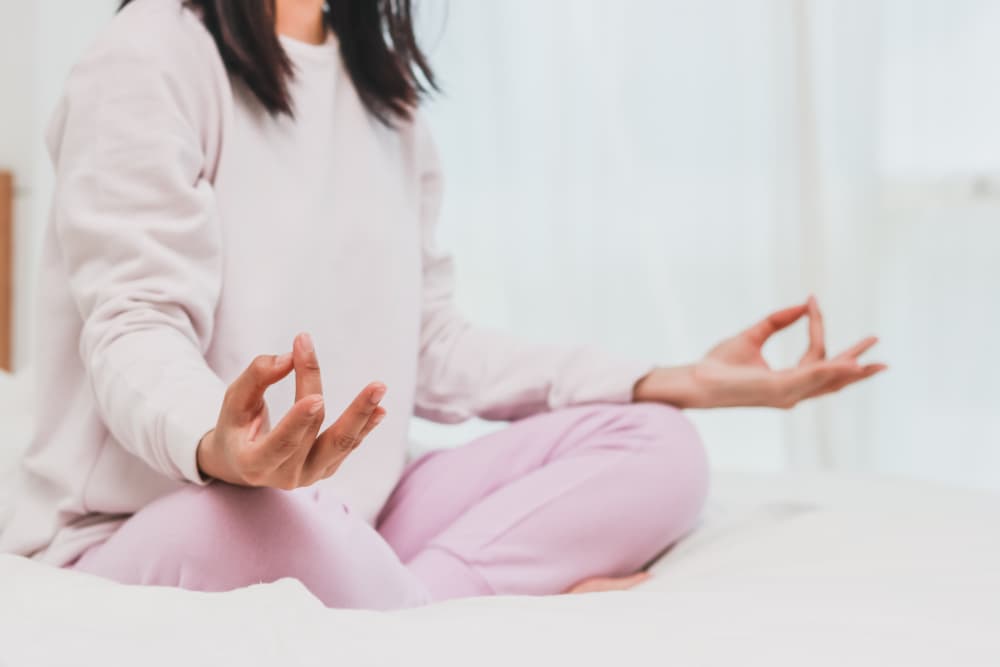
Practicing Mindfulness Before Your Exam
Meditation, in its truest form, is simply spending a few minutes in a quiet space, focusing on the moment. Meditation does not need to be an elaborate quest for Nirvana, but simply a time for self-reflection and self-preservation.
Carving out merely 30 minutes daily can refresh your mind and recharge your body which is surely a welcomed pause for students of any age. Follow along for a few tips on how mindfulness can help your academics.
Uncover your Hidden Abilities
Body scans through guided meditations can help you develop a mindful awareness of your bodily sensations and uncover the root of certain tensions. Meditation provides you with the tools to self-manage your stress that would have otherwise seemed insurmountable.
The physicality of a body scan is what makes it truly effective for students especially. By engaging your body through a series of mindful exercises, you are unlocking a previously undiscovered calm within. By stepping away from your studies periodically for a meditative stretch, you are allowing your body to release stress and reset.
The World of Online Mindfulness
Applications such as Headspace, Insight Timer and Simple Habit Meditation are fantastic resources for beginners. Through a series of tutorials, audio files and calming games, our cellphones have made mediation a captivating experience.
Apps such as these take the guessing game out of meditation and carefully guide you to a calmer state of mind. If you prefer a guided meditation where you listen to simple instructions to bring you into a deep state of relaxation, you can choose from a large number of YouTube videos or find guided meditation circles in your community.
Breathing Does not Merely Sustain Life
Oxygen is not only life-sustaining but a tool that can easily relax you after just a few deep breaths. When you follow your inhales and exhales, something quite amazing begins to happen. Your body becomes more oxygenated, and all your systems begin to work more efficiently.
Deep breathing is essential to our well-being as much as are walking and other forms of exercise. Daily 10-minute time-outs to breathe deeply can infuse our body with rich oxygen-filled blood cells ready to work on our behalf. Breathing with intention at regular intervals throughout the day will keep us grounded and steady in order to gain clarity and focus.
Before sitting for an exam, practice deep breathing to ensure your body and mind are in sync.
Meditation comes in many different forms and finding the right technique for you will take time and patience. The wonder of meditation is that it requires nothing more than that; time and patience. As a student, a sense of calm is hard to come by and must be actively sought out; but once you make your mental health a priority, your academics will surely flourish as a result.
The idea of ‘mindfulness’ has received a lot of attention recently, and rightfully so. Incorporating quick (as quick as a few seconds!) mindfulness techniques into your day can help reduce stress, especially around exam season. Here are five simple tips to help you practice mindfulness in the moments right before your exam.
Take 3 intentional breaths in and out
How often do you *really* notice yourself breathing? Chances are your breath is quite shallow right before an exam, contributing to unwarranted feelings of stress.
Try taking a moment to take 3 intentional deep breaths, filling up your lungs. Aside from the stress-reducing benefits of deep breathing, taking this time to be mindful of what your body is doing is the first step to feeling grounded before entering that exam room.
Notice the sensation of your feet meeting the ground as you walk
One of the most ‘mindless’ actions we perform during the day is walking - we do it so often that there’s really no need to think about it anymore.
On your way to your next exam, try being mindful of how the weight of your foot feels when it meets the ground with each step. Since this is likely the first time you’ve really thought about this, your mind will start to wake up, refocus, and re-energize just in time for the exam.
List one see you can see, one thing you can smell, one thing you can taste, one thing you can hear, and one thing you can touch
Every time I sat down in an exam room, I could never escape the feeling that I was forgetting everything I had just studied.
To help ease your running mind before the clock officially starts, try listing one thing you can identify in that moment with each of your senses. No matter how trivial your list may be, you’ll be surprised at how this mental exercise grounds you in the room and has you feeling ready to take on the exam.
List 3 tangible things you’re grateful for in your life
Whether this is your family, friends, pets, significant other, or anything else that comes to mind, it can be helpful to remember that these things will still be there for you after your exam, no matter how things go in there.
Remind yourself of the bigger reason you entered university in the first place
I remember crying in the library right before my third-year ecology exam. One of my pets was unwell, and I felt guilty for leaving her at home. I then reminded myself: I am writing this exam to get my degree, which will help me start my career. This career will allow me to rescue and care for even more animals in the future.
Connecting your exam to a bigger purpose in your life has amazing potential to calm you right down, giving you an extra boost of energy to knock that exam out of the park!
Struggling to balance life as a student? Check out this video about the 5 best apps to help you stay organized!
Related Posts:

Study with Us
The help you need to get the grades you want.
Previous Blog
Concordia Best Eats
Next Blog
Exercise Routines You Can Do in Your Dorm Room
Other posts you might like:
Health & Wellness
Why Your Grades Don’t Define You
Your grades do not define you. It does not matter how long it takes you to complete your degree or i... Read More
M
Megan Polstra