Vectors and Their Components
- A Vector is a quantity that has both magnitude and direction such as velocity.
- A Scalar has magnitude but no direction such as speed.
- Two vectors are equal to each other as long as they have the same size and direction
- Vectors can be written in terms of their components based on different coordinate systems
- The most common coordinate system is XYZ -coordinate system which is also known as Cartesian coordinate system.
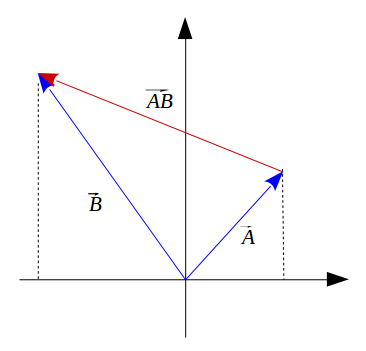
- Theses components are the shadow of the vector on different axis of the coordinate system
- A given vector in 2D space is shown as:
- where vectors , and are basic unit vectors in and directions, respectively. These unit vectors are:
- Unit vectors are vectors with length equal to 1 which are used to show directions.
- and are called components of vector
ٰVector's Magnitude
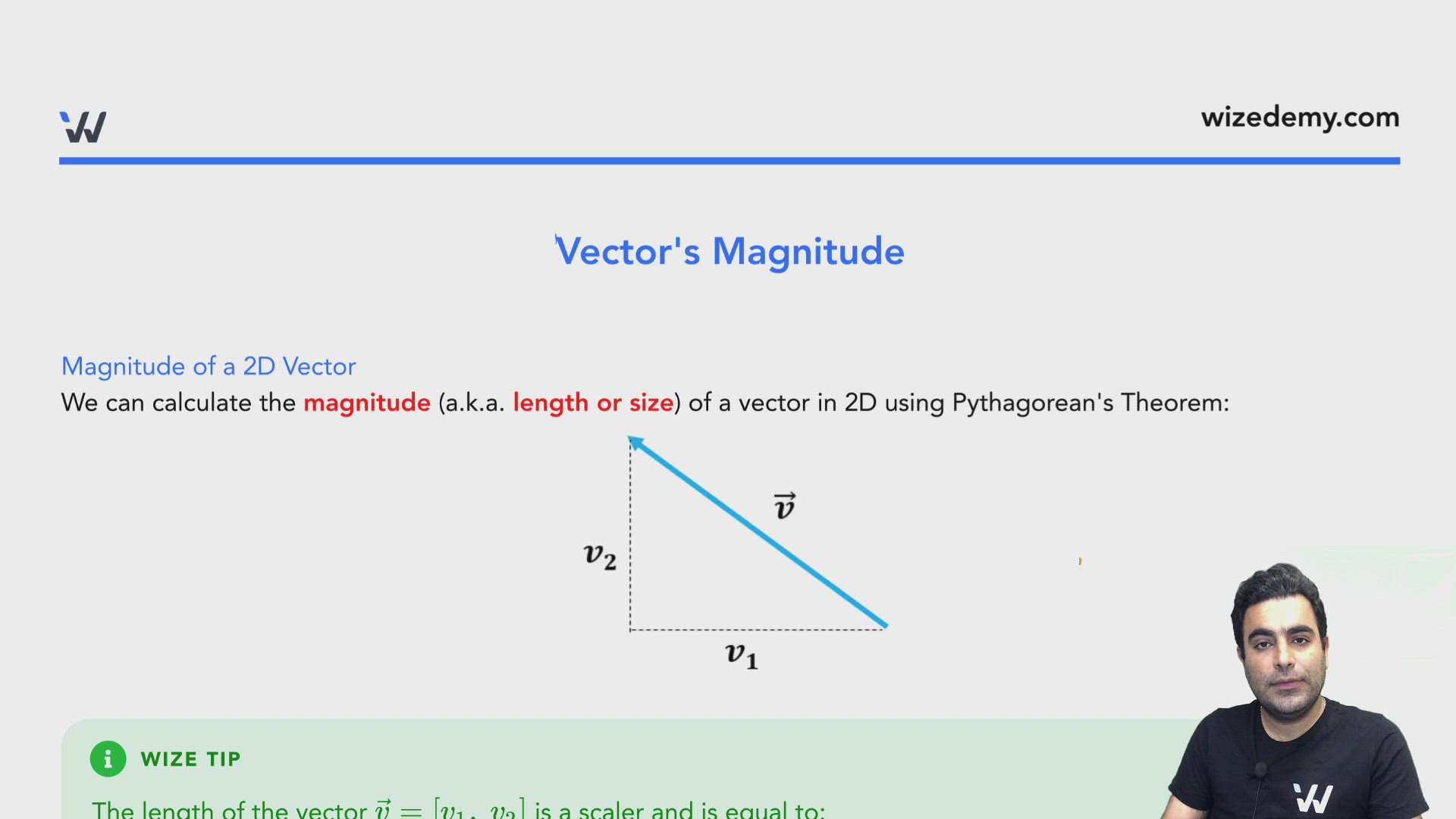
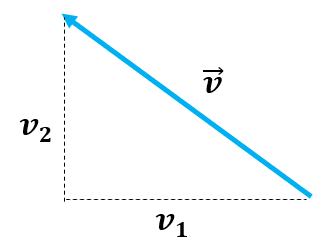
Magnitude of a 2D Vector
We can calculate the magnitude (a.k.a. length or size) of a vector in 2D using Pythagorean's Theorem:
Magnitude of a 3D Vector
Similarly, We can calculate the magnitude of a vector in 3D using an extension of this formula.
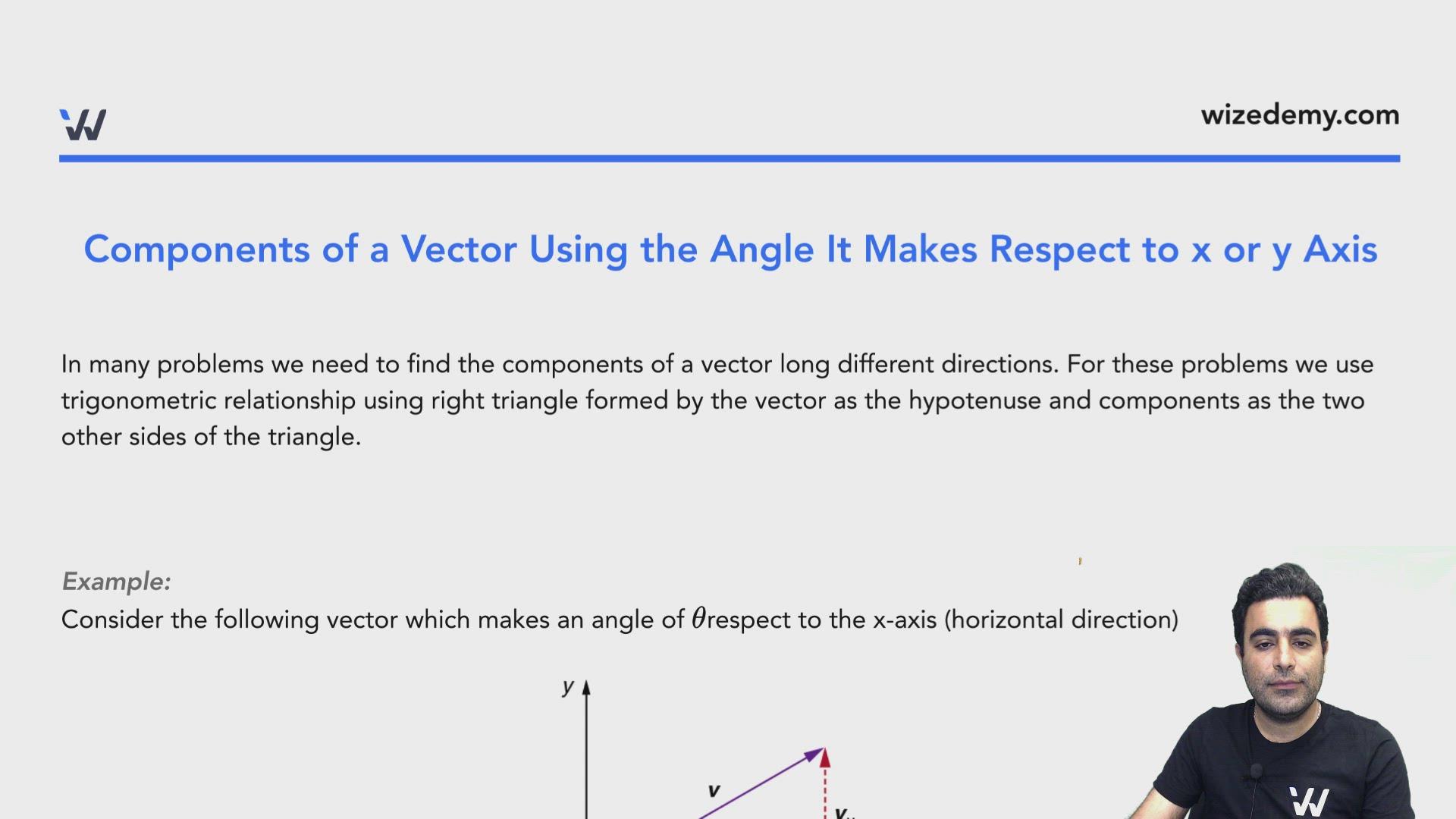
Components of a Vector Using the Angle It Makes Respect to x or y Axis
In many problems we need to find the components of a vector along different directions. For these problems we use trigonometric relationship using right triangle formed by the vector as the hypotenuse and components as the two other sides of the triangle.
Example:
Consider the following vector which makes an angle of respect to the x-axis (horizontal direction)

Components of this vector along x and y directions could be found as:
We can find the length of this vector and the angle it makes respect to horizontal x-axis using the following equation:
- Length of a vector in 2-D space is equal to:
- The direction of a vector usually is reported by the angle it makes with positive -axis (Counter-clockwise) using following formula:
Example: Vector Connecting Two Points
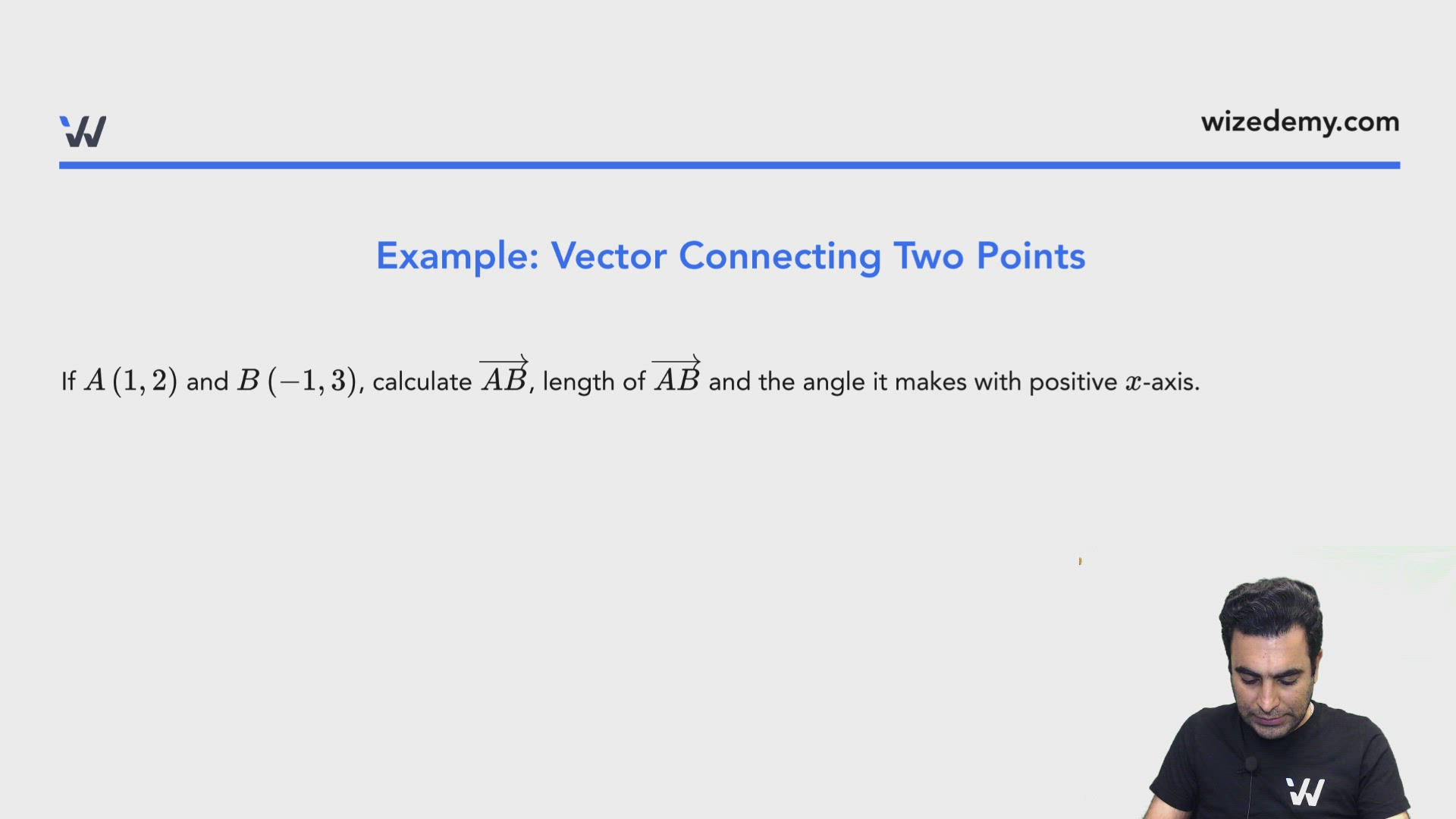
If and , calculate , length of and the angle it makes with positive -axis.
Solution: