
Electron Configuration of Ions of Main Group Elements
We will now look at how to write the electron configurations for ions!
Writing the electron configurations for anions (negative ions) are simple.
- Write out the electron configuration for the neutral element
- Fill in the desired number of electrons by adding electron(s) to the highest energy subshell
Writing the electron configurations for cations (positive ions) usually confuses students more, but there is a simple thing to remember to get these questions right every time!
- Write out the electron configuration for the neutral element
- Remove the desired number of electrons by first removing electrons from the highest n level and highest energy subshell!

What is the electron configuration for F+?
F+: [He] 2s2 2p4
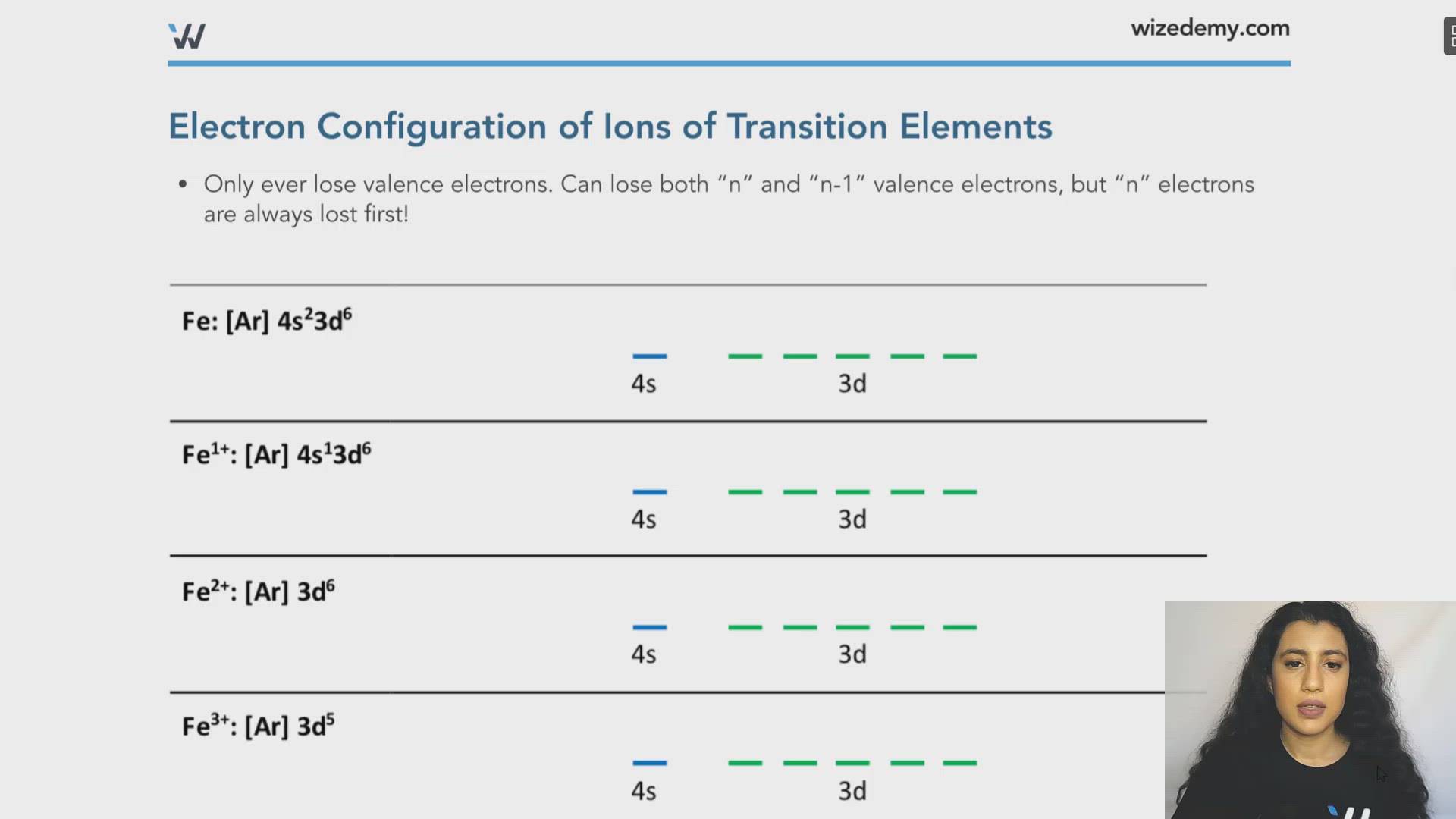
Electron Configuration of Ions of Transition Elements
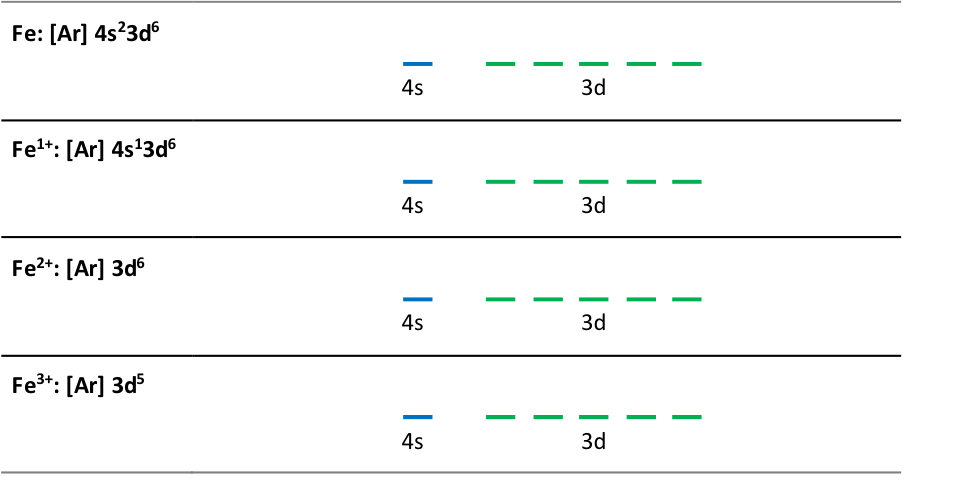
The same rules that we just learned apply for transition elements as well. Note that valence electrons are only removed, never core electrons.

Example: Isoelectronic Species
Two atoms or ions are said to be isoelectronic if the electron configuration is the same for both species. Which of the following pairs are isoelectronic?
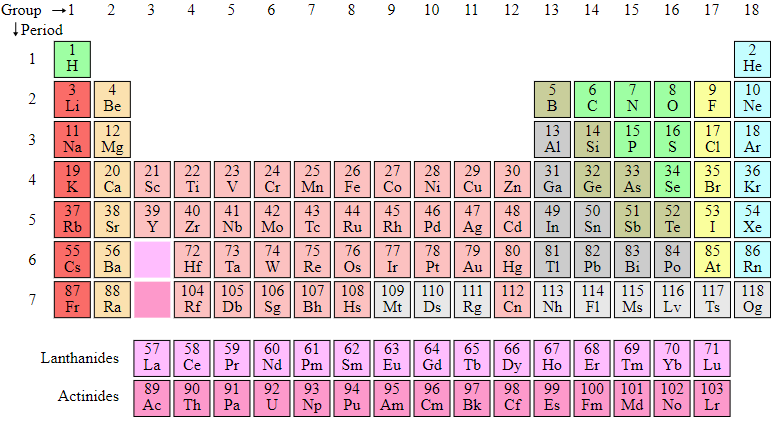
i) N+ and C
Isoelectronic since they have the same number of electrons and electron configuration
ii) C and B+
Not isoelectronic (do not have the same electron configuration)
C: [He] 2s2 2p2
B: [He] 2s2 2p1
B+: [He] 2s2
iii) Cl- and Ar
Isoelectronic. Both have the same electron configuration.

Example: Writing Electron Configurations of Ions
Write the electronic configuration for the following species:
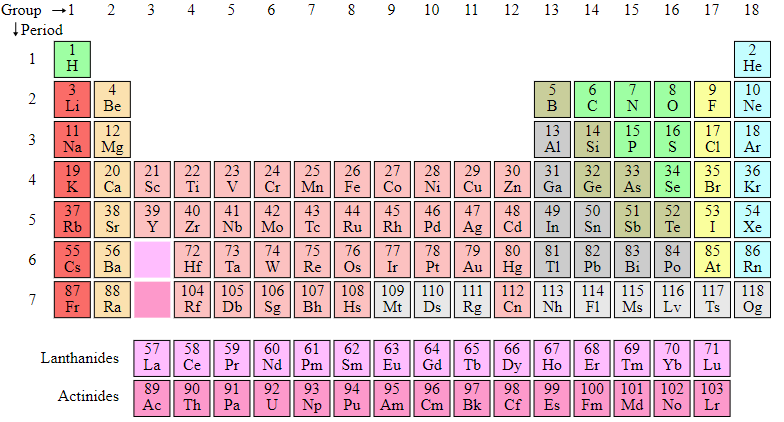
a) N+
N: [He] 2s2 2p3
N+: [He] 2s2 2p2
b) Ni2+
Ni: [Ar] 4s2 3d8
Ni2+: [Ar] 3d8
c) Ge-
Ge: [Ar] 4s2 3d10 4p2
Ge-: [Ar] 4s2 3d10 4p3