
Income Elasticity
The income elasticity of demand tells us whether a good is normal or inferior.
Normal Goods
The income elasticity of normal goods is ________. As your income increases you will buy ________normal goods (positive relationship).
There are two types of normal goods:
- Normal and Necessity Goods - Income elasticity is positive and less than 1 Example If your income doubles, you might spend a little bit more on necessity goods (like water or bottled water), but not double.
- Normal and Luxury Goods - Income elasticity is positive and greater than 1 Example If your income doubles, you will spend more than double on luxury goods (like nice clothes and eating out at nice restaurants).
Inferior Goods
The income elasticity of inferior goods is ________. As your income increases, you will buy ________inferior goods (negative relationship).
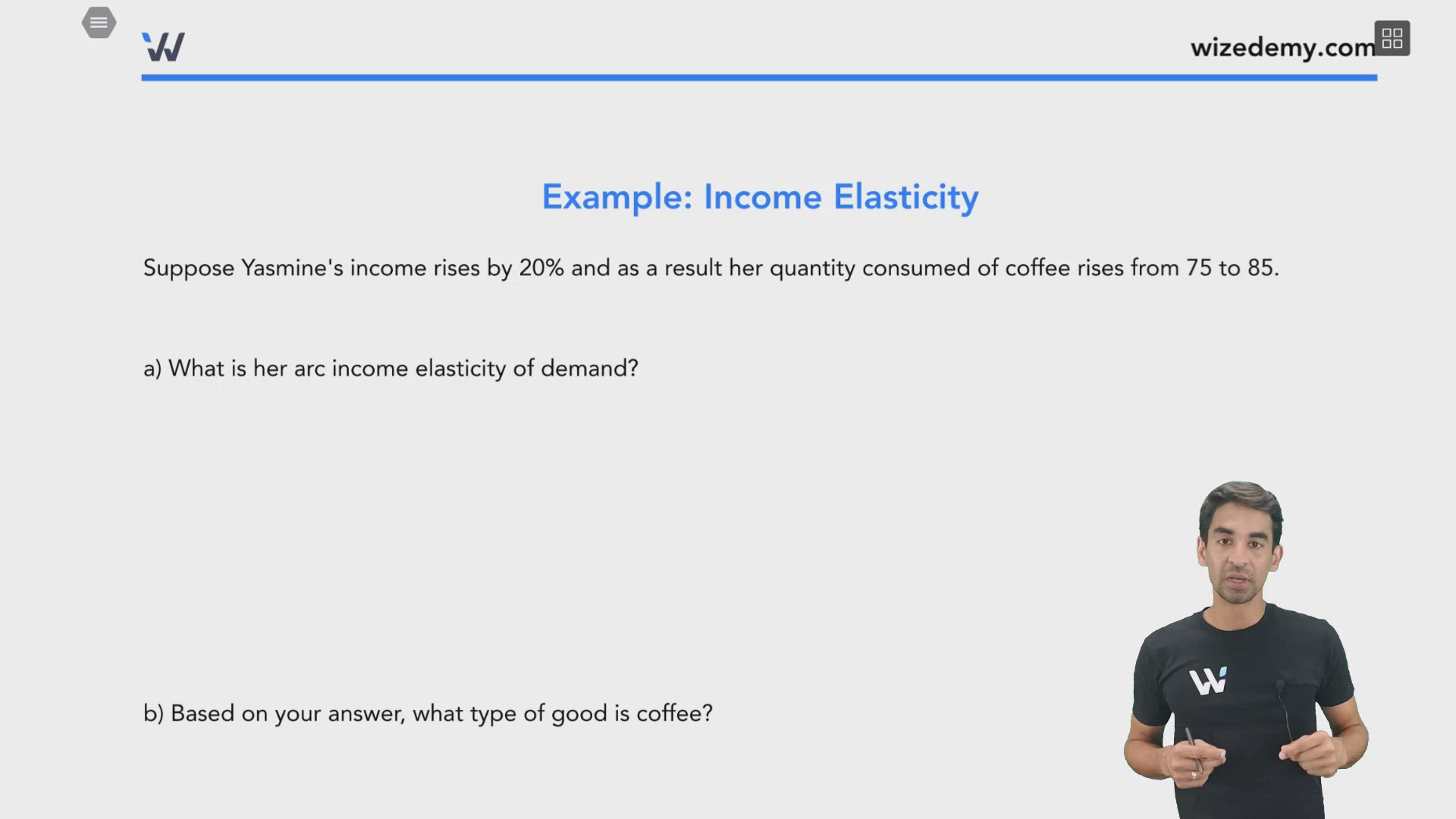
Example: Income Elasticity
Suppose Yasmine's income rises by 20% and as a result her quantity consumed of coffee rises from 75 to 85.
a) What is her arc income elasticity of demand?
b) Based on your answer, what type of good is coffee?
This is a normal and necessity good since income elasticity is positive and less than 1.