
Paradox of Value
The Paradox of Value tells us that prices for goods are based on marginal utility rather than total utility. Example: Water gives us more total utility than diamonds (we need water to live), yet we are willing to pay a lot more for diamonds. This is because diamonds offer us a higher marginal utility (since there are very few diamonds in the world).
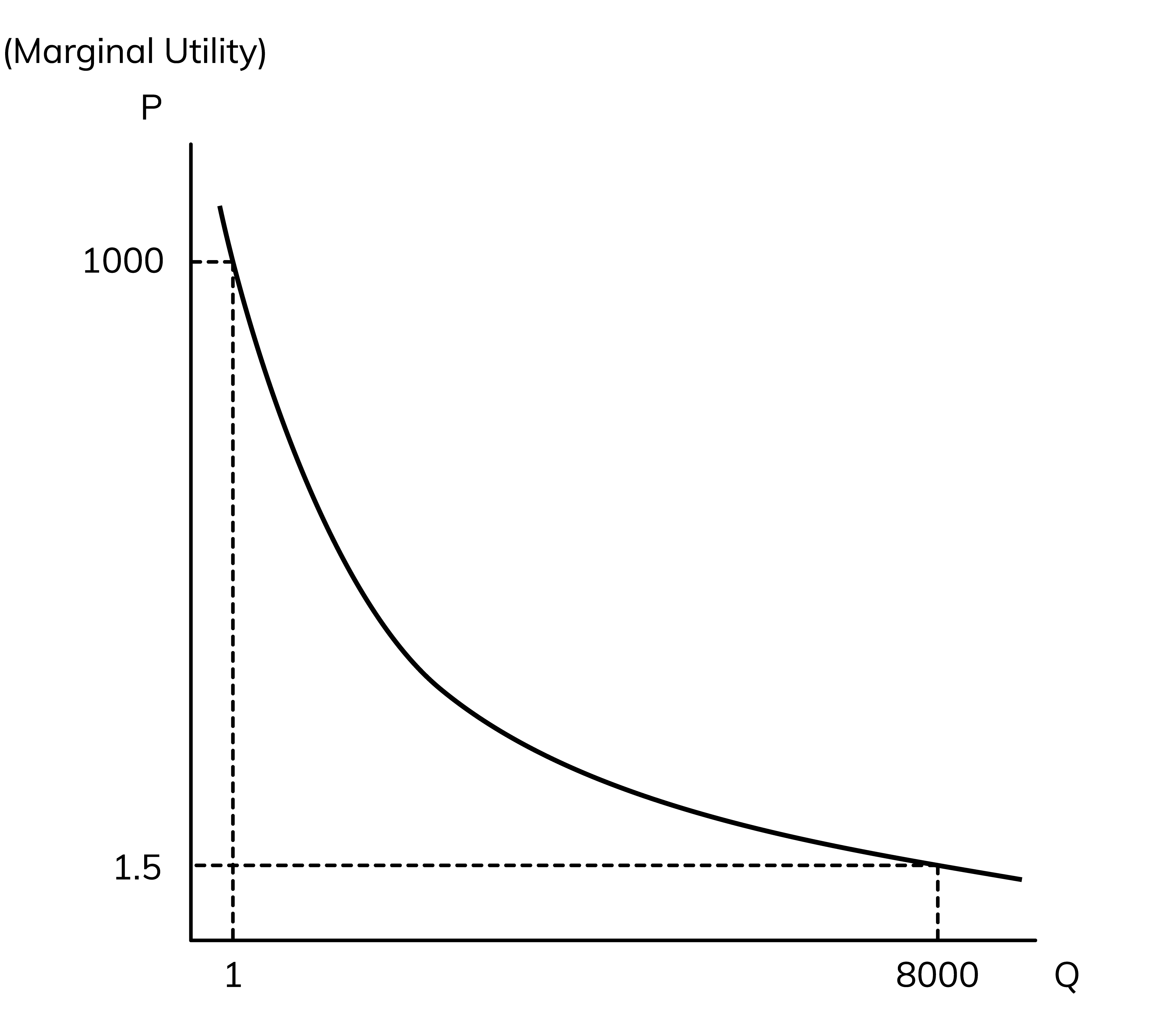
- In the diagram above if you have consumed 8,000 bottles of water in your life, the marginal utility from the last bottle of water will be ________ which is low so you will be willing to pay a low price for a bottle of water.
- If you have no diamonds and you buy your first diamond ever, it will give you a marginal utility of ________ which is high so you will be willing to pay a high price for that first diamond.
- This helps explain why the marginal utility curve looks the same as the demand curve. As the marginal utility falls, you are willing to pay a lower price for the good.