Perimeter and Area of 2D Figures
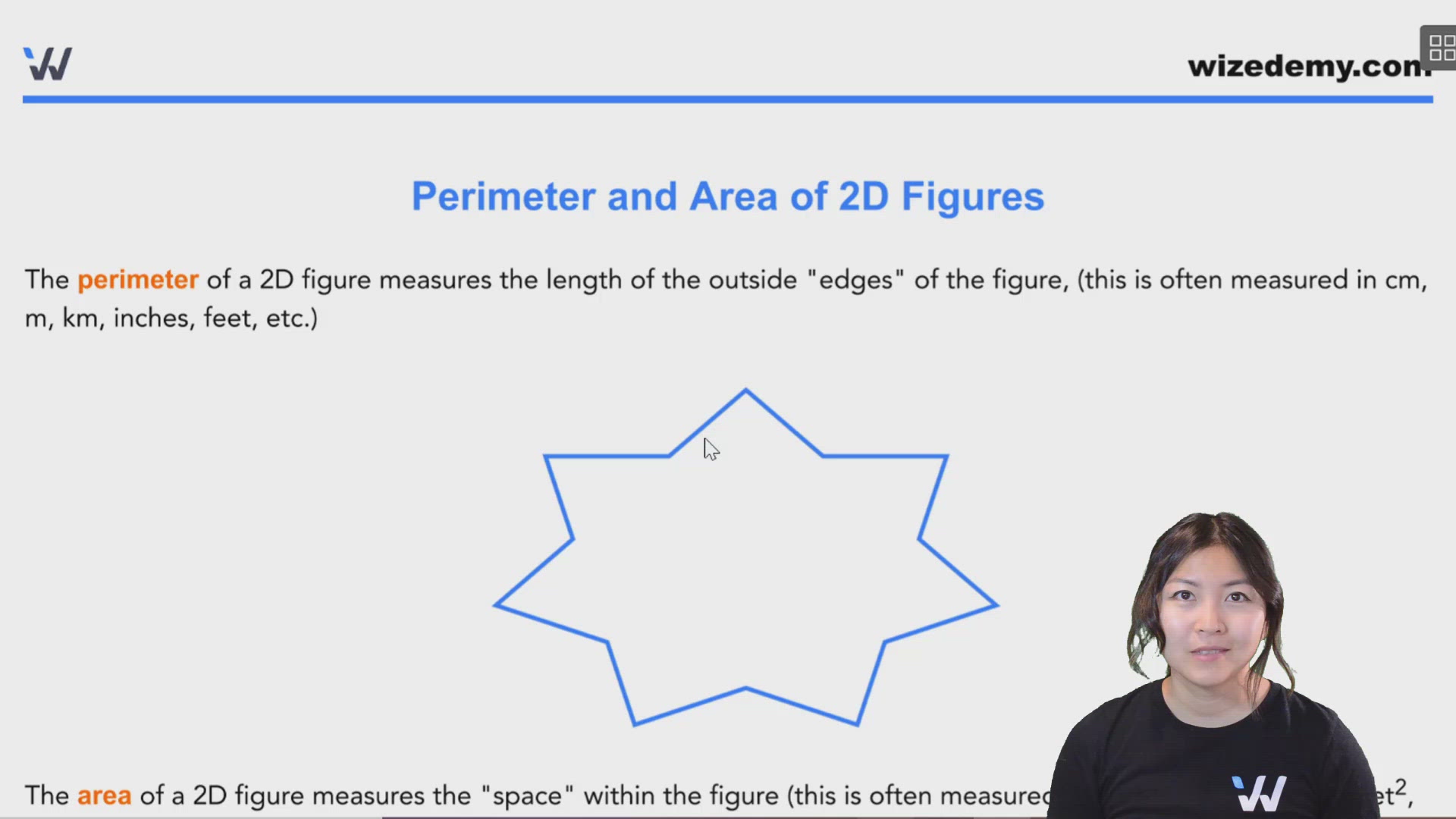
The perimeter of a 2D figure measures the length of the outside "edges" of the figure, (this is often measured in cm, m, km, inches, feet, etc.)

The area of a 2D figure measures the "space" within the figure (this is often measured in cm2, m2, km2, inch2, feet2, etc.)

Formulas

If you are asked to find the area of a composite 2D figure, break the shape up into one of these basic shapes, then calculate the area of each smaller shape.

Example: Composite 2D Figures
Calculate the perimeter and area of this composite figure. (The diagram may not be drawn to scale)
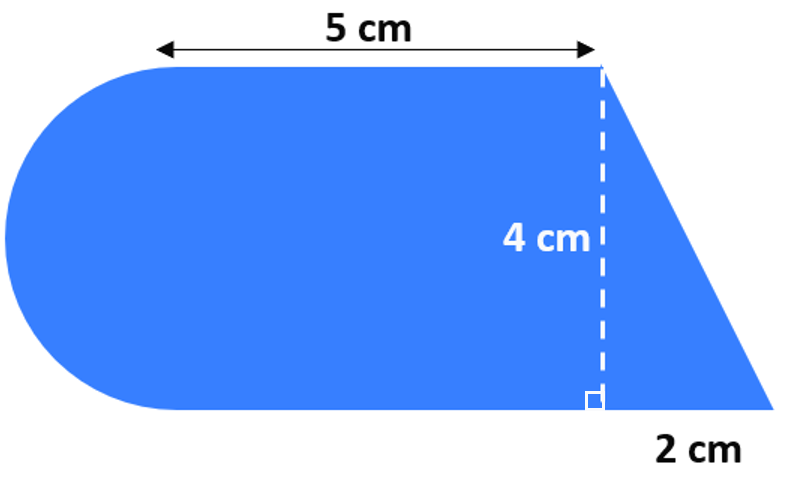
Label our diagram
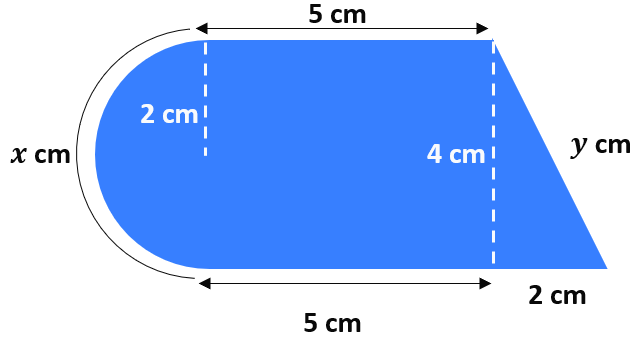
Solving for the unknowns
represents half the circumference of a circle with radius :
represents the hypotenuse of the right angle triangle:
Perimeter
So, the perimeter is approximately 22.76 cm
Area
So, the area is approximately 30.28 cm2