Infinite Limits
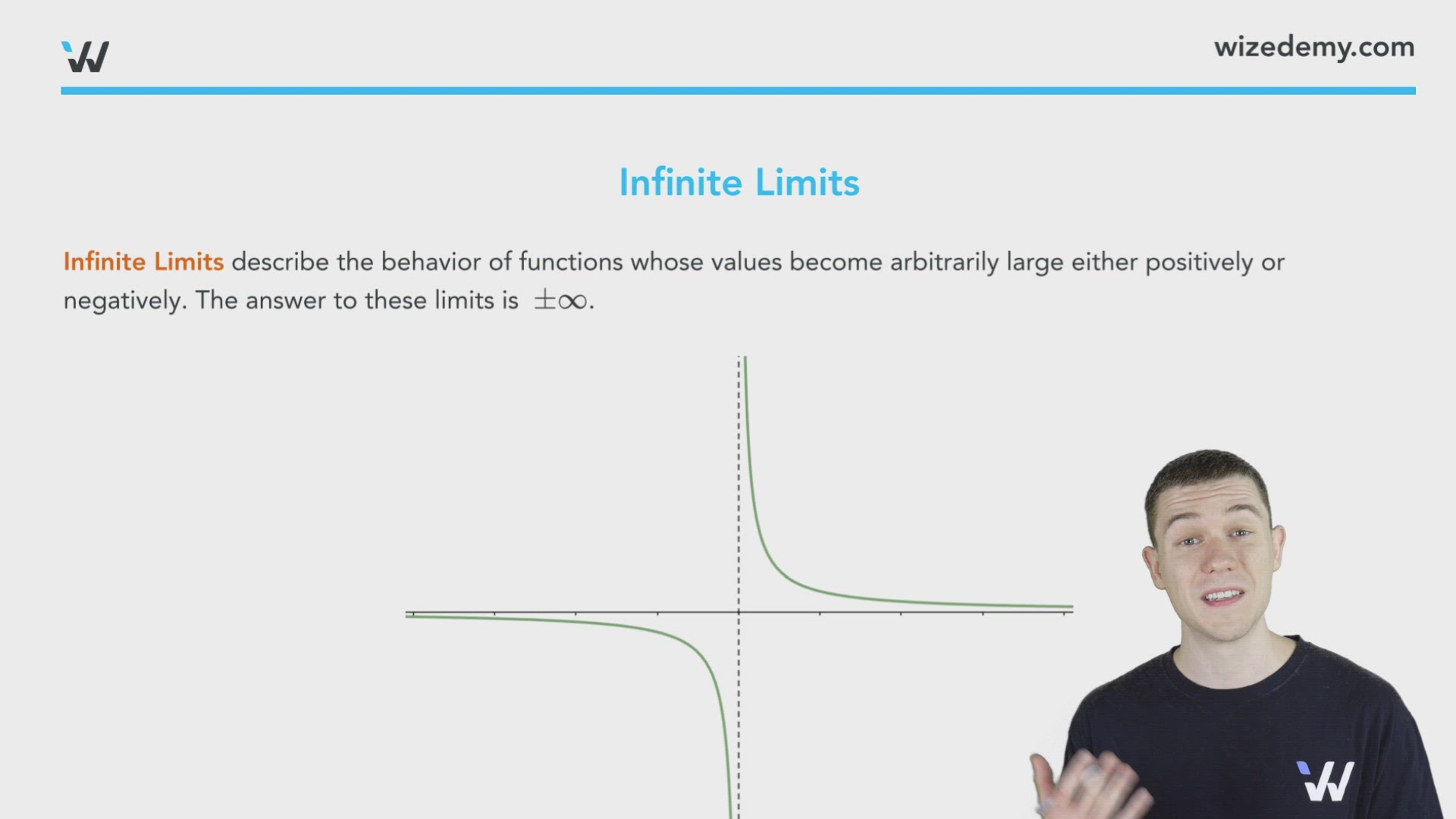
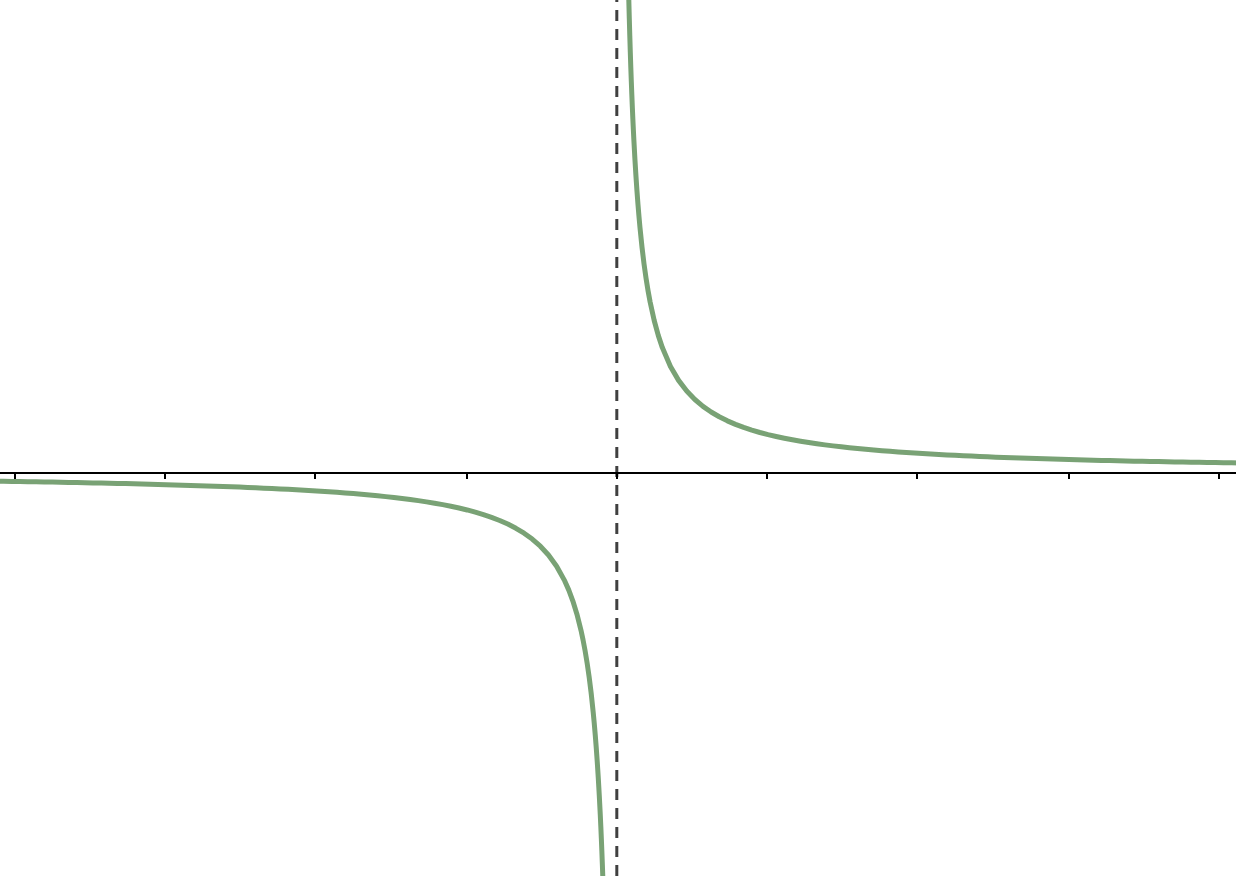
Infinite Limits describe the behavior of functions whose values become arbitrarily large either positively or negatively. The answer to these limits is .
(Positive) Infinite Limits
Let be a function defined on both sides of except possibly at itself. If grows arbitrarily large as approaches then
(Negative) Infinite Limits
Let be a function defined on both sides of except possibly at itself. If grows arbitrary small as approaches then
Vertical Asymptotes
A function has a vertical asymptote with equation if at least one of these statements is true:
Example: Infinite Limits
For the following graph, find:
i)
ii)
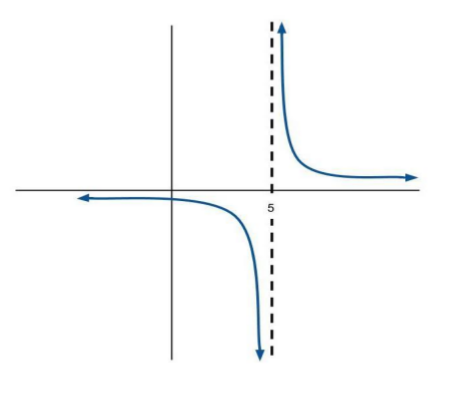
Note: The graph above has a vertical asymptote at .
i)
ii)
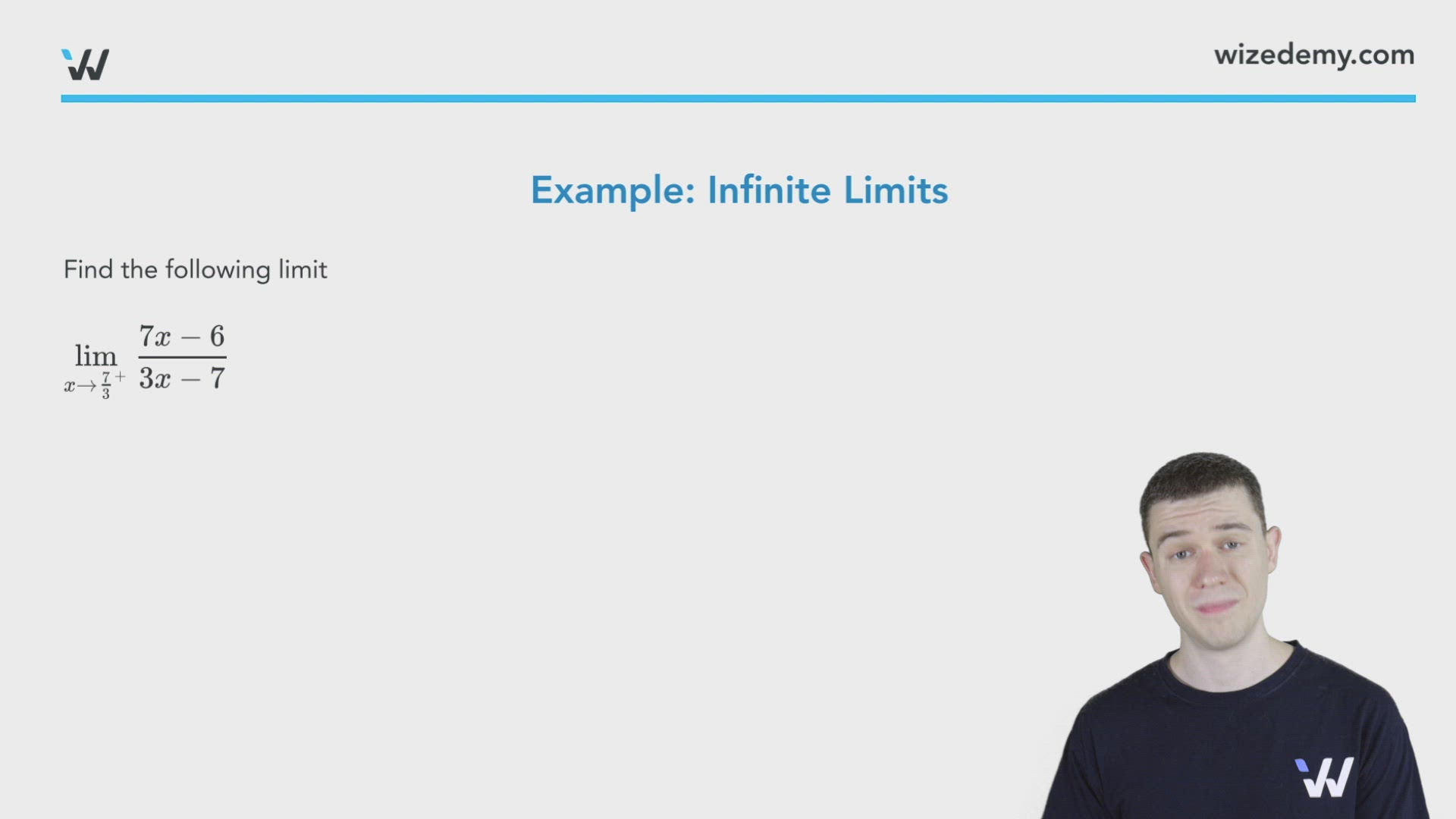
Example: Infinite Limits
Find the following limit
When we try to evaluate the limit, the numerator is positive while the denominator becomes 0. Evaluating with numbers to the right of 7/3 will give positive values in the denominator.
Extra Practice
Limits at infinity: Indeterminate forms
Which of the following statements is true about the function?
Limits at infinity: Indeterminate forms
Which of the following statements is true about the function?
Limits at infinity: Indeterminate forms
Which of the following statements is true about the function?
Limits at infinity: Indeterminate forms
Which of the following statements is true about the function?