
Derivatives as a Rate of Change
Derivative is a fancy word for rate of change. The derivative is of a function tells us how much the function is changing at any value we wish!
Instantaneous Rate of Change (Slope of the Tangent Line)
The derivative gives the instantaneous rate of change (geometrically the slope of the tangent line) of to the curve at any point where the function is differentiable.

Note: A function is differentiable on an interval only if it is continuous over that interval!
Notation for Derivatives
The derivative of the function is denoted:
If a function is constant, it has no rate of change. Thus the derivative of a constant, , is zero
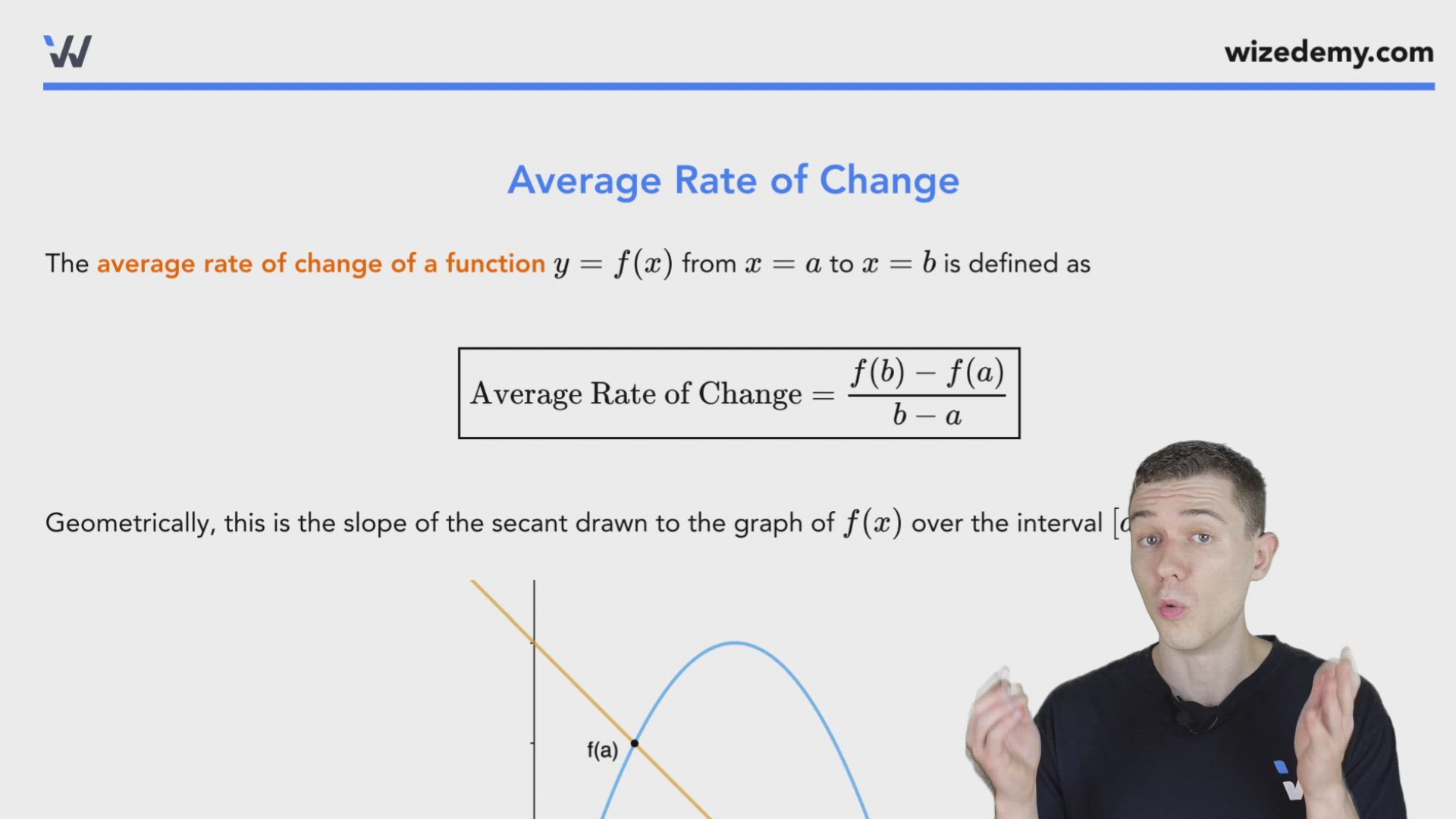
Average Rate of Change
The average rate of change of a function from to is defined as
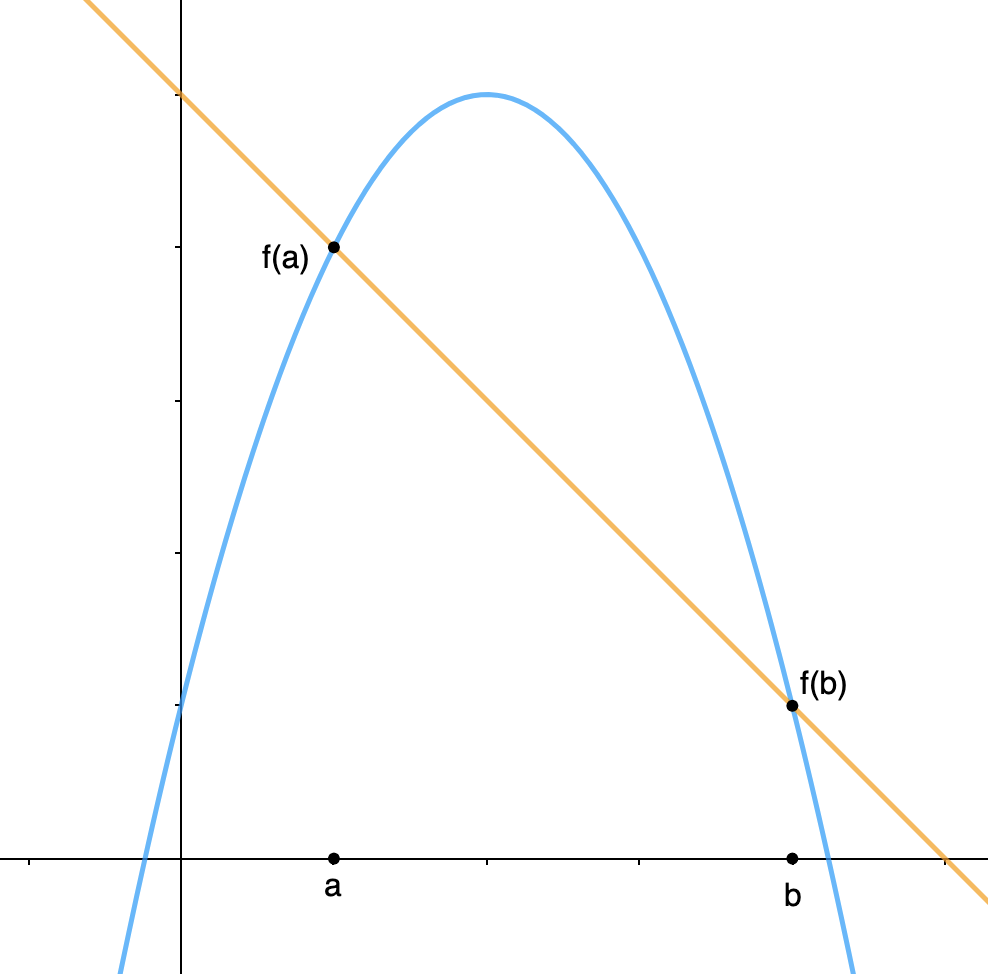
Geometrically, this is the slope of the secant drawn to the graph of over the interval .
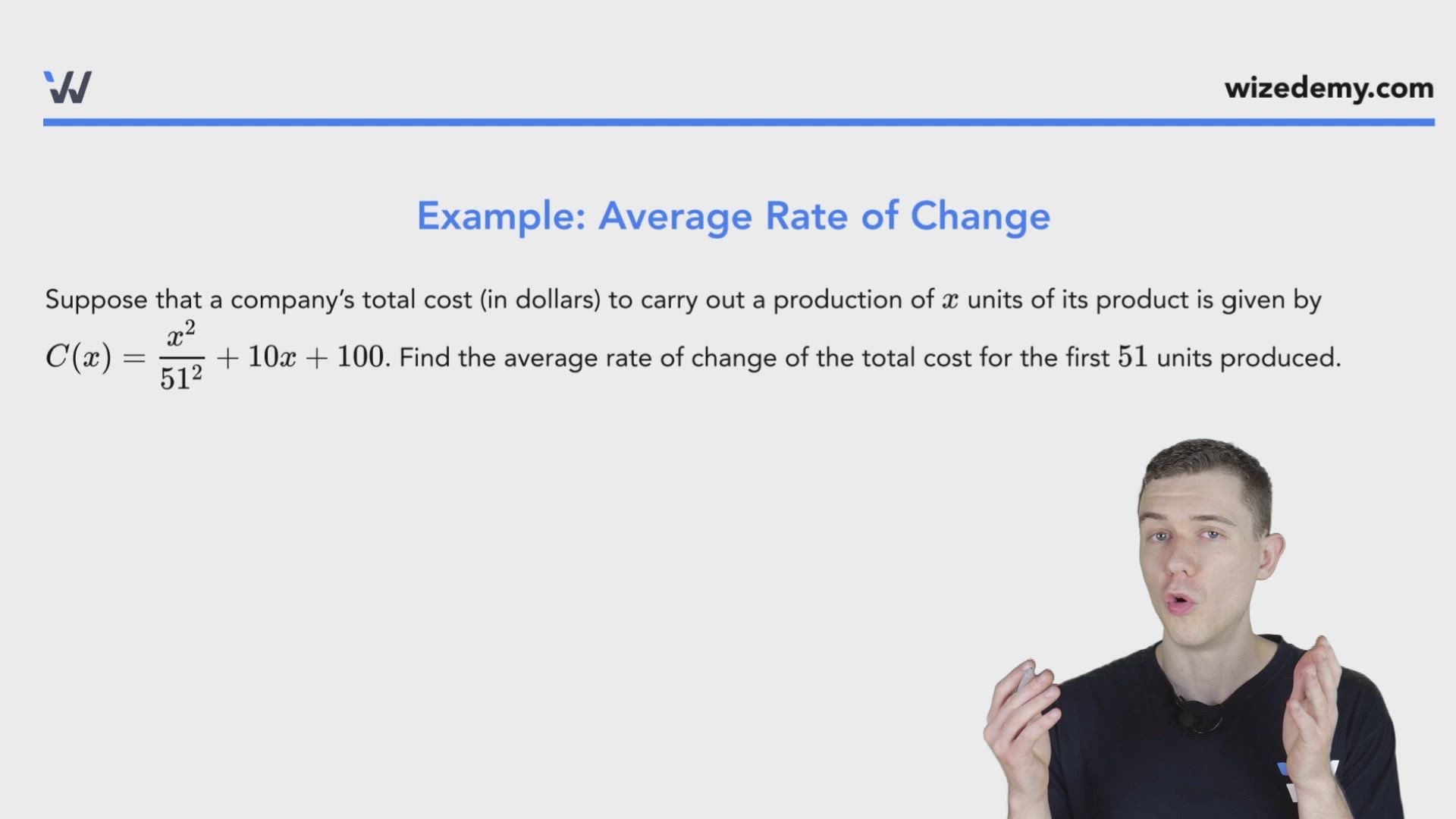
Example: Average Rate of Change
Suppose that a company’s total cost (in dollars) to carry out a production of units of its product is given by . Find the average rate of change of the total cost for the first units produced.