Vertical Springs
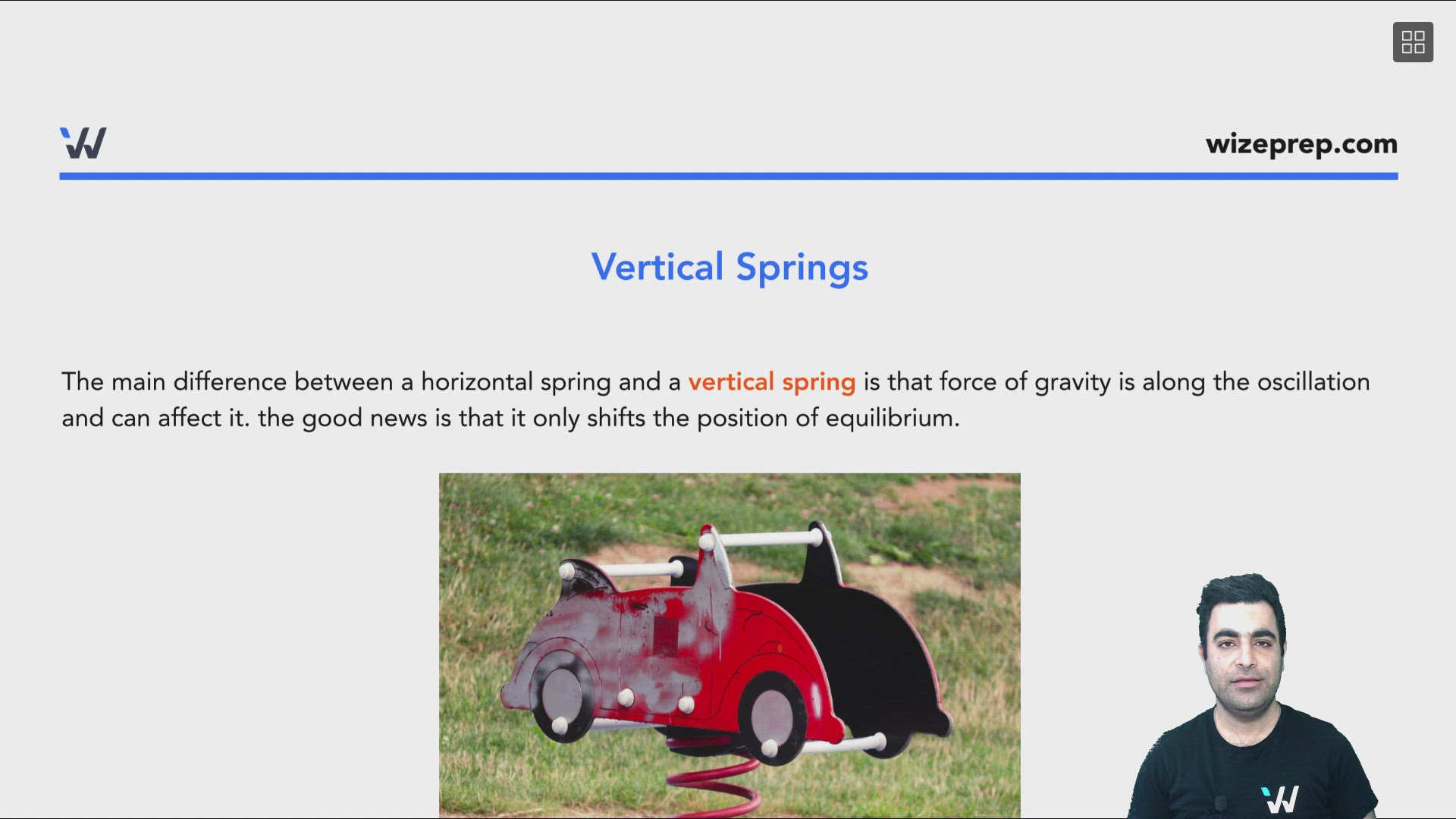
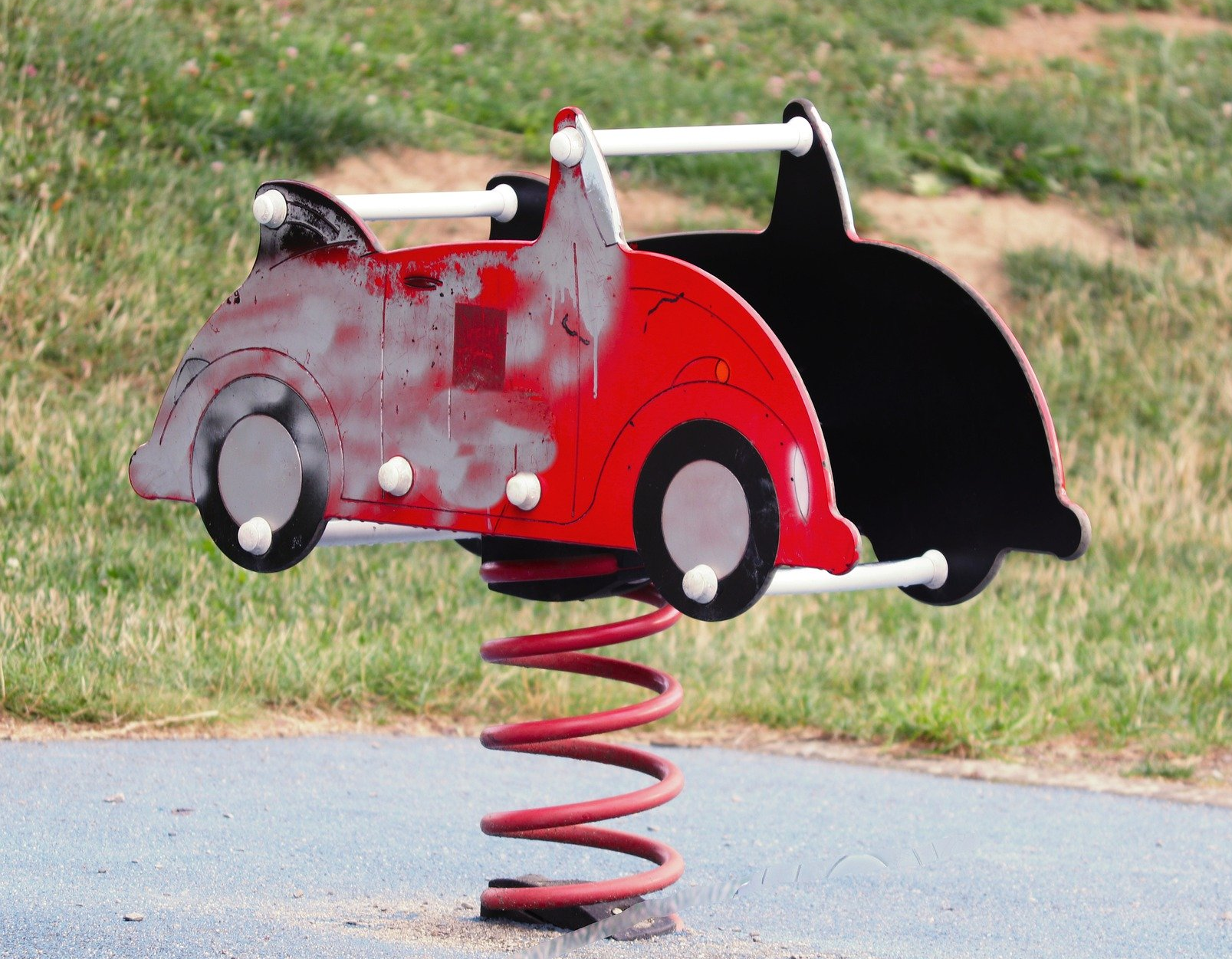
The main difference between a horizontal spring and a vertical spring is that force of gravity is along the oscillation and can affect it. the good news is that it only shifts the position of equilibrium.
If a mass is attached to a vertical spring and then is slowly lowered to stop in a lower position, the spring is stretched by
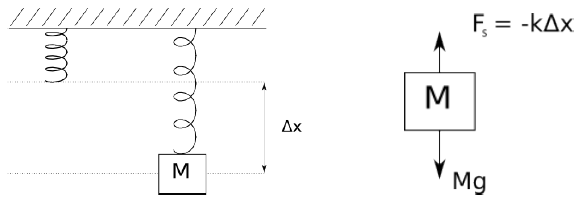
Basically, would be at equilibrium in the new position. So, the equation could be derived by noting that the net force on is zero.
Common Vertical Springs Scenarios
There are two common scenarios for problems about vertical springs:
- Mass is already attached to the spring and is at rest in the new equilibrium position. It is pulled down and then released to oscillate.

- Here, we start with a free spring. Now, the mass is added to the spring and then released to fall down.
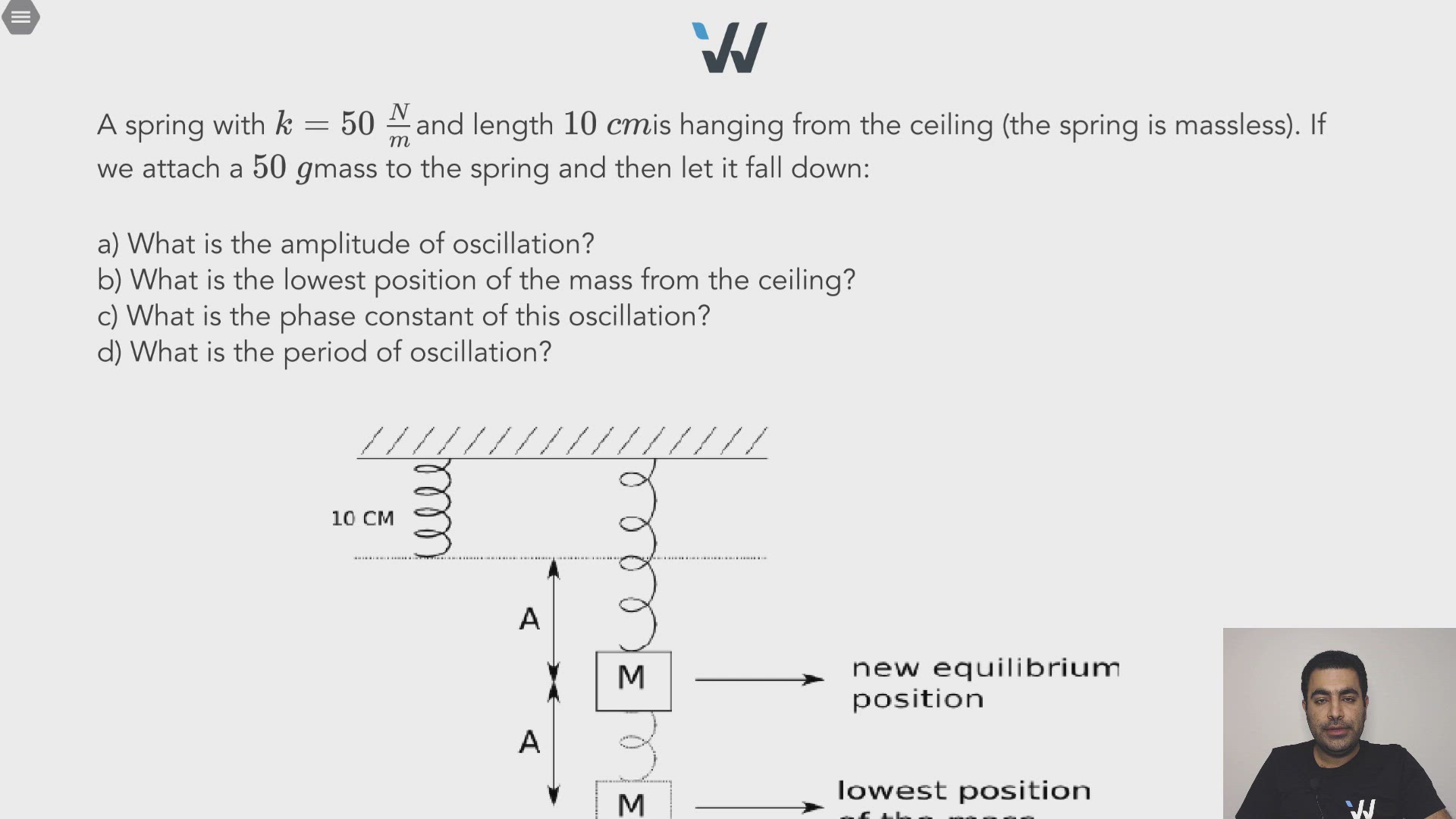
Example: Oscillating Vertical Spring
A spring with and length ofis hanging from the ceiling (the spring is massless). If we attach a mass to the spring and then let it fall down:
a) What is the amplitude of oscillation?
b) What is the lowest position of the mass from the ceiling?
c) What is the phase constant of this oscillation?
d) What is the period of oscillation?
Solution:

Part a)
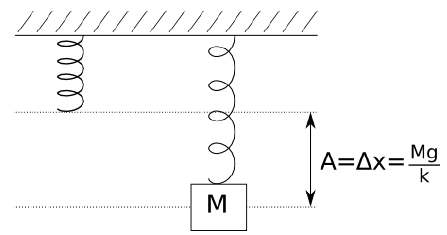
As shown in the picture, since the mass is released when it is attached, the initial position is the highest position of oscillation. So, mass starts at the amplitude respect to the new equilibrium position which is found by:
Part b)
Lowest position of the mass from the ceiling is equal to natural length of the spring plus twice the amplitude of oscillation:
Part c)
Let's focus on the initial condition and consider upward direction to be positive.
at :
Part d)