Simple Harmonic Motion
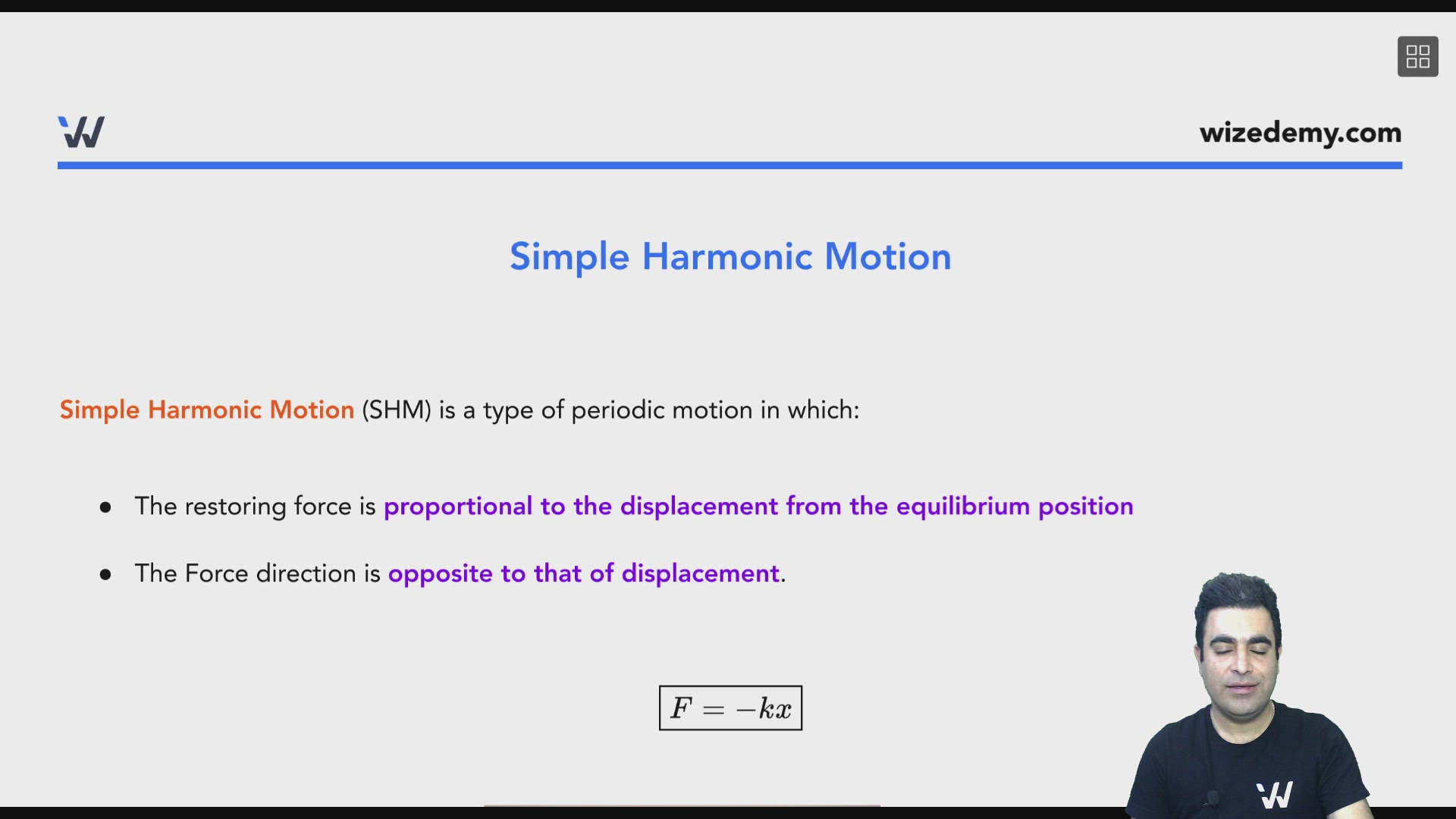
Simple Harmonic Motion (SHM) is a type of periodic motion in which:
- The restoring force is proportional to the displacement from the equilibrium position
- The Force direction is opposite to that of displacement.

The mathematical description of SHM is a sinusoidal function of time:
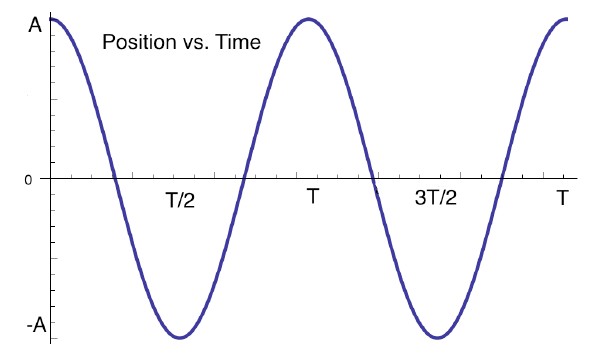
These are the parameters we use to describe a simple harmonic motion:
- Amplitude (A): The maximum displacement of the object from the equilibrium.
- Period (T): The time it takes for one complete oscillation (Period is measured in seconds).
- Frequency (f): The number of oscillations per unit of time (Frequency is measured in Hertz (1 Hz=1/s)).
- Angular frequency (): The rate at which argument of sinusoidal function describing oscillation changes in time (Angular frequency is measured in ).
Simple Harmonic Motion
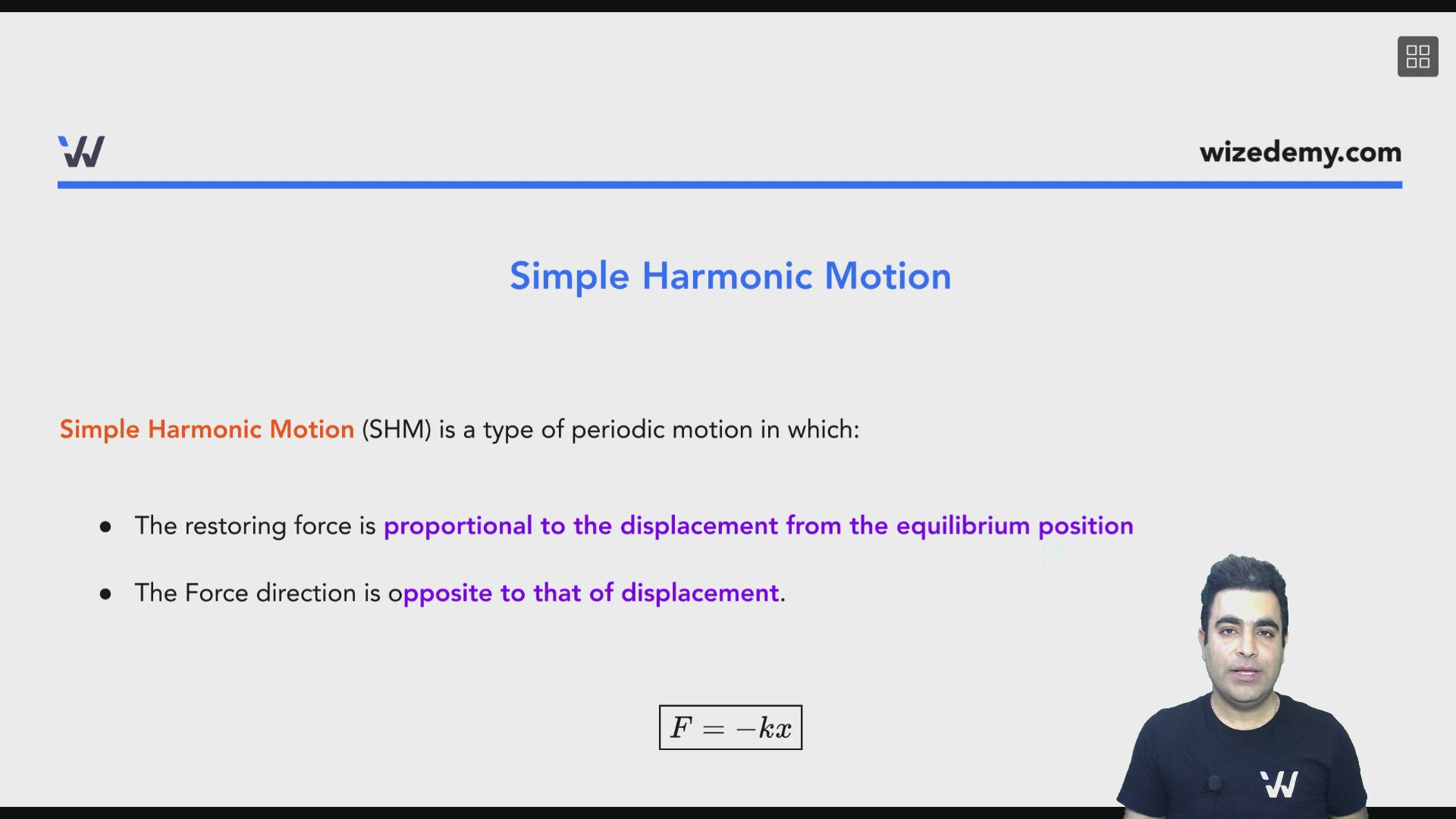
Simple Harmonic Motion (SHM) is a type of periodic motion in which:
- The restoring force is proportional to the displacement from the equilibrium position
- The Force direction is opposite to that of displacement.

The mathematical description of SHM is a sinusoidal function of time:
These are the parameters we use to describe a simple harmonic motion:
- Amplitude (A): The maximum displacement of the object from the equilibrium.
- Period (T): The time it takes for one complete oscillation (Period is measured in seconds).
- Frequency (f): The number of oscillations per unit of time (Frequency is measured in Hertz (1 Hz=1/s)).
- Angular frequency (): The rate at which argument of sinusoidal function describing oscillation changes in time (Angular frequency is measured in ).
- Phase Constant (): A term which determines the initial condition of oscillation (Phase constant is measured in ).
Phase constant causes a shift in the oscillating function which changes the starting point of oscillation:

Write the equation of motion for a 2.3 kg mass attached to a spring with constant 8.0 N/m, when the mass is released from rest at 0.15 m from equilibrium.
x(t) = A cos (wt)
A = 0.15 m
m = 2.3 kg
k = 8.0 N/m
w = sqrt (k/m) = sqrt (8.0/2.3) = 1.9 rad/s
x(t) = 0.15 cos (1.9t)