AI Tutor
High School
SAT
SAT Elite 1500
SAT Tutoring
ACT
ACT Elite 33
ACT Tutoring
University
MCAT
MCAT Elite 515
Med-School Admissions
Med School Calculator
MCAT Score Percentiles
Pre-Med Tutoring
Pre-Med Plus
LSAT
LSAT Elite 170
LSAT Self-Paced
LSAT Tutoring
DAT
DAT Programs
DAT Elite
DAT Self-Paced
DAT Tutoring
Log in
Get Started for Free
Practice: First Law of Thermodynamics
Related Topics
Wize High School Grade 12 Chemistry Textbook > Energy Changes
First Law of Thermodynamics
3 Activities
Practice: Work Calculation
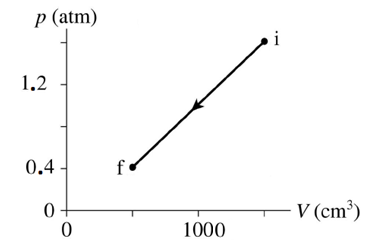
0.08 mole of nitrogen undergoes the following process. What is the work done on the gas?
Work, in Joules
I don't know
Check Submission
More First Law of Thermodynamics Questions:
Practice: Internal Energy
Which of the following processes always results in a positive change in internal energy of a system?
Practice: First Law of Thermodynamics
Practice: Work
0.08 mole of nitrogen undergoes the following process. What is the work done on the gas?
Thermodynamics: Internal energy and Enthalpy
2.3 moles of an ideal gas initially at -12
o
C and 16 atm underwent a complete expansion against a constant external pressure of 1atm and did 1.1kJ of work. Calculate Δ𝑈, Δ𝐻, 𝑎𝑛𝑑 𝑞 for this process.
You have a family of four living in a home. The home has a one large
window with
k
=
1.05
[
W
m
K
]
,
A
=
1.2
[
m
2
]
k=1.05\ \left[\frac{W}{mK}\right],\ A=1.2\ \left[m^2\right]
k
=
1.05
[
m
K
W
]
,
A
=
1.2
[
m
2
]
. The house is
made of wood
k
=
0.2
[
W
m
K
]
k=0.2\left[\frac{W}{mK}\right]
k
=
0.2
[
m
K
W
]
and an exposed area of
A
=
15
[
m
2
]
A=15\ \left[m^2\right]
A
=
15
[
m
2
]
.Given an outside temperature of
5
°
C
5\ \degree C
5
°
C
and an inside temperature of
24
°
C
24\ \degree C
24
°
C
, find the smallest heater than can maintain the internal temperature.
Worked Example
Practice: Isothermal Expansion
4 moles of neon was confined to a 8L flask initially at room temperature underwent an isothermal expansion into a vacuum at 348K. Calculate ∆𝑈, ∆𝐻, 𝑎𝑛𝑑 𝑞 for this process.
Thermodynamics
In the following reaction, assuming that the gases behave ideally, calculate the work at 25C and 101.3kPa
Thermodynamics: Work calculation
Determine the work done when a gas is allowed to expand from 25.0 L to 50.0 L against a constant pressure of 13.6 atm.
Work equation:
∆V=Vf=Vi
If an exothermic process releases 555 J of heat to the surroundings when the volume of the system is kept constant, how would the amount of heat released change if the system were allowed to expand instead?
Thermodynamics
2. If an exothermic process releases 555 J of heat to the surroundings when the volume of the system is kept constant, how would the amount of heat released change if the system were allowed to expand instead?
Thermodynamics: Bond enthalpy
The enthalpy of combustion for ethanol (C
2
H
5
OH) is -1370.7 kJ/mol. Calculate q, w, ΔH and ΔU when 45g of ethanol are burned at 1atm and 298K.
A 2.00 mole sample of a monoatomic ideal gas is initially at 1.00 L and 1.00 atm. Calculate the total q, w,
Δ
E
{\small \Delta\text{E}}
Δ
E
and
Δ
H
{\small \Delta \text{H}}
Δ
H
when the final conditions are 0.500 L and 5.00 atm along the pathway where the volume is compressed first.
[Do NOT include units in your answers]
Which statement below is INCORRECT?
Which statement below is INCORRECT?
An alkane’s vapour pressure at 25.00 °C is 6.00 kPa. What is its vapour pressure at 80.00 °C if the enthalpy of vaporization is 43.0 kJ/mol? (Give your answer in kPa)
Thermodynamics: Work Done by a Piston
In an auto shop, a hydraulic piston expands to lift a car into the air so the mechanic can access the oil pan under the car. When the piston expands, which of the following is true? You may consider the piston the system.
Calorimetry
A fuel compound was burned in oxygen in a bomb calorimeter with a combined heat capacity of 56.5 kJ / K (Bomb assembly and water). The temperature of the surrounding water bath increased from 23.5 to 34.6 °C as a result. Calculate
Δ
E
s
y
s
\Delta E_{sys}
Δ
E
sy
s
for this process? Consider any change in pressure due to gaseous products to be negligible.
Thermodynamics: Reaction of Mg with HCl
A 10.0 g piece of Mg
(s)
is deposited in a container with a vast excess of HCl
(aq)
. A reaction takes place forming hydrogen gas and Magnesium Chloride. Write a balanced chemical reaction for the transformation and calculate the work done by the system as a consequence of the reaction, if P
ex
= 1.1 atm and T = 298.15 K. You may assume ideal behaviour.
Calorimetry: Energy of vaporization of water
How much energy is required to bring 1.00 g of liquid water from 35 °C to 165 °C water vapour? The enthalpy of vaporization of water is +40.7 kJ/mol, the specific heat capacity of liquid water is 4.18 J / g °C, and the specific heat capacity of water vapour is 1.87 J/g °C.
From the following reaction:
2
C
6
H
12
O
6
(
s
)
+
2
O
2
(
g
)
→
12
C
O
2
(
g
)
+
4
H
2
O
(
l
)
Δ
H
r
x
n
=
−
1680
k
J
2C_6H_{12} O_{6(s)}+2O_{2(g)} \to 12CO_{2(g)}+4H_2O_{(l)} \hspace{20pt} \Delta H_{rxn}=-1680 kJ
2
C
6
H
12
O
6
(
s
)
+
2
O
2
(
g
)
→
12
C
O
2
(
g
)
+
4
H
2
O
(
l
)
Δ
H
r
x
n
=
−
1680
k
J
When an unknown quantity of sugar (C
6
H
12
O
6
) is burned, it was determined that the internal energy of the system decreased by 960 kJ and that 15.7 kJ of work was done on the system. How many grams of sugar were present at the beginning of this specific reaction?
How much work is performed in Joules when 3.00 mols of N
2(g)
expands against 1 atm of external pressure via heating from 298 K to 498 K at constant pressure of 1 atm?
A chemical compound has a molecular weight of 89.05 g/mol. 1.400 grams of this compound underwent complete combustion under constant pressure conditions in a calorimeter with a heat capacity of 2.980 × 10
3
J/ °C. The temperature went up by 11.95 °C. Calculate the standard heat of combustion of the compound.
Calorimetry: Heat capacity of calorimeter
The combustion of 1.00 mol of glucose (C
6
H
12
O
6
) gives off 2.82x10
3
kJ of heat (i.e. ΔH
comb
= 2.82x10
3
kJ mol-1). If 1.80 g glucose (molar mass is 180) is burned in a bomb calorimeter and the temperature of the calorimeter increases from 19.00
o
C to 23.50
o
C, what is the heat capacity of the calorimeter (kJ/
o
C)?
Calorimetry: Heat requirement
How much heat is required to convert a 15.5 g ice cube at -5.00
o
C to liquid water at 0
o
C? (The specific heat of ice is 2.09 J/g K, the specific heat of water is 4.18 J/g K, and the ΔH
fus
for water=334 J/g).
A Piston containing an 1.3 moles of an Ideal Gas undergoes a compression from 32 L to 27 L against a constant external pressure of 178 kPa. During this transformation the temperature does not change. Calculate the heat flow, q, for this transformation.
First Law of Thermodynamics
0.08 mole of nitrogen undergoes the following process. What is the work done on the gas?
Calorimetry
From the following reaction:
2
C
6
H
12
O
6
(
s
)
+
2
O
2
(
g
)
→
12
C
O
2
(
g
)
+
4
H
2
O
(
l
)
Δ
H
r
x
n
=
−
1680
k
J
/
m
o
l
⋅
r
x
n
2C_6H_{12}O_6(s)+2O_2(g)→12CO_2(g)+4H_2O(l)\qquad \qquad ΔH_{rxn}=-1680kJ/mol\cdot rxn
2
C
6
H
12
O
6
(
s
)
+
2
O
2
(
g
)
→
12
C
O
2
(
g
)
+
4
H
2
O
(
l
)
Δ
H
r
x
n
=
−
1680
k
J
/
m
o
l
⋅
r
x
n
When an unknown quantity of sugar (C
6
H
12
O
6
) is burned, it was determined that the internal energy of the system decreased by 960 kJ and that 15.7 kJ of work was done on the system. How many grams of sugar were present at the beginning of this specific reaction?
A freshly baked pie is placed near an open window to cool. Which of the following statements best describes this situation?
Thermodynamics: Internal Energy
Which of the following processes always results in a positive change in internal energy of a system?
Thermodynamics: Heat and Work
Consider the following balanced chemical equation for the combustion of propane, C
3
H
8
:
C
3
H
8
(
g
)
+
5
O
2
(
g
)
→
4
H
2
O
(
ℓ
)
+
3
C
O
2
(
g
)
q
<
0
C_3H_8 (g) + 5 O_2 (g) → 4 H_2O (ℓ) + 3 CO_2 (g) \qquad q < 0
C
3
H
8
(
g
)
+
5
O
2
(
g
)
→
4
H
2
O
(
ℓ
)
+
3
C
O
2
(
g
)
q
<
0
Use this information to answer the next two questions. Choose one if the options inside the brackets
The enthalpy of combustion for ethanol (C
2
H
5
OH) is -1370.7 kJ/mol. Calculate q, w, ΔH and ΔU when 45g of ethanol are burned at 1atm and 298K.
Thermodynamics
4 moles of neon was confined to a 8L flask initially at room temperature underwent an isothermal expansion into a vacuum at 348K. Calculate ∆𝑈, ∆𝐻, 𝑎𝑛𝑑 𝑞 for this process.
Isothermal Expansion of an ideal gas:
Free Expansion into a vacuum:
Worked Example
Four moles of an ideal gas originally at 323
o
C and 7.3 atm underwent a complete expansion against a constant external pressure of 1 atm and did 8kJ of work. Calculate q, ΔE, ΔH.
Solve for the missing initial variable (Vi):
hint: rearrange PV=nRT to do this!
Thermodynamics
16 grams of dry ice (CO
2(s)
) was placed in a piston with an initial volume of 4L and allowed to sublimate and warm to room temperature. The system then underwent a reversible isothermal expansion to a final pressure of 1.0 atm. Calculate ΔU, q and w for this process. You can assume that CO
2(g)
behaves as an ideal gas.
R=0.08206Latm/Kmol
R=8.314J/Kmol
Thermodynamics
1
.8 moles of an ideal gas initially at -5
o
C and 1.7 atm underwent a complete expansion against a constant external pressure of 1atm and did 1.1kJ of work. Calculate ∆𝑈, ∆𝐻, 𝑎𝑛𝑑 𝑞 for this process.
Step 1:
Extract all relevant information from the problem
Step 2:
We have three of four variables for the initial state so we solve for the fourth (R=0.08206Latm/Kmol)
Thermodynamics: Internal Energy
The enthalpy of combustion for ethanol (C
2
H
5
OH) is -1370.7 kJ/mol. Calculate q, w and ΔU when 45.0g of ethanol are burned at 1atm and 298K.
Answers need to be in scientific notation, with proper significant figures. Give all values in kJ.
Thermodynamics: Pressure-Volume Work
Which of these reactions involve pressure-volume work being done on the system?
Bomb Calorimetry
A fuel compound was burned in oxygen in a bomb calorimeter with a combined heat capacity of 56.5 k] / K (Bomb assembly and water). The temperature of the surrounding water bath increased from 23.5 to 34.6 °C as a result. Calculate
Δ
E
s
y
s
\Delta E_{sys}
Δ
E
sy
s
for this process? Consider any change in pressure due to gaseous products to be negligible.
Thermodynamics: Work Done During Acid Digestion of Magnesium
A 10.0 g piece of Mg
(s)
is deposited in a container with a vast excess of HCl
(aq)
. A reaction takes place forming hydrogen gas and Magnesium Chloride.
a) Write a balanced chemical reaction for the transformation
b) Calculate the work done by the system as a consequence of the reaction, if P
ex
= 1.1 atm and T = 298.15 K. You may assume ideal behaviour.
Thermodynamics: Pressure-Volume Work
A system composed of 4.50 L of N
2
in a cylinder expands against an external pressure of 300 kPa until its volume is 6.30 L.
What is the value of
w
for this process?
What would the value of
w
be if the external pressure was 0 kPa?
A steam turbine uses some form of energy to evaporate water, heat the vapour and move a cylinder. We can think of this a constant pressure process, where
H
2
O
(
l
)
→
H
2
O
(
g
)
H_2O(l) → H_2O(g)
H
2
O
(
l
)
→
H
2
O
(
g
)
.
Complete the following sentences about this process by choosing one description per line. Enter the answers separated by a comma in the box below.
This process is
exothermic / endothermic.