Wize AP Biology Textbook > Mendelian Genetics
More Complex Genetics [Blood Type, Pleiotropy, Epistasis and Polygenic Inheritance]
Popular Courses
Find My Course
0:00 / 0:00
Blood Types
Sometimes, there is more than one allele coding for a particular trait. A classic example is blood types. A person can have:
- Type A
- Type B
- Type AB
- Type O
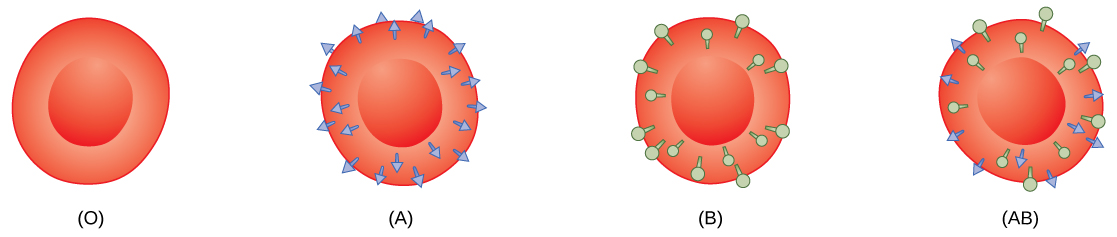
These blood types are determined by the type of carbohydrate added to a protein on the surface of red blood cells, and there are three different enzymes (encoded by three different alleles) responsible for adding this carbohydrate:
- IA adds "A" type carbohydrate
- IB adds "B" type carbohydrate
- i does not add a carbohydrate
Blood type is determined by which of these three alleles a person has:
- IAIA OR IAi will have type A blood ("A" type carbohydrates)
- IAIB will have type AB blood ("A" and "B" type carbohydrates)
- IBIB OR IBi will have type B blood ("B" type carbohydrates)
- ii will have type O blood (no carbohydrates)
Practice: Possible Blood Types
A child finds out that he is blood type O and his mother is blood type B. He claims that his father cannot be bloodtype AB.
Is his claim true or false?

0:00 / 0:00
Pleiotropy, Epistasis and Polygenic Inheritance
Pleiotropy
Some genes can control multiple different seemingly unrelated traits. A mutation in a pleiotropic gene can therefore have a broad range of phenotypes associated with it.
- Mutation on a pleiotropic gene can have an effect on several different traits.
- Likely due to the fact that this gene is required in different cell types.

- An example of a pleiotropy is phenylketonuria.
- This is a genetically inherited condition that has to do with levels of the amino acid phenylalanine.
- A mutation in the gene that codes for an enzyme responsible for breaking down phenylalanine into tyrosine is the cause of this condition.
- The mutation leads to toxic build up of phenylalanine in the body and low levels of tyrosine. This has several outcomes:
- Nerve damage leading to mental disorders;
- Developmental problems (abnormal gait and posture);
- Seizures;
- Skin rashes and fair skin.
Epistasis
Alleles and genes can interact with each other to give different phenotypes. Epistasis is when two or more genes contribute to a phenotype, and the phenotype of one gene is altered by the presence of another.
Examples:


Polygenic Inheritance
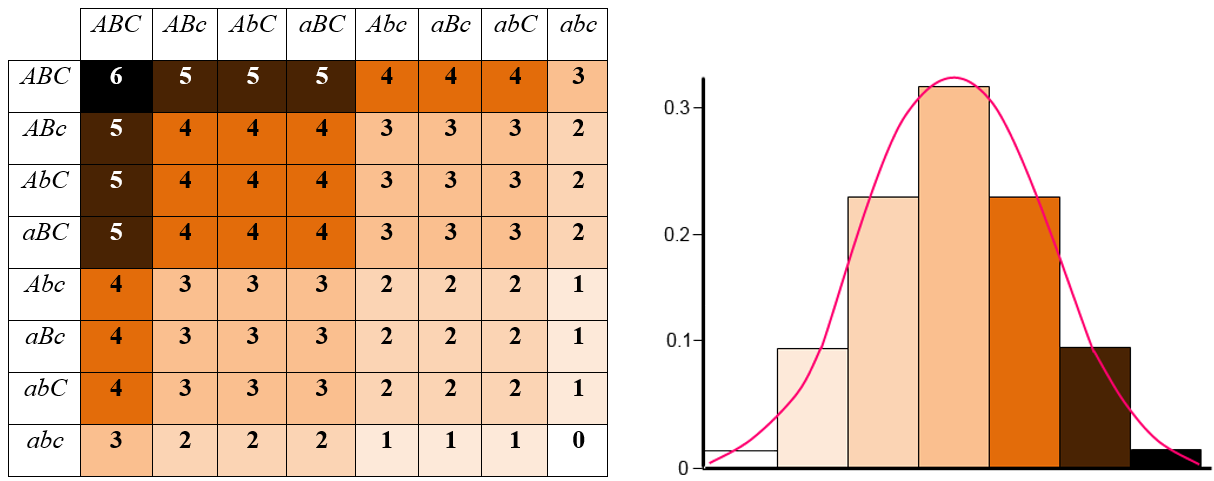
Some traits are determined by the combination of multiple genes. An example is skin color:
Environment and Genes Can Determine Phenotypes
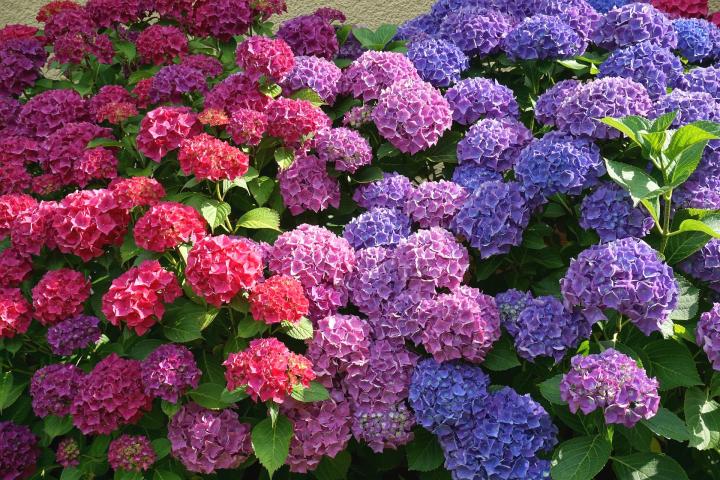
Sometimes, the phenotype depends on the environment as well as the genes. For example, hydrangea flowers can range in color from pink to blue depending on the environmental temperature, even though they have the same genotype:
Practice: Non-Mendelian Inheritance
Match the non-mendelian inheritance terms with the correct definition.
A.
A phenotypic trait that is controlled by more than one gene
B.
When the effect of one gene is dependent on the allele present at a different gene
C.
One gene influences two or more unrelated traits/phenotypes
Polygenic
Epistasis
Pleiotropy
Practice: Epistasis
There are 2 genes in an alien species that have an epistatic interaction (meaning, one gene affects the expression of the other). Recessive alleles at the “bald” gene (bb) inhibit the expression of different alien antennae lengths (AL for long, AS for short and AN for no antennae where AL>AS>AN). Individuals who are homozygous recessive for the bald gene will show the AN phenotype regardless of their other antennae alleles. Individuals with at least one normal bald gene (B) express their antennae as expected from their genotype. If two parents heterozygous for long antennae (ALAS) and heterozygous for the bald allele (Bb) mate, what is the probability that they have a child with no antennae?