
0:00 / 0:00
Telomerase
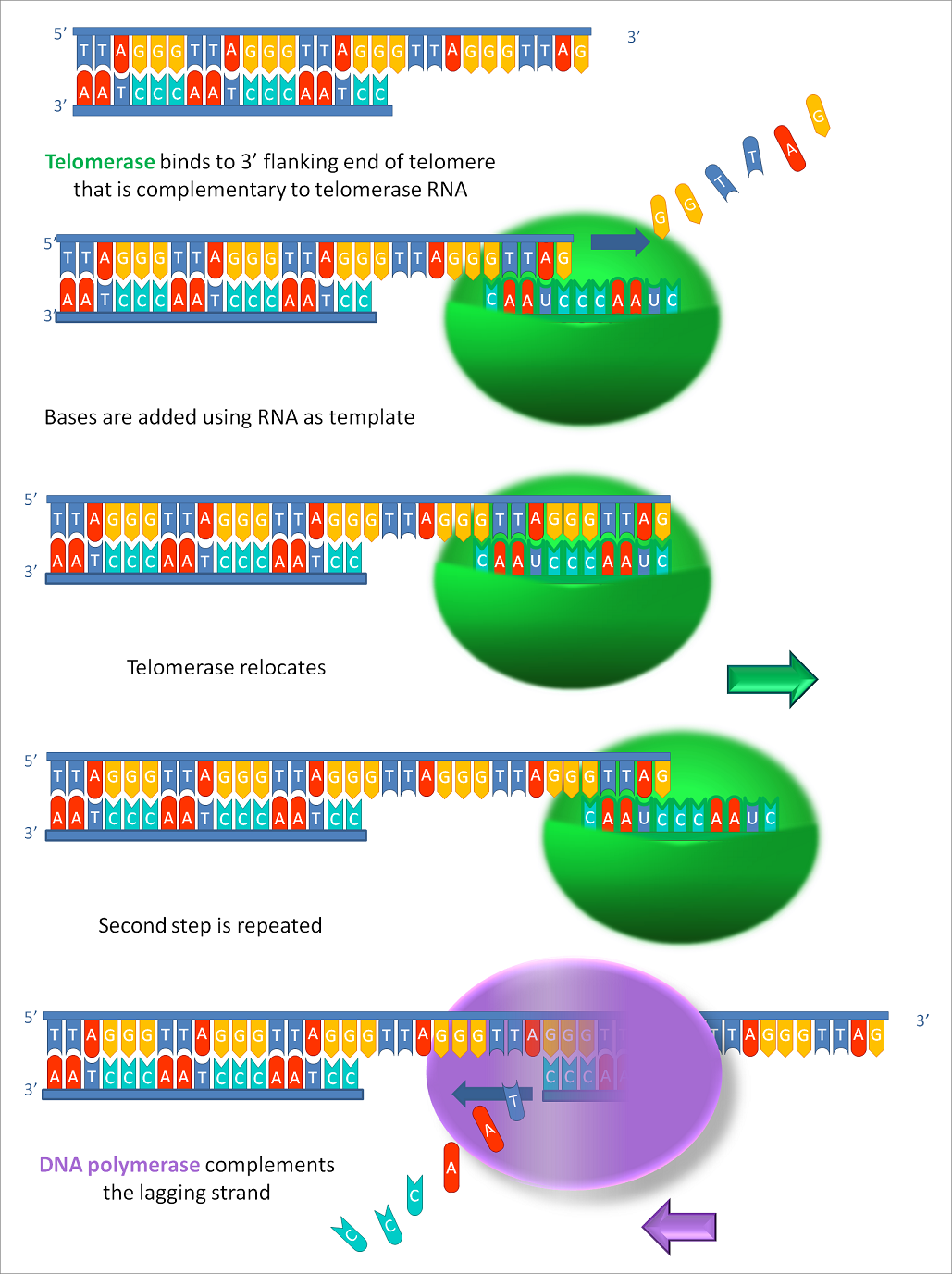
- In the linear DNA of eukaryotic cells, RNA primers cannot be added to the 3' end of the DNA (lagging strand) in order to allow DNA polymerase to replicate the very end of the strand.
- The enzyme telomerase extends the 3' end of the lagging strand by adding a DNA sequence to which a primer can attach. DNA polymerase III can now replicate the 3' end of the lagging strand.
- Prokaryotic cells don't have this problem and therefore don't have telomerase because they have circular chromosomes and during replication both replication forks meet in the middle.
Practice: Prokaryote Telomerase?
Why don't prokaryotic chromosomes require a telomerase during replication?
Practice: Absence of Telomerase
What would happen to a eukaryotic chromosome after repeated rounds of replication if the telomerase was not functioning properly?