Wize University Biology Textbook > Ecology
Biogeochemical Cycles
Popular Courses
AP Biology Exam Prep Course
AP Exam Prep
Biology
General Course
General Biology
University Study Guides
BIOL 211
University of Calgary
Grade 12 Biology
Canada High School
DAT
General Course
High School Biology
US High School
Grade 11 Biology
Ontario High School
Grade 11 Biology
Canada High School
BIOL 103
Queen's University
BIO 1131
University of Ottawa
BIOL 121
University of British Columbia
BIOLOGY 1M03
McMaster University
BIO120H1
University of Toronto
General Biology
University Study Guides
Biology 20
Alberta High School
SC/BIOL 1001 3.00
York University
BIOL 1201
Western University
Life Sciences 11
British Columbia High School
BIOL 1011
Dalhousie University
0:00 / 0:00
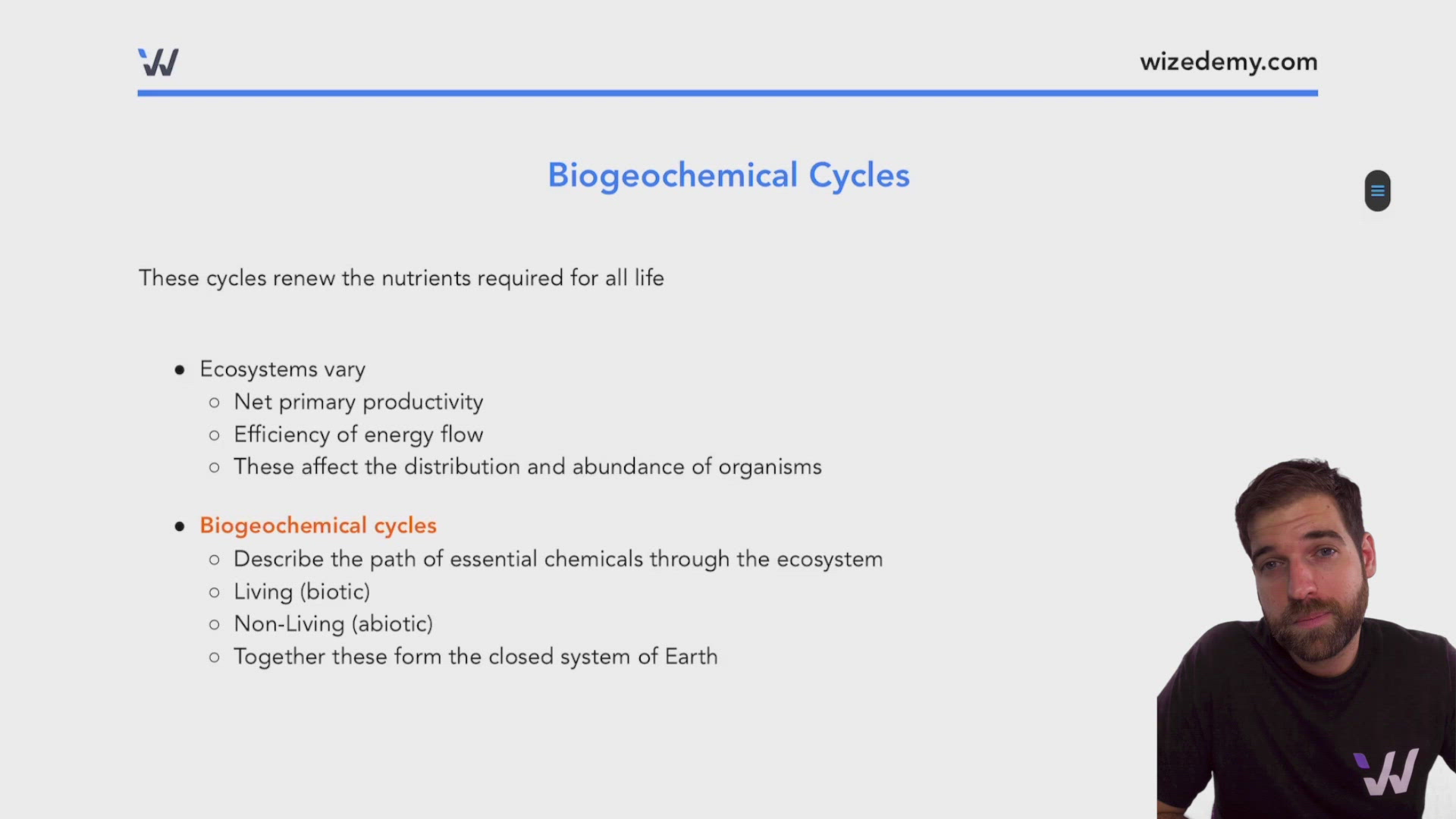
Biogeochemical Cycles
These cycles renew the nutrients required for all life
- Ecosystems vary
- Net primary productivity
- Efficiency of energy flow
- These affect the distribution and abundance of organisms
- Biogeochemical cycles
- Describe the path of essential chemicals through the ecosystem
- Living (biotic)
- Non-Living (abiotic)
- Together these form the closed system of Earth
Carbon Cycle
Carbon
- Essential building block of life
- Exists in many minerals
Carbon Reservoirs
- Most carbon is stored in reservoirs Examples: Fossil fuels, sediment, dissolved in ocean, stored in plant and animals
Atmospheric Carbon
- Most available form for life
- Found as CO2 gas
- Removed from atmosphere by photosynthesis
Organic Carbon
- Terrestrial
- Plants remove CO2 from atmosphere
- Consumers eat plants to obtain carbon
- Release CO2 back into atmosphere through respiration (breathing)
- Decomposers break down complex carbon molecules and release back into cycle
- Aquatic Carbon
- Removed from atmosphere through photosynthesis
- Runs into water from terrestrial system

0:00 / 0:00
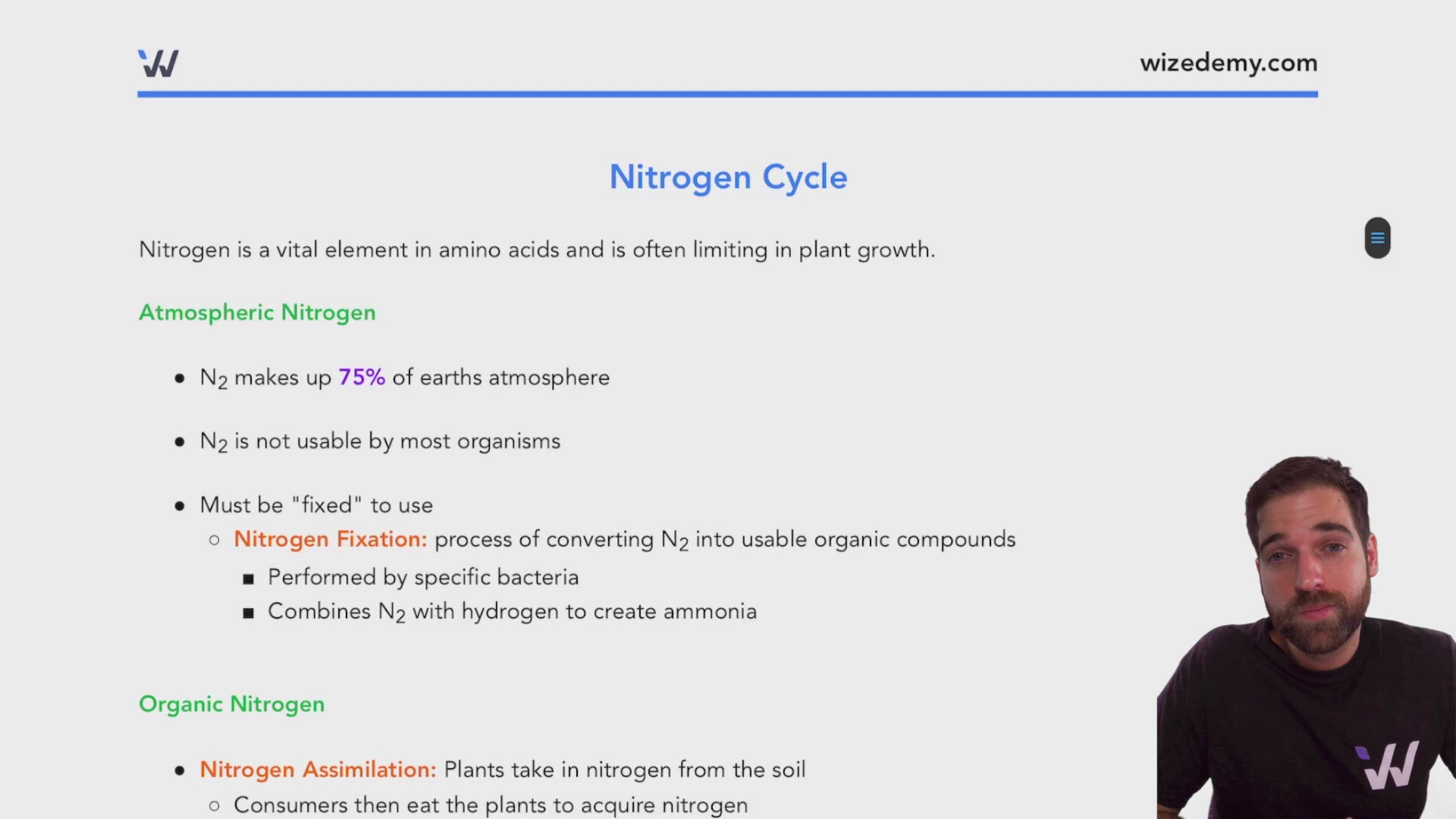
Nitrogen Cycle
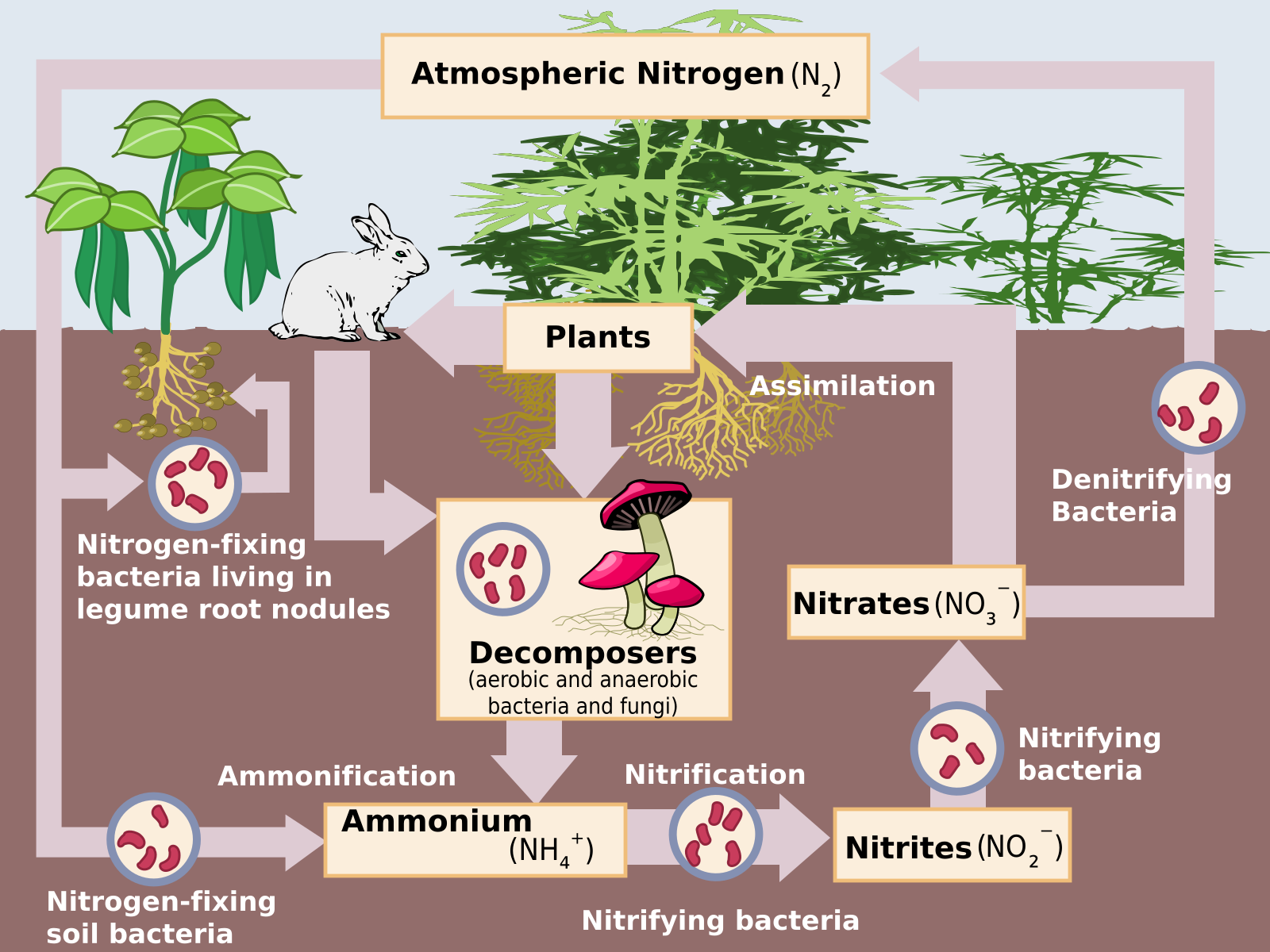
Nitrogen is a vital element in amino acids and is often limiting in plant growth.
Atmospheric Nitrogen
- N2 makes up 75% of Earth's atmosphere
- N2 is not usable by most organisms
- Must be "fixed" to use
- Nitrogen Fixation: process of converting N2 into usable organic compounds
- Performed by specific bacteria
- Combines N2 with hydrogen to create ammonia
Organic Nitrogen
- Nitrogen Assimilation: Plants take in nitrogen from the soil
- Consumers then eat the plants to acquire nitrogen
- Animal waste and decomposition contains nitrogen which is released back into the soil
- Oceans cycle nitrogen in a similar way
0:00 / 0:00
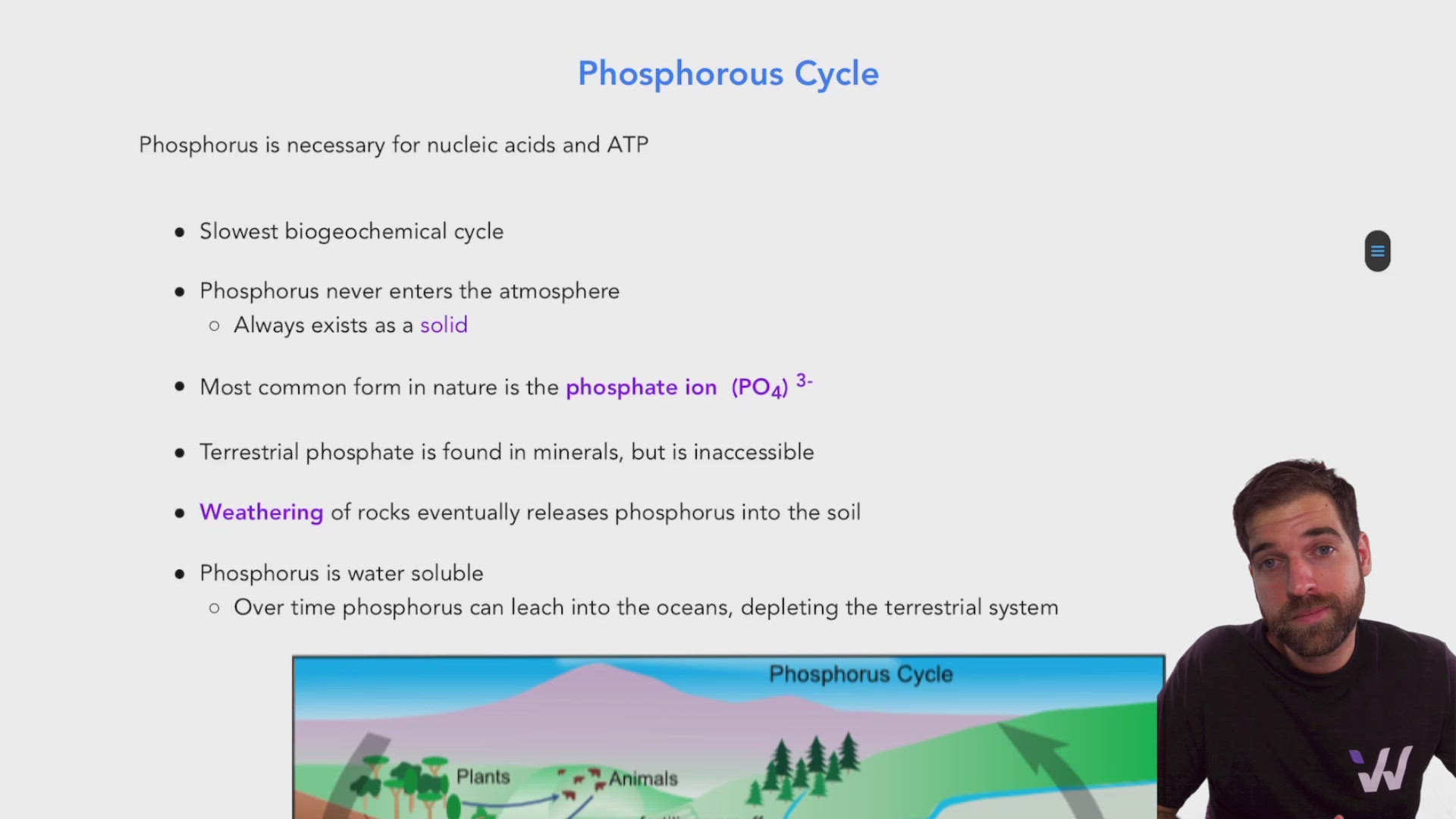
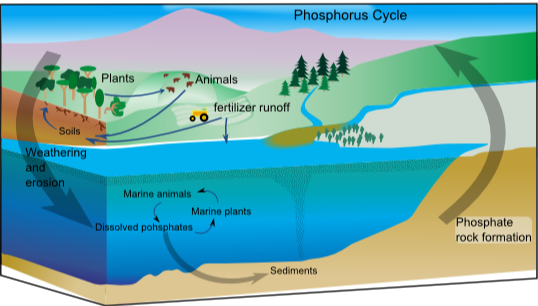
Phosphorous Cycle
Phosphorus is necessary for nucleic acids and ATP
- Slowest biogeochemical cycle
- Phosphorus never enters the atmosphere
- Always exists as a solid
- Most common form in nature is the phosphate ion (PO4) 3-
- Terrestrial phosphate is found in minerals, but is inaccessible
- Weathering of rocks eventually releases phosphorus into the soil
- Phosphorus is water soluble
- Over time phosphorus can leach into the oceans, depleting the terrestrial system
Practice
Which biogeochemical cycle does not include an atmospheric (gas) stage?
Practice
Which of the following does NOT represent a Carbon reservoir?

Mark Yourself Question
- Grab a piece of paper and try this problem yourself.
- When you're done, check the "I have answered this question" box below.
- View the solution and report whether you got it right or wrong.
Practice
What would happen to the levels of N2 in the atmosphere if the nitrogen fixing bacteria ceased to exist?