Wize University Microeconomics Textbook > Elasticity
Cross Price Elasticity
Popular Courses
ECON 201
Concordia University
ECONOMIC 1021A/B
Western University
Microeconomics
University Study Guides
ECON 201
University of Calgary
ECON 101
University of British Columbia
ECON 1B03
McMaster University
ECON*1050
University of Guelph
ECON 101
University of Alberta
Microeconomics
General Course
ECO101H1
University of Toronto
Microeconomics
University Study Guides
ECON 208
McGill University
ECON 101
University of Waterloo
ECN 104
Toronto Metropolitan University
ECON 110A
Queen's University
ECO 1104
University of Ottawa
EC120
Wilfrid Laurier University
AP/ECON 1000 3.00
York University
ECON 103
University of Victoria
ECON 1101
Dalhousie University
0:00 / 0:00
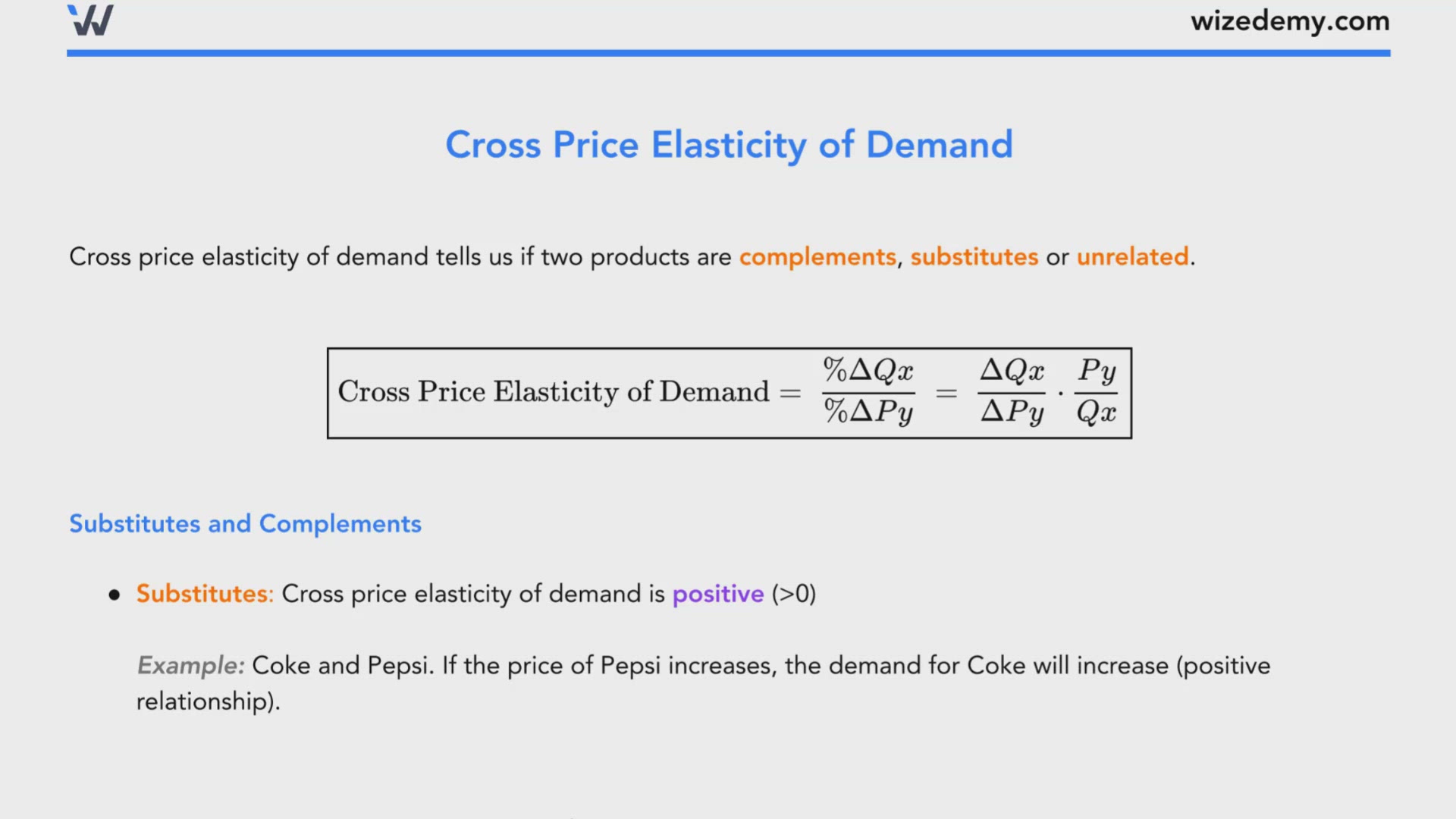
Cross Price Elasticity of Demand
Cross price elasticity of demand tells us if two products are complements, substitutes or unrelated.
Substitutes and Complements
- Substitutes: Cross price elasticity of demand is positive (>0) Example: Coke and Pepsi. If the price of Pepsi increases, the demand for Coke will increase (positive relationship).
- Complements: Cross price elasticity of demand is negative (<0) Example: Cars and gas. If the price of cars increase, the demand for gas will decrease (negative relationship).
- Unrelated Products: Cross price elasticity of demand is equal to zero. Example: Cars and oranges. If the price of cars increase, it will have no effect on the demand for oranges (no relationship).

0:00 / 0:00
Example: Cross Price Elasticity of Demand
The table below shows information about lemonade and cola:

a) What is the arc cross price elasticity of demand for lemonade with respect to the price of cola?
The table only gives us quantity of lemonade so that means lemonade it good X and cola is good Y.
The price of cola only changes from 2015 to 2016 so those are the only two years we will look at.
This means cola and lemonade are substitutes because the cross price elasticity is positive.
Practice: Cross Price Elasticity of Demand
The price of peaches at a market rises from $3.95 to $4.05 per kilo, and as a result the quantity of plums that consumers purchase increases from 4950 to 5050 kilos per week. The arc cross-price elasticity is