Wize University Microeconomics Textbook > Efficiency
Consumer Surplus
Popular Courses
ECON 201
Concordia University
ECONOMIC 1021A/B
Western University
Microeconomics
University Study Guides
ECON 201
University of Calgary
ECON 101
University of British Columbia
ECON 1B03
McMaster University
ECON*1050
University of Guelph
ECON 101
University of Alberta
Microeconomics
General Course
ECO101H1
University of Toronto
Microeconomics
University Study Guides
ECON 208
McGill University
ECON 101
University of Waterloo
ECN 104
Toronto Metropolitan University
ECON 110A
Queen's University
ECO 1104
University of Ottawa
EC120
Wilfrid Laurier University
AP/ECON 1000 3.00
York University
ECON 103
University of Victoria
ECON 1101
Dalhousie University
0:00 / 0:00
Consumer Surplus
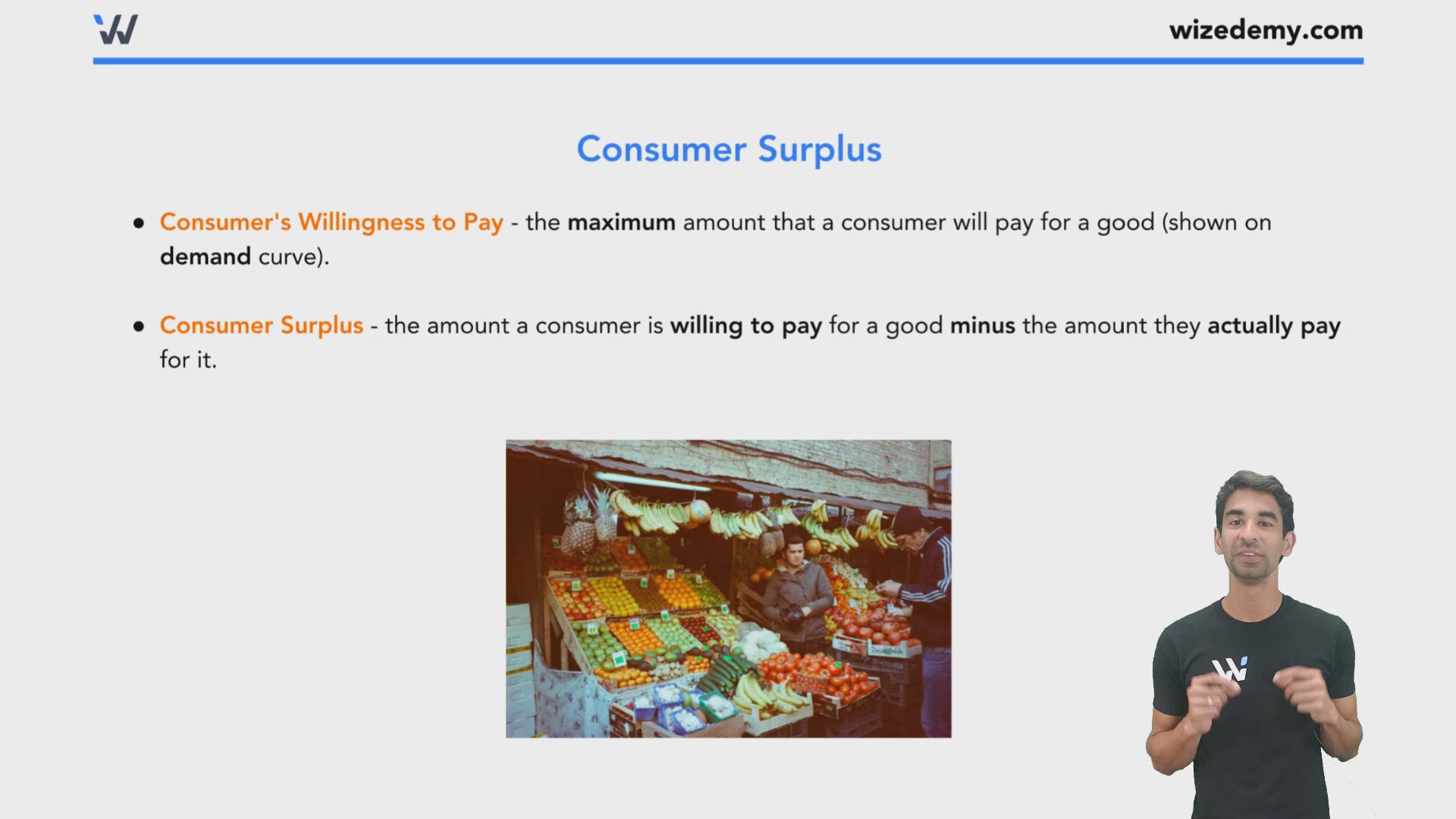
- Consumer's Willingness to Pay - the maximum amount that a consumer will pay for a good (shown on demand curve).
- Consumer Surplus - the amount a consumer is willing to pay for a good minus the amount they actually pay for it.

Consumer Surplus for Individuals
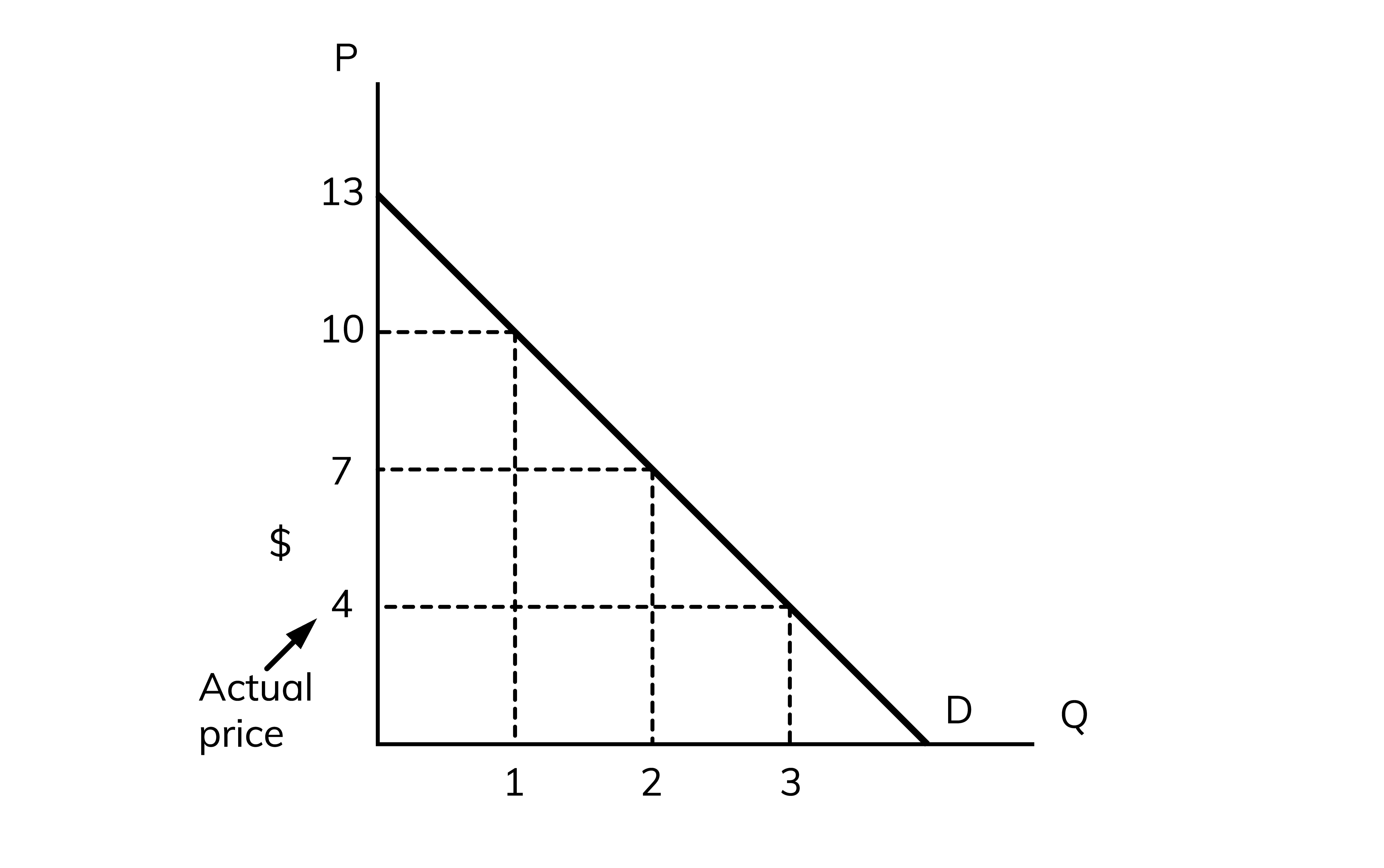
- In the diagram below, if the actual market price right now is $4, then the consumer surplus for the first consumer is$6which we find by doing$10(willingness to pay) minus$4(actual price paid).
- For the second person the consumer surplus is$3which we find by doing$7minus$4
- For the third person the consumer surplus is$0which we find by doing$4minus$4
Total Consumer Surplus at Equilibrium
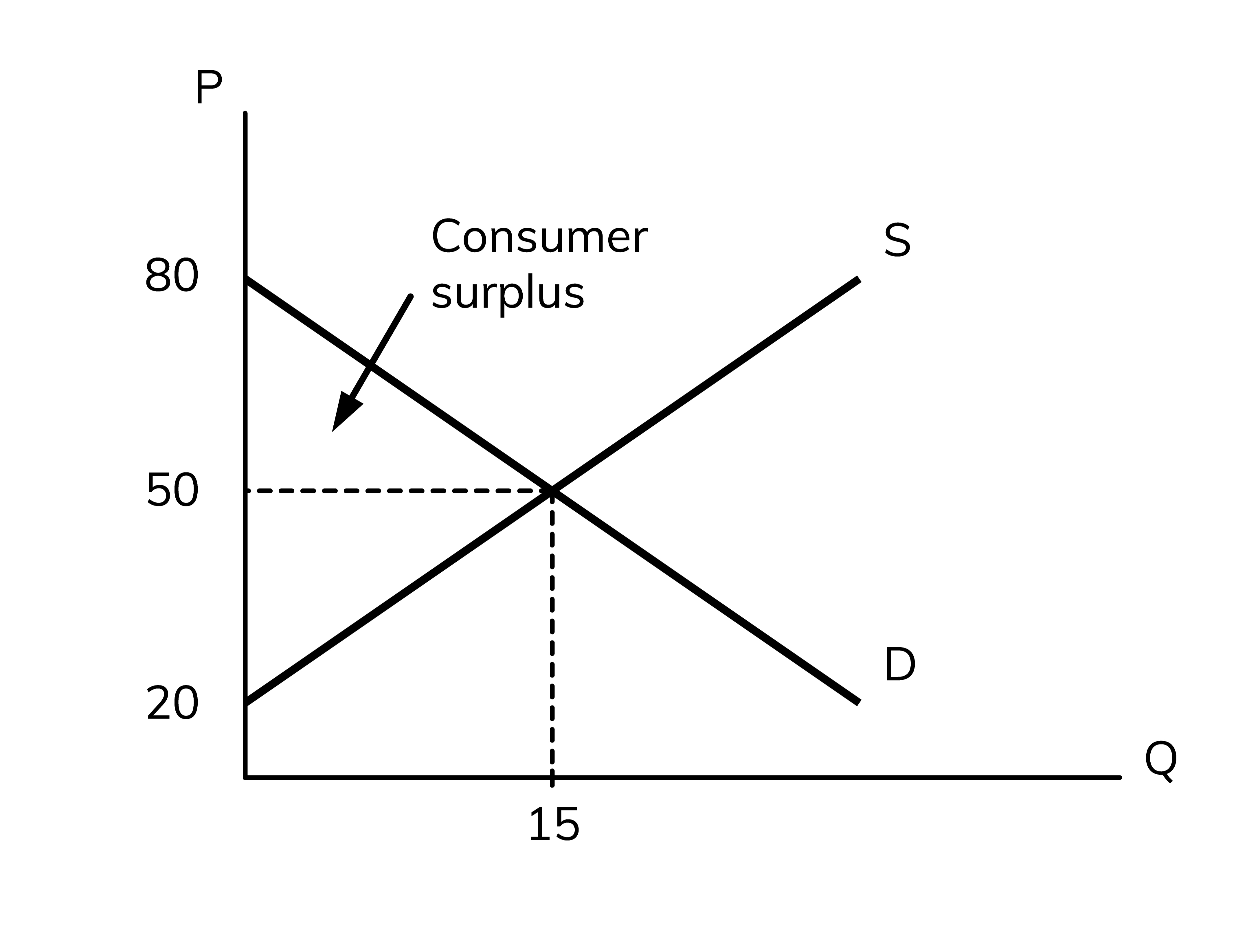
In the diagram above, the total consumer surplus is
15 * (80-50) * 1/2
= $225
0:00 / 0:00
Example: Consumer Surplus
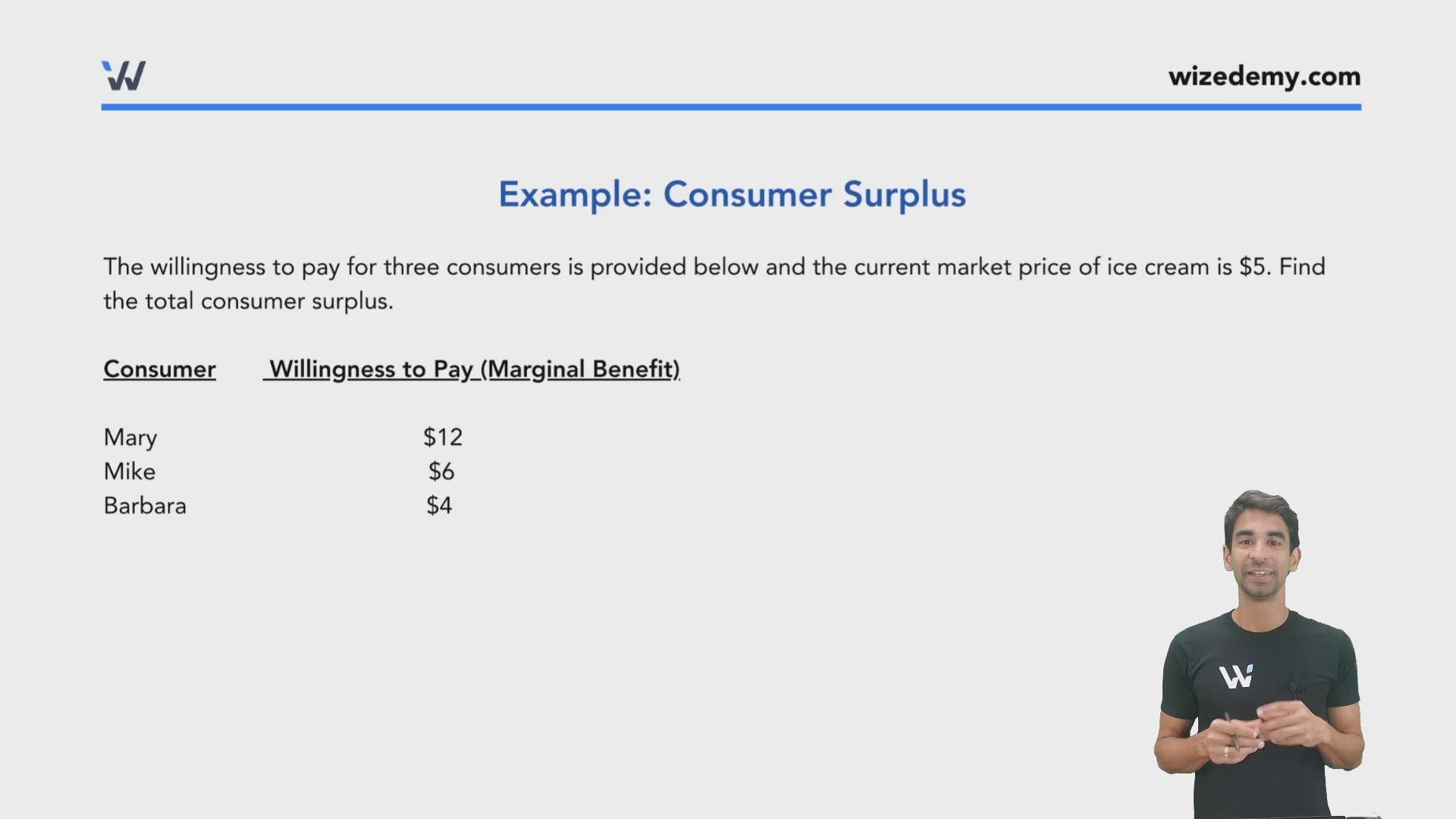
The willingness to pay for three consumers is provided below and the current market price of ice cream is $5. Find the total consumer surplus.
Consumer Willingness to Pay (Marginal Benefit)
Mary $12
Mike $6
Barbara $4
$8
Consumer surplus for Mary = 12 - 5 = 7
Consumer surplus for Mike = 6 - 5 = 1
Consumer surplus for Barbara = 0 (because she is not willing to buy the product)
Total Consumer Surplus = 7 + 1 = 8
Practice: Consumer Surplus
The price of a milkshake is $8 the quantity demanded is 100 units. If the price rises to $9, the consumer surplus will: