Wize University Microeconomics Textbook > Efficiency
CS and PS with Taxes
Popular Courses
ECON 201
Concordia University
ECONOMIC 1021A/B
Western University
Microeconomics
University Study Guides
ECON 201
University of Calgary
ECON 101
University of British Columbia
ECON 1B03
McMaster University
ECON*1050
University of Guelph
ECON 101
University of Alberta
Microeconomics
General Course
ECO101H1
University of Toronto
Microeconomics
University Study Guides
ECON 208
McGill University
ECON 101
University of Waterloo
ECN 104
Toronto Metropolitan University
ECON 110A
Queen's University
ECO 1104
University of Ottawa
EC120
Wilfrid Laurier University
AP/ECON 1000 3.00
York University
ECON 103
University of Victoria
ECON 1101
Dalhousie University

0:00 / 0:00
Consumer Surplus and Producer Surplus with Taxes

Before Tax After Tax Change
Consumer Surplus
A + B + C
A
- B - C
Producer Surplus
D + E + F
F
- D - E
Government Revenue
None
B + D
+ B + D
Total Surplus
A + B + C + D + E + F
A + B + D + F
- C - E
- Deadweight Loss (DWL) - the change in total surplus as we go from equilibrium to the new point (after tax). It is caused by the loss in consumer and producer surplus due to the lower quantity being produced. The DWL is also called change in total surplus or change in welfare
- The consumer and producer surplus before tax just means at equilibrium.
- Consumer surplus after tax - we only take the area above the consumer's price (which is only triangle A) because only those consumers are still willing to buy the product (at a price of $12)
- Producer surplus after tax - we only take the area below the producer's price (which is triangle F) because only those producers are still willing to sell the product (receiving only $8).
- Government Revenue - this is the tax multiplied by the new quantity ($4 * 15) which is the rectangle B and D.
0:00 / 0:00
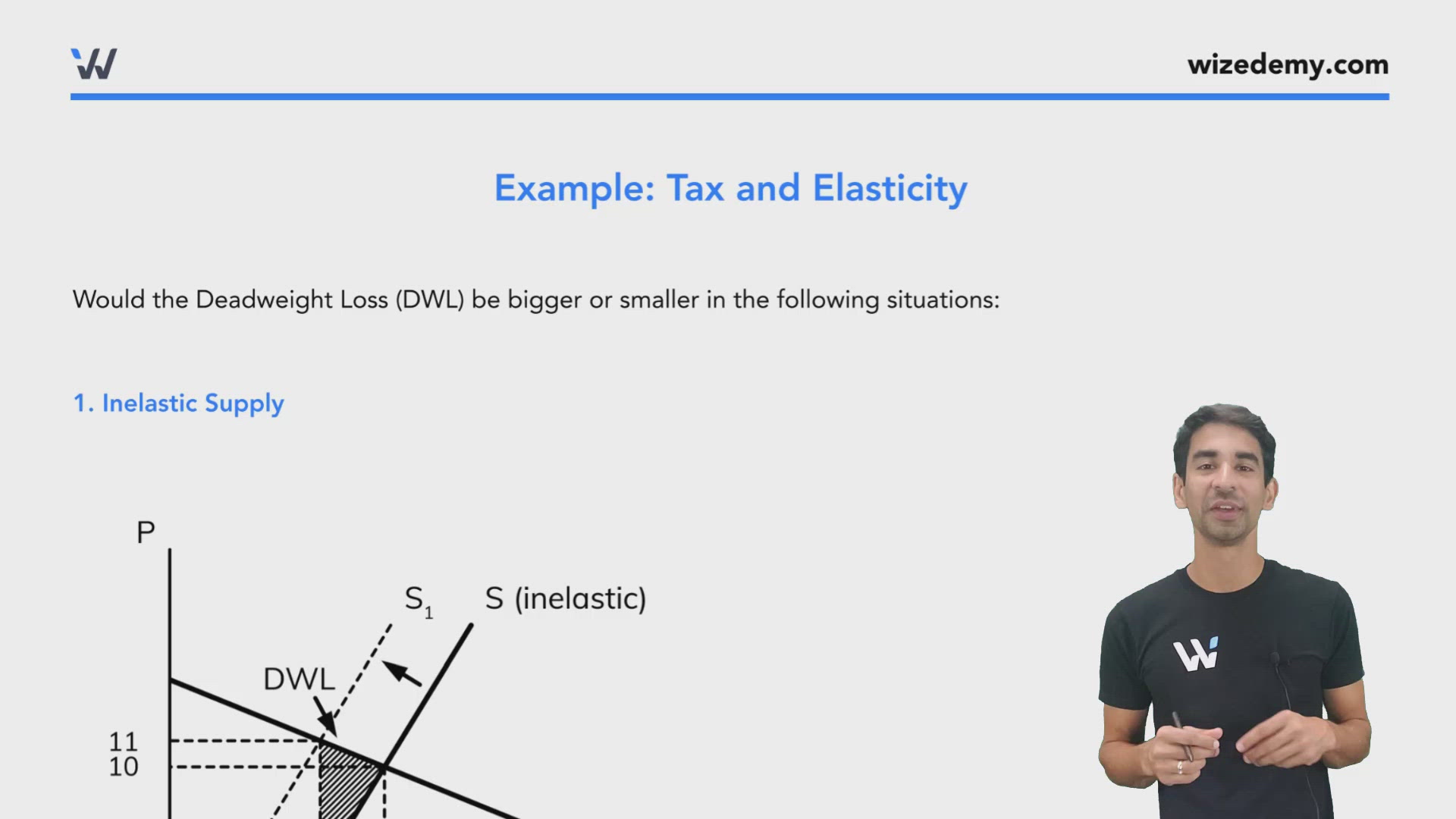
Example: Tax and Elasticity
Would the Deadweight Loss (DWL) be bigger or smaller in the following situations:
1. Inelastic Supply

If supply is inelastic the deadweight loss will be
small
because the equilibrium quantity will fall by only a little bit. 2. Inelastic Demand
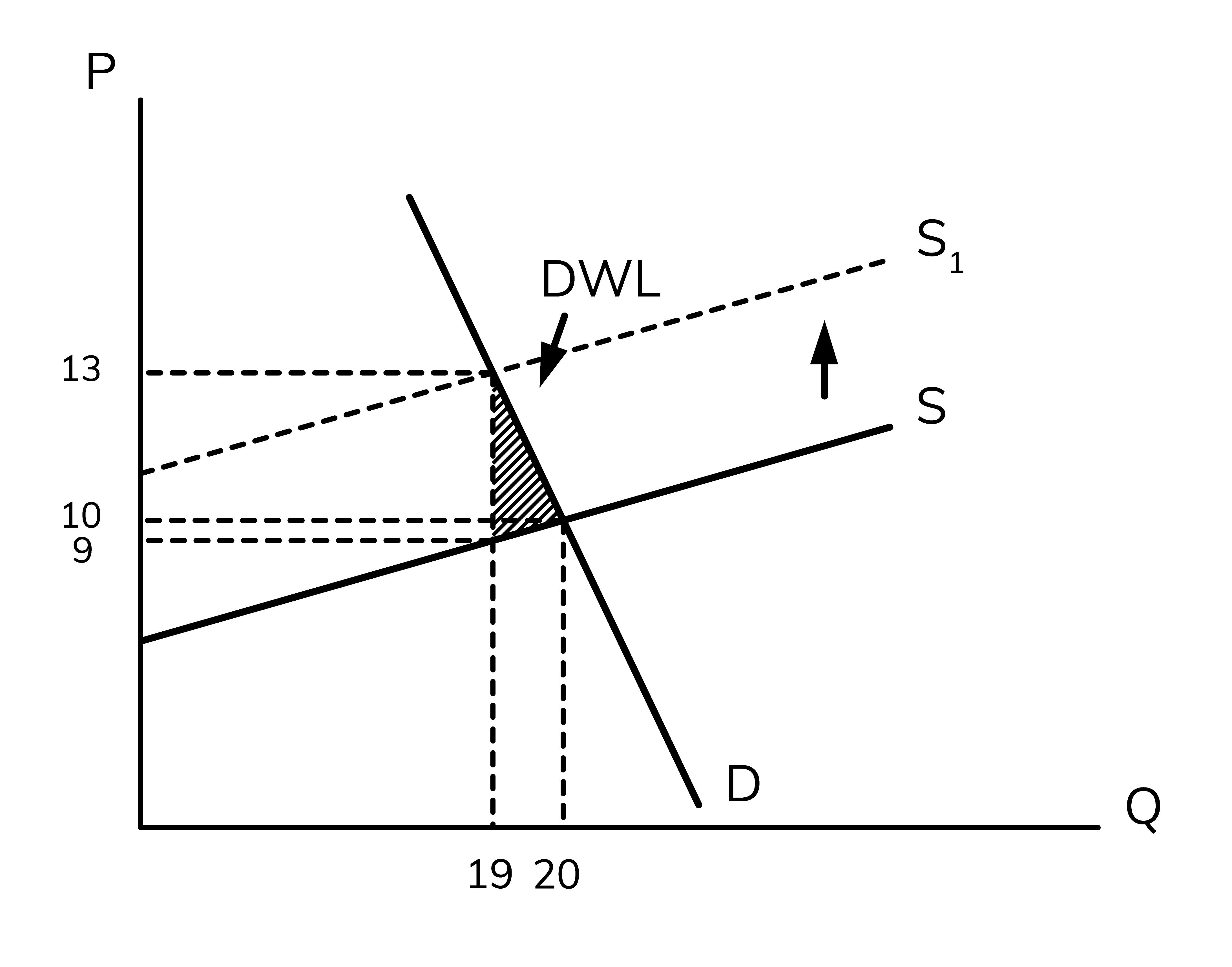
If the demand is inelastic the deadweight loss will be
small
because the equilibrium quantity will fall by only a little bit.3. Elastic Supply

If the supply is elastic the deadweight loss will be
big
because the equilibrium quantity will fall by a lot.4. Elastic Demand

If demand is elastic the deadweight loss will be
big
because the equilibrium quantity will fall by a lot.Practice: CS and PS with Taxes
If the supply is relatively inelastic, which of the following is true:
0:00 / 0:00
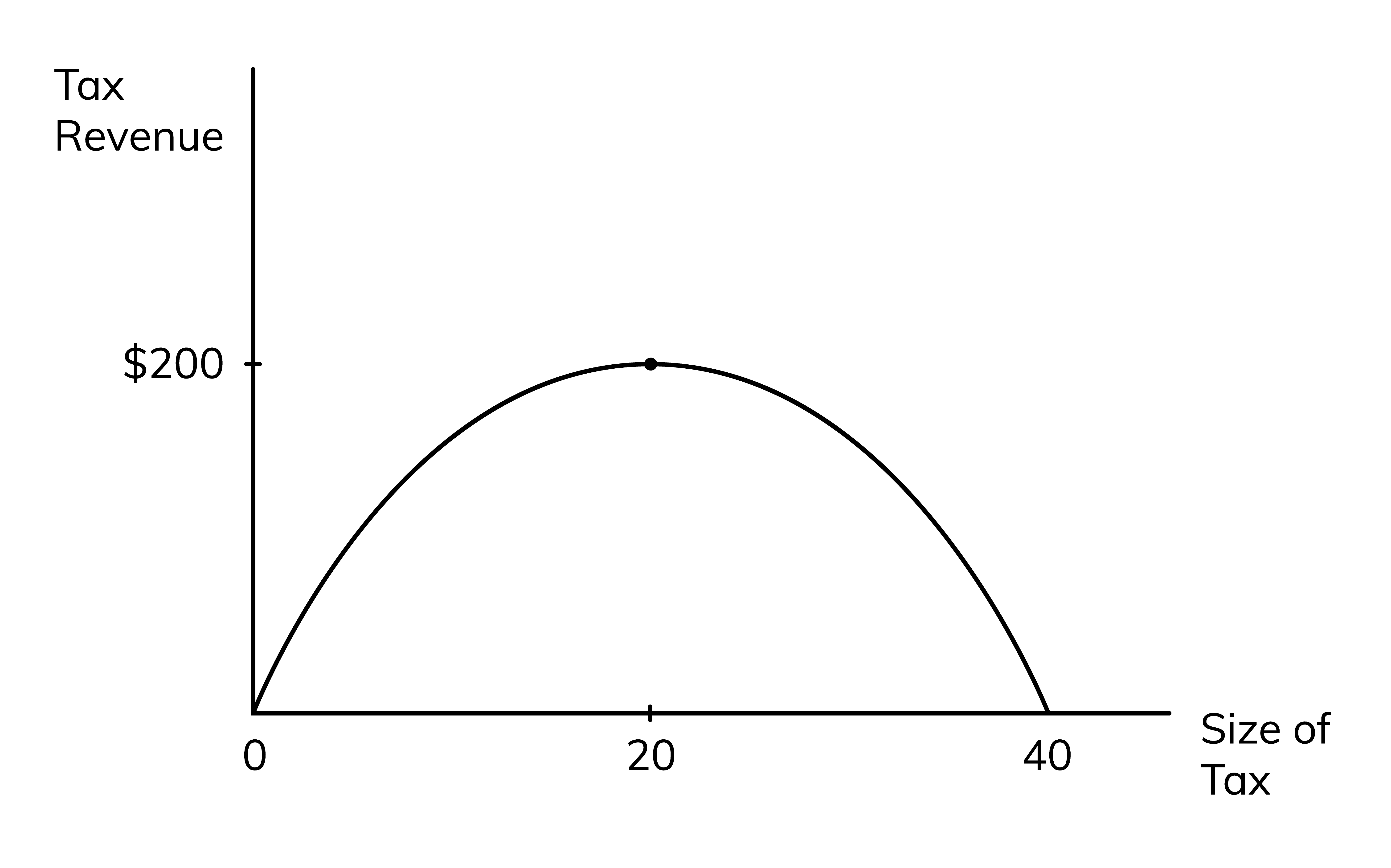
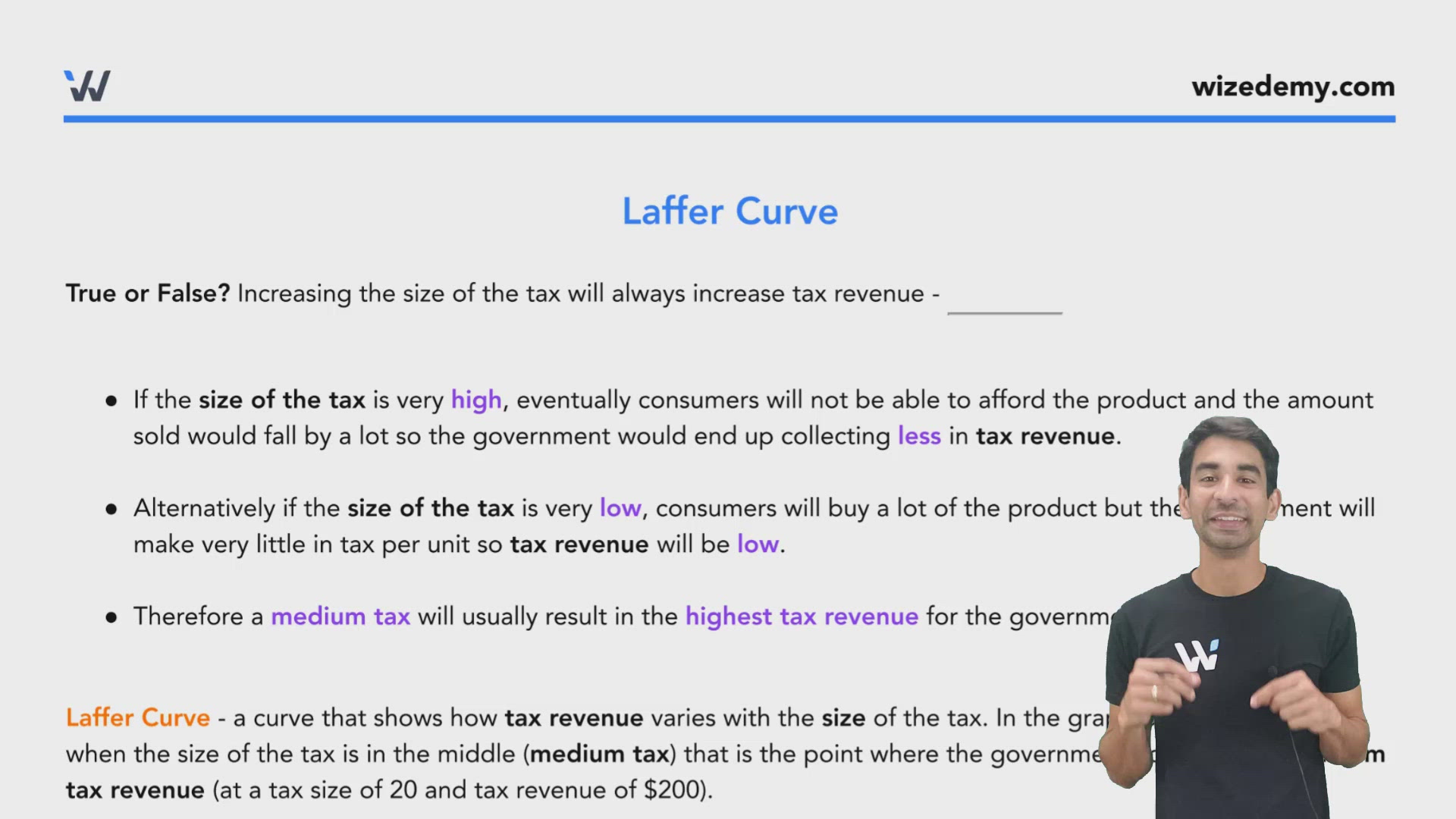
Laffer Curve
True or False? Increasing the size of the tax will always increase tax revenue -
False
- If the size of the tax is very high, eventually consumers will not be able to afford the product and the amount sold would fall by a lot so the government would end up collecting less in tax revenue.
- Alternatively if the size of the tax is very low, consumers will buy a lot of the product but the government will make very little in tax per unit so tax revenue will be low.
- Therefore a medium tax will usually result in the highest tax revenue for the government.
Laffer Curve - a curve that shows how tax revenue varies with the size of the tax. In the graph below we can see when the size of the tax is in the middle (medium tax) that is the point where the government collects the maximum tax revenue (at a tax size of 20 and tax revenue of $200).