Popular Courses
ECON 201
Concordia University
ECONOMIC 1021A/B
Western University
Microeconomics
University Study Guides
ECON 1B03
McMaster University
ECON*1050
University of Guelph
ECON 101
University of Alberta
Microeconomics
General Course
ECO101H1
University of Toronto
Microeconomics
University Study Guides
ECON 208
McGill University
ECON 101
University of Waterloo
ECN 104
Toronto Metropolitan University
ECON 110A
Queen's University
ECO 1104
University of Ottawa
AP/ECON 1000 3.00
York University
ECON 1101
Dalhousie University
ECON 111
Queen's University
ECON 103
Simon Fraser University
ECON-1100
University of Windsor
MET EC 101
Boston University

0:00 / 0:00
Paradox of Value
The Paradox of Value tells us that prices for goods are based on marginal utility rather than total utility.
Example: Water gives us more total utility than diamonds (we need water to live), yet we are willing to pay a lot more for diamonds. This is because diamonds offer us a higher marginal utility (since there are very few diamonds in the world).
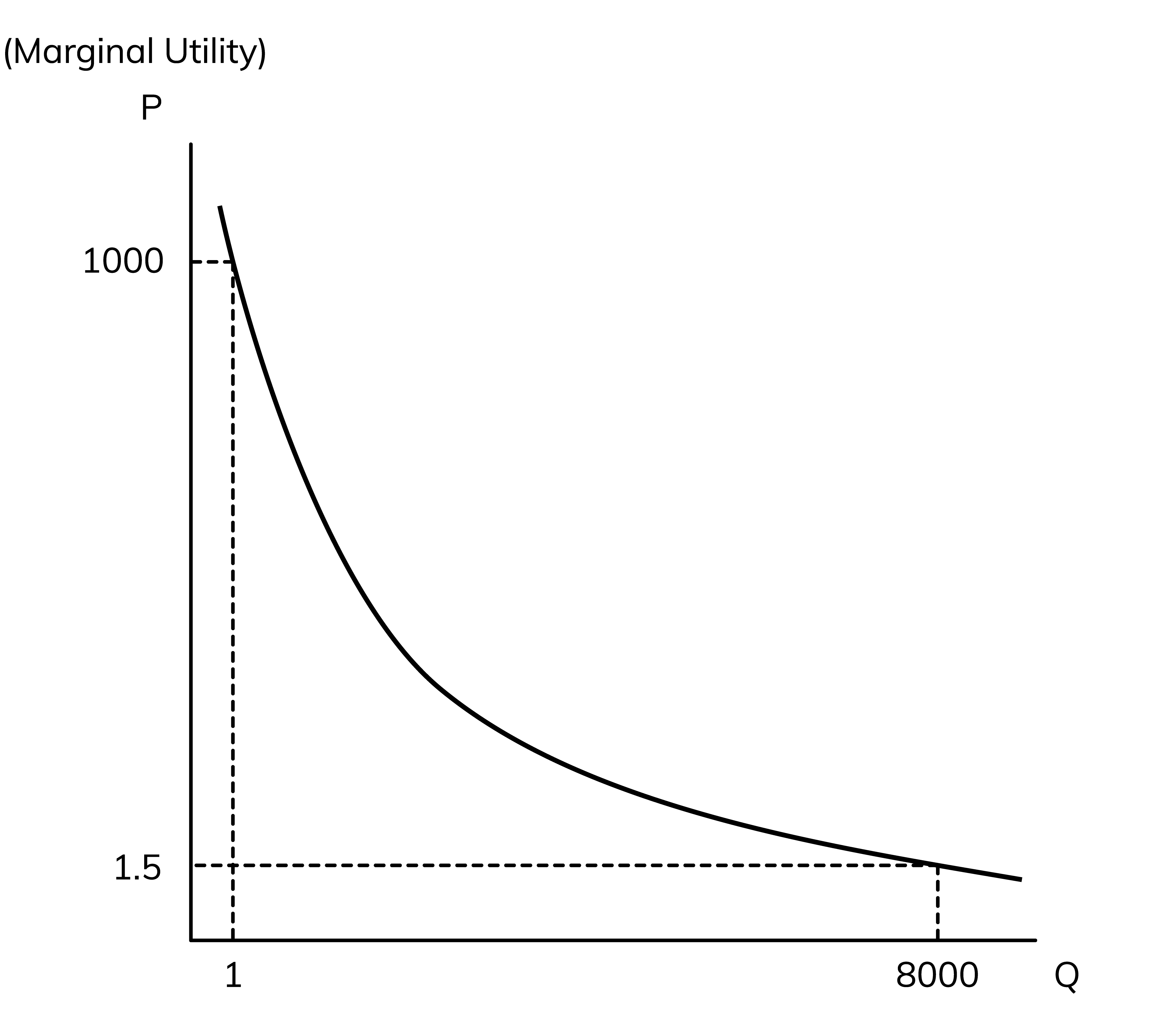
- In the diagram above if you have consumed 8,000 bottles of water in your life, the marginal utility from the last bottle of water will be1.5which is low so you will be willing to pay a low price for a bottle of water.
- If you have no diamonds and you buy your first diamond ever, it will give you a marginal utility of1000which is high so you will be willing to pay a high price for that first diamond.
- This helps explain why the marginal utility curve looks the same as the demand curve. As the marginal utility falls, you are willing to pay a lower price for the good.
Practice: Paradox of Value
The paradox of value tells us that: