Popular Courses
ECON 203
Concordia University
ECON 203
Concordia University
Macroeconomics
University Study Guides
AP Macroeconomics Exam Prep Course
AP Exam Prep
ECONOMIC 1022A/B
Western University
Macroeconomics
General Course
ECON 102
University of British Columbia
ECON*1100
University of Guelph
Macroeconomics
University Study Guides
ECON 203
University of Calgary
ECON 102
University of Alberta
ECO102H1
University of Toronto
ECO 1102
University of Ottawa
ECON 209
McGill University
ECON 1BB3
McMaster University
COMM 171
Queen's University
ECON 112
Queen's University
AP/ECON 1010 3.00
York University
ECON 295
McGill University
ECON 110
Queen's University
0:00 / 0:00
Aggregate Demand
The aggregate demand is the total demand for all the goods and services provided in the economy.
Why Does the Aggregate-Demand (AD) Curve Slope Downward?
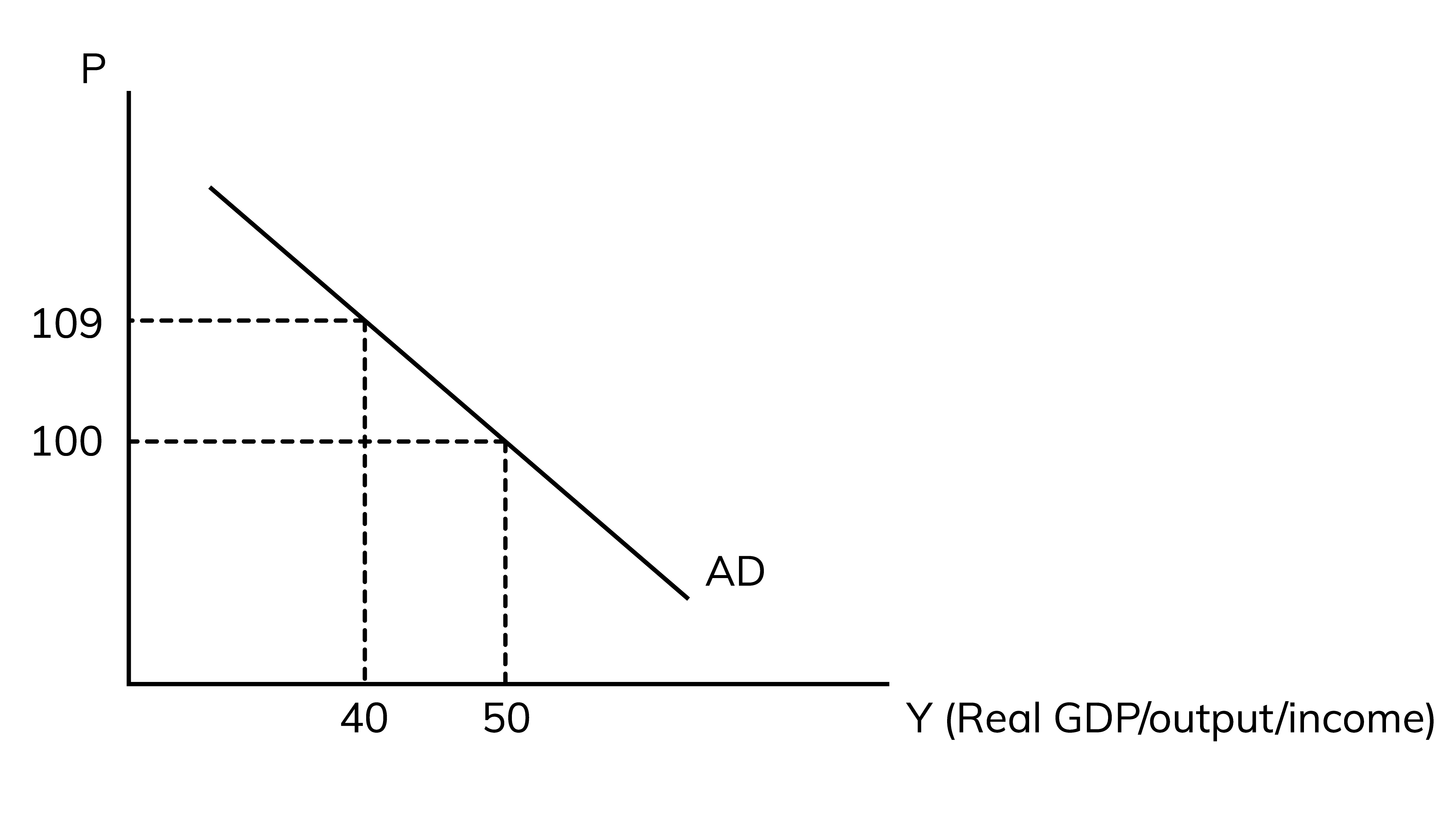
1. The Wealth Effect: A higher price level
decreases
real wealth, which causes a decrease
in consumption and AD. 2. The Interest Rate Effect: A higher price level
increases
the interest rate, which decreases
spending on investment and AD.3. The Real Exchange-Rate Effect: This is also called the substitution effect or the foreign trade effect. A higher price level causes the real exchange rate to
appreciate
, which decreases
net exports and AD. All three of these factors lead to a movement along the AD curve.
Shifts in AD
- Shifts Arising from Changes in Consumption: An event that makes consumers spend more at a given price level (a tax cut or a stock market boom) shifts AD to theright.
- Shifts Arising from Changes in Investment: An event that makes firms invest more at a given price level (optimism about the future or a fall in interest rates) shifts AD to theright
- Shifts Arising from Changes in Government Purchases: An increase in government purchases of goods and services (greater spending on defence or highway construction) shifts AD to theright.
- Shifts Arising from Changes in Net Exports: An event that raises spending on net exports at a given price level (a boom experienced by a major trading partner) shifts AD to theright.