Wize University Calculus 1 Textbook > Applications of Differentiation
Intervals of Increase and Decrease
Popular Courses
CALCULUS 1000A/B
Western University
Calculus 1
University Study Guides
AP Calculus (AB) Exam Prep Course
AP Exam Prep
MATH 209
Concordia University
MATH 100A
University of British Columbia
MATH 100C
University of British Columbia
MATH 1LS3
McMaster University
MATH 249
University of Calgary
MATH 265
University of Calgary
Calculus 1
General Course
MATH 140
McGill University
MAT135H1
University of Toronto
MATH*1080
University of Guelph
MATH 134
University of Alberta
MATH 154
University of Alberta
Calculus 1
University Study Guides
MAT 1320
University of Ottawa
MATH 100
University of Alberta
MATH 100B
University of British Columbia
MATH 203
Concordia University

0:00 / 0:00
Intervals of Increase and Decrease
If a function has a positively sloped tangent line at a certain point, the function must be going up. Thus, the derivative tells us where functions are increasing and decreasing.
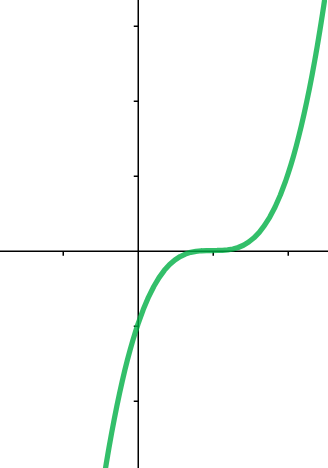
Intervals of Increase
A function is increasing on an interval if when , then , for every and in that interval.
A function is increasing if on that interval.
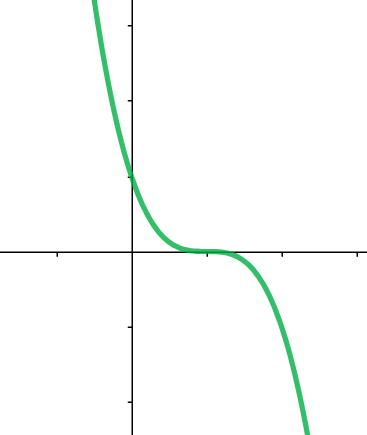
Intervals of Decrease
A function is decreasing on an interval if when , then , for every and in that interval.
A function is decreasing if on that interval.
0:00 / 0:00
Example: Intervals of Increase and Decrease
Find the intervals in which the function is increasing or decreasing.
The derivative is
Find where or is undefined:
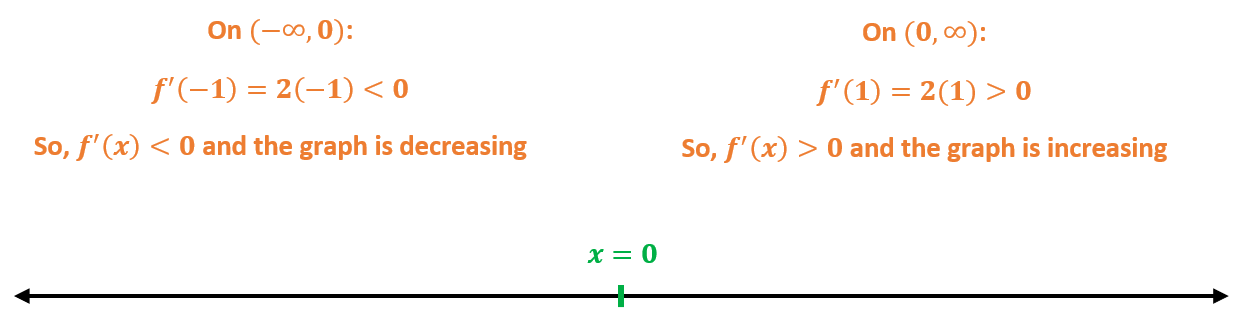
Therefore, is decreasing on the interval and increasing on the interval
Find the intervals in which the function is increasing.