Popular Courses
MCAT
General Course
PHYSICS 1201A/B
Western University
Intro to Physics
University Study Guides
PHYSICS 1D03
McMaster University
AP Physics C: Mechanics Exam Prep Course
AP Exam Prep
Physics
General Course
PHYS 115
Queen's University
PHYS 211
University of Calgary
PHYSICS 1401A/B
Western University
PCS 211
Toronto Metropolitan University
PHYS 204
Concordia University
PHYS*1300
University of Guelph
Intro to Physics
University Study Guides
PHYS*1080
University of Guelph
PHY 1321
University of Ottawa
PHYS 131
McGill University
APSC 111
Queen's University
PHYS 102A
University of Victoria
PHYS 111
University of Waterloo
PCS 120
Toronto Metropolitan University

0:00 / 0:00
Elastic Collision
In a perfectly elastic collision, two objects completely bounce off each other (e.g. billiard balls).
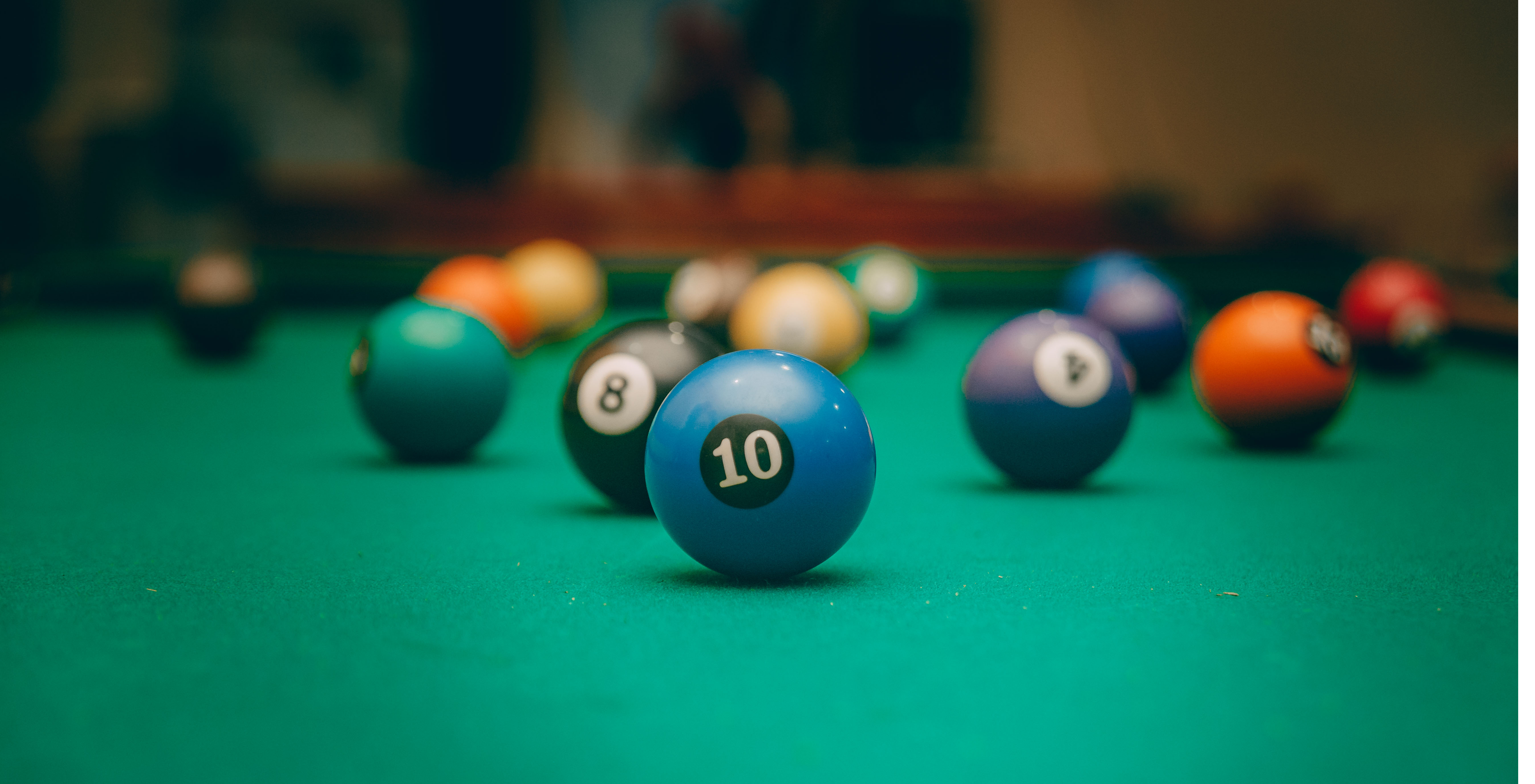
We assume there is no loss of energy in this type of collision because there is no deformation.
Wize Concept
During this collision, total momentum and total kinetic energy of the two objects are conserved, from before the collision to after the collision.
Conservation of kinetic energy:
Conservation of total momentum:
0:00 / 0:00
Elastic Collision with One Object Initially at Rest
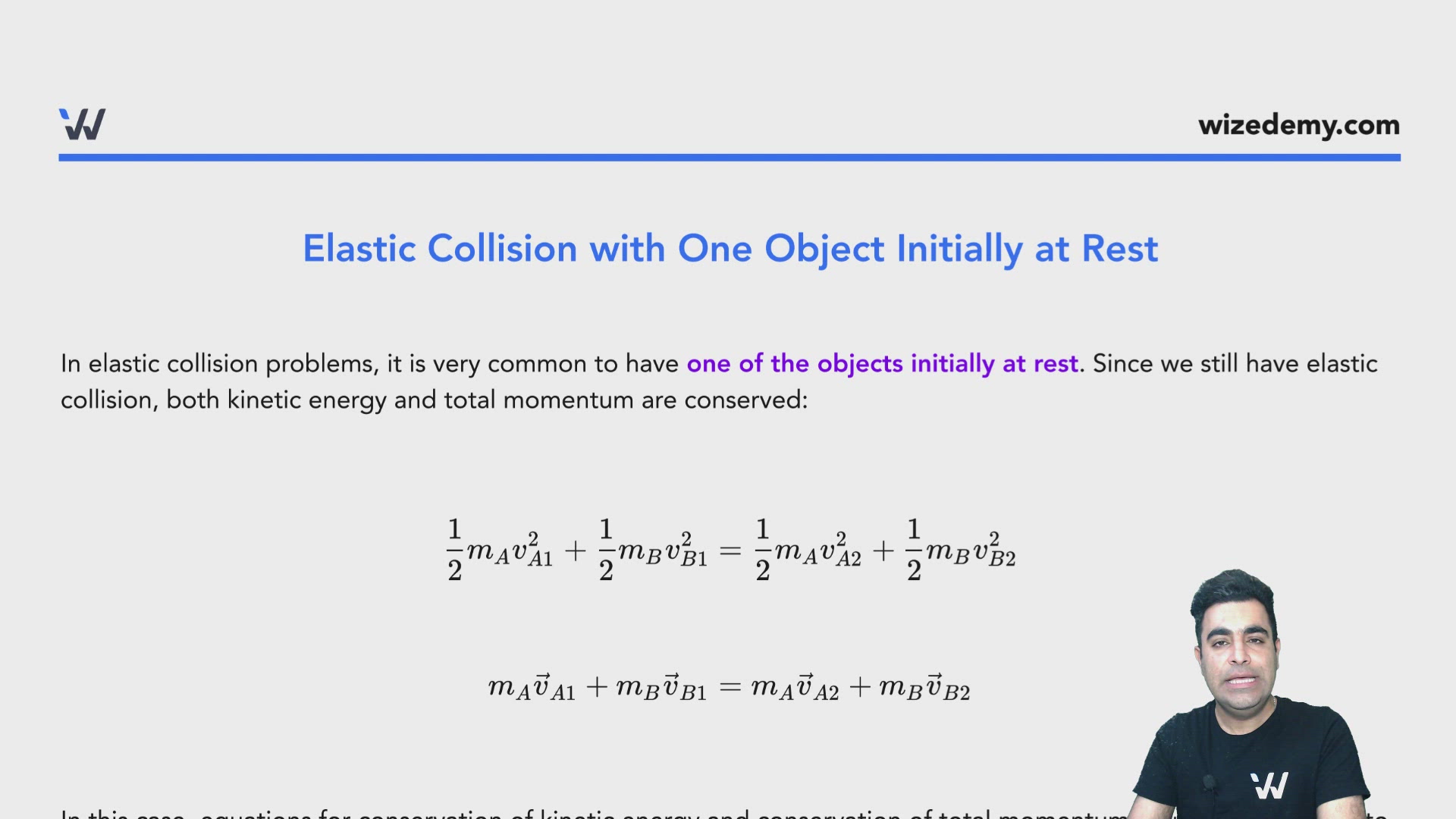
In elastic collision problems, it is very common to have one of the objects initially at rest. Since we still have elastic collision, both kinetic energy and total momentum are conserved:
In this case, equations for conservation of kinetic energy and conservation of total momentum could be combined to find the nice equation for the velocity of the moving object after collision:
where we have assumed object B is the one initially at rest.
0:00 / 0:00
Inelastic Collision
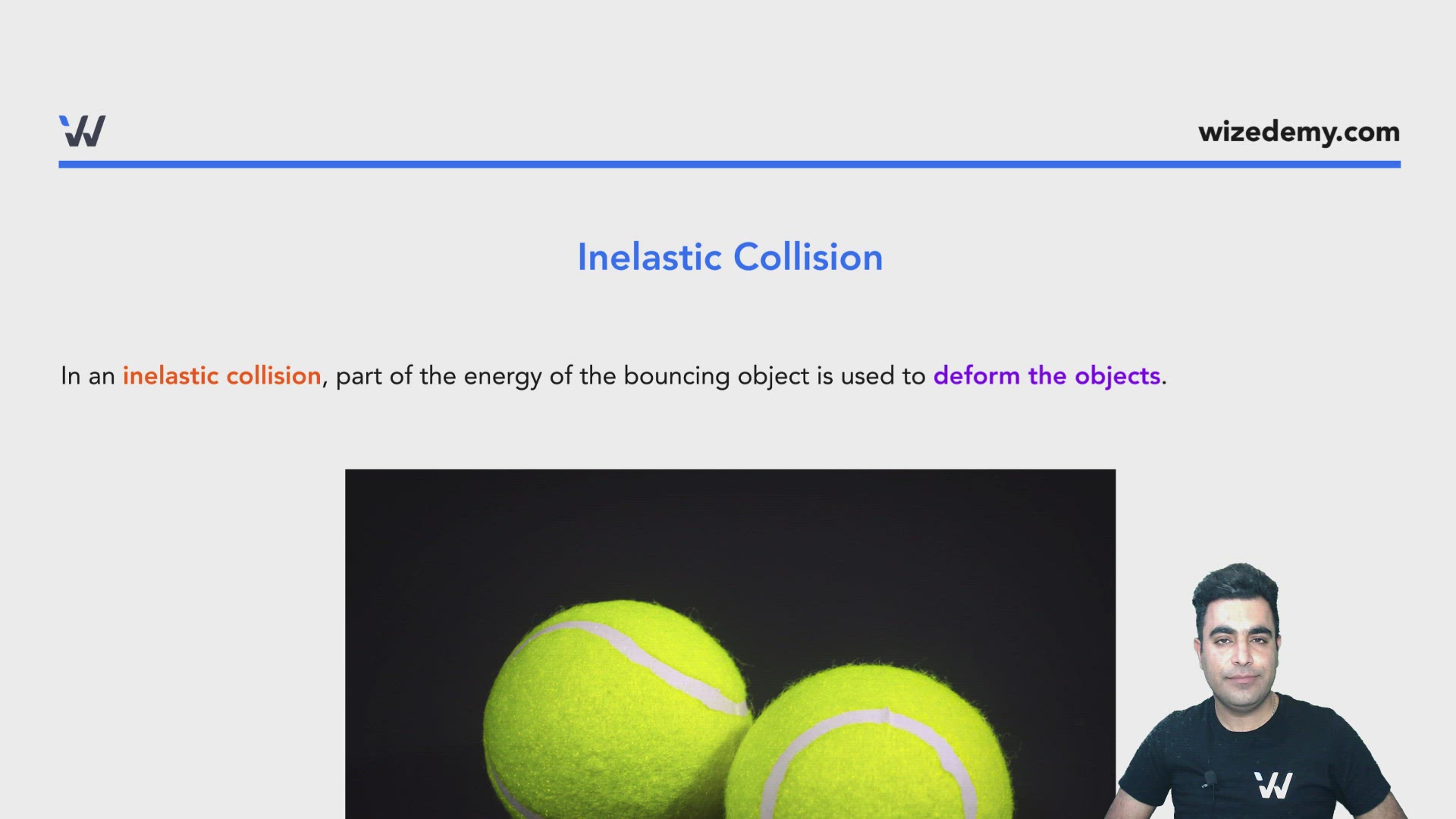
In an inelastic collision, part of the energy of the bouncing object is used to deform the objects.

In this type of collision, the kinetic energy of the problem is not conserved because part of the energy is lost due to deformation. But still the total momentum is conserved.
The example of this type of collision could be collision of two spongy balls.
Wize Concept
During this collision, total momentum of the two objects is conserved from before the collision to after the collision, but the kinetic energy is not conserved .
For kinetic energy:
Conservation of total momentum:
0:00 / 0:00
Perfectly Inelastic Collision
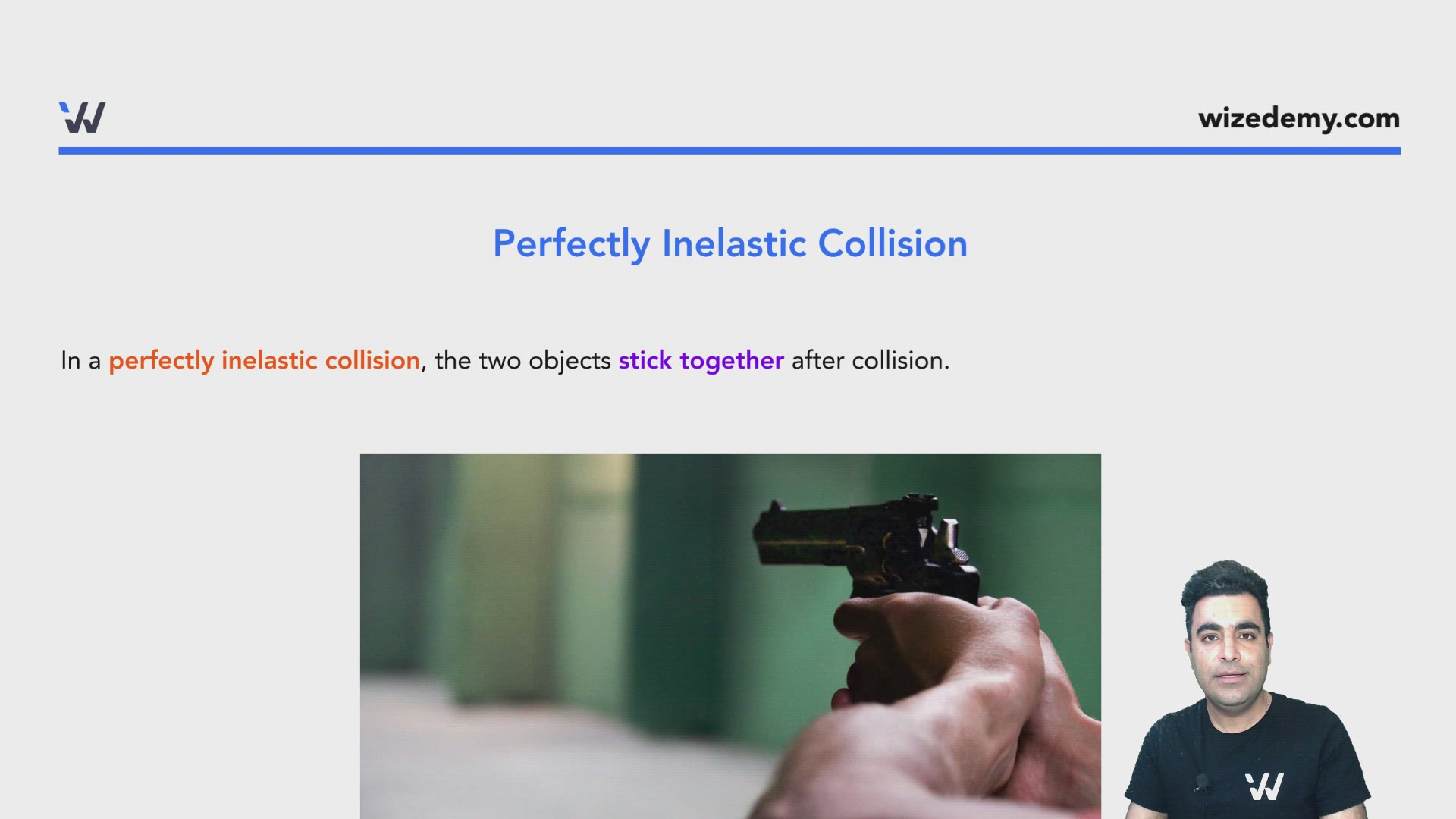
In a perfectly inelastic collision, the two objects stick together after collision.
In this type of collision, the kinetic energy of the problem is not conserved because part of the energy is lost due to deformation. But still the total momentum is conserved.
The example of this type of collision could be a bullet hitting a sand bucket.
Wize Concept
During this collision, total momentum of the two objects is conserved from before the collision to after the collision, but the kinetic energy is not conserved
For kinetic energy:
Conservation of total momentum:
Watch Out!
The difference between this type of collision and inelastic collision is that here, two object get stuck after collision, so they move together, hence, they have the same velocity after collision.
0:00 / 0:00
Example: Change in the Kinetic Energy in an Inelastic Collision
A 3000 kg truck traveling at 50 km/hr strikes a stationary 1000 kg car, locking the two vehicles together. (a) What is the final velocity of the two vehicles? (b) How much of the initial kinetic energy is lost to the collision?
Solution:
Part a)
This is a perfectly inelastic collision, hence, the final velocity will be:
The initial velocity of the car () is zero. Hence, the final velocity is:
Part b)
The initial kinetic energy of the system, is only the one for the truck:
The final kinetic energy is the sum of kinetic energy for both the truck and the car:
The loss in kinetic energy is then:
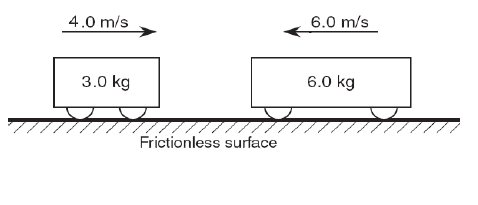
Two carts on a friction less surface collide and stick to each other. What is the velocity of the two carts after collision?
A cart with mass 340 g moving on a frictionless linear air track at an initial speed of 1.2 m/s undergoes an elastic collision with an initially stationary cart of unknown mass. After the collision, the first cart continues in its original direction at 0.66 m/s.
What is the mass of the second cart?