Wize High School Grade 11 Biology Textbook > Viruses, Archaea & Bacteria [Under construction]
Prokaryotic Growth & Reproduction
0:00 / 0:00
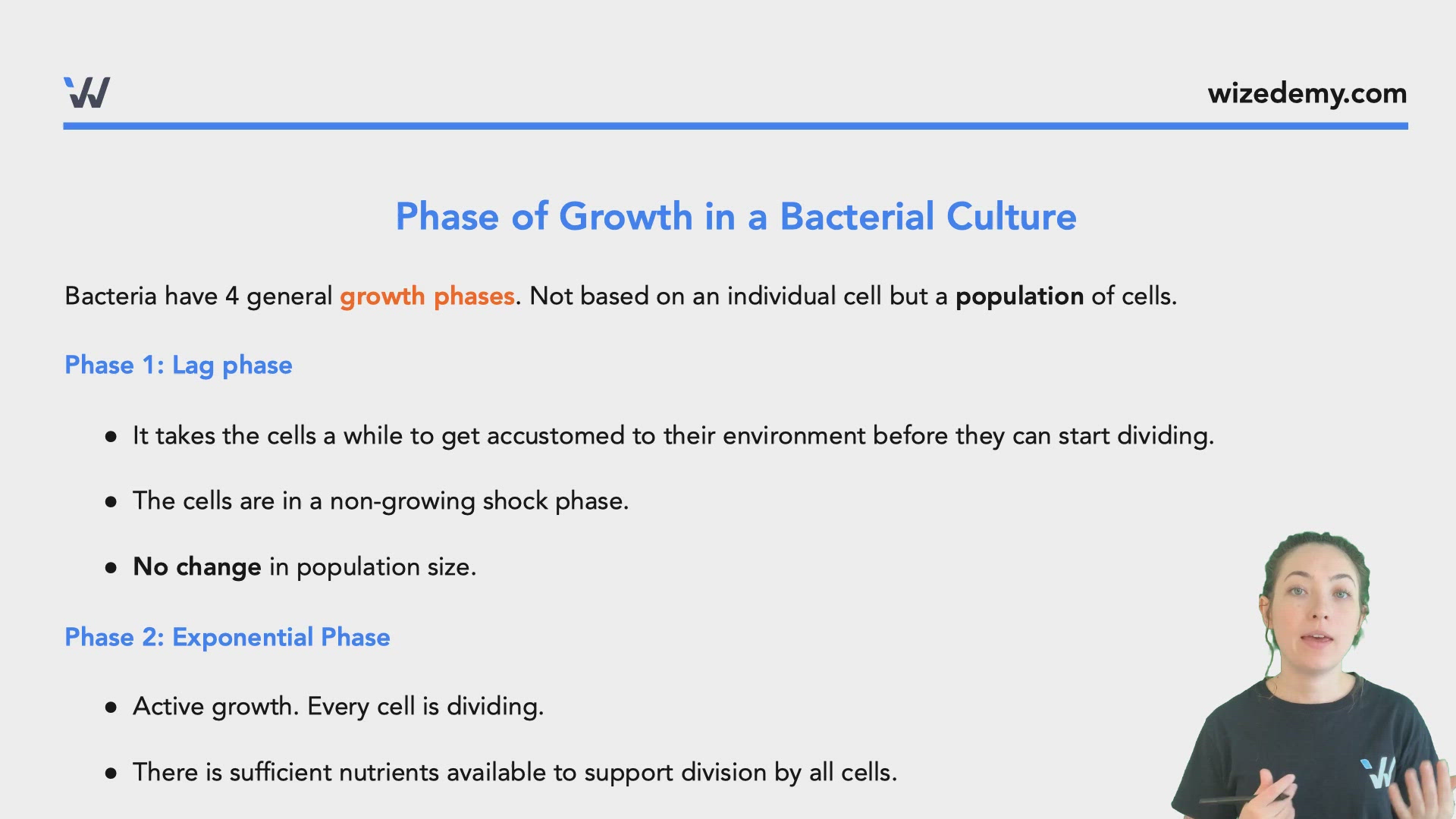
Phase of Growth in a Bacterial Culture
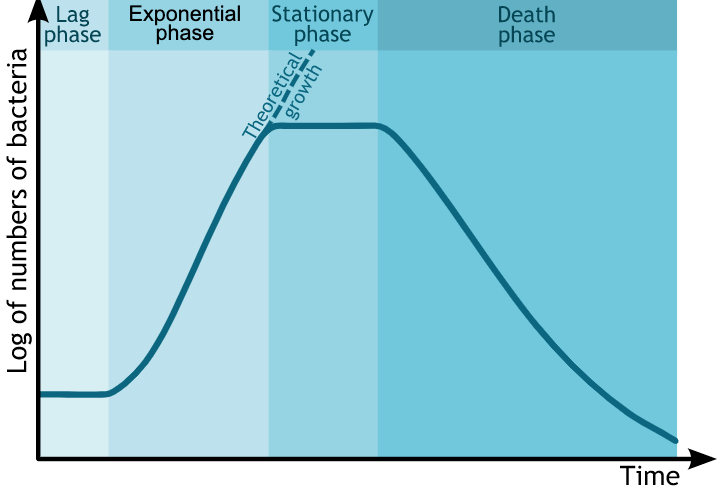
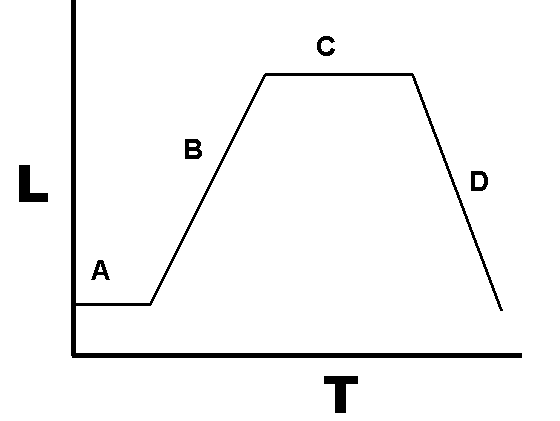
Bacteria have 4 general growth phases. Not based on an individual cell but a population of cells.
Phase 1: Lag phase
- It takes the cells a while to get accustomed to their environment before they can start dividing.
- The cells are in a non-growing shock phase.
- No change in population size.
Phase 2: Exponential Phase
- Active growth. Every cell is dividing.
- There is sufficient nutrients available to support division by all cells.
- Number of dividing cells outnumber the dying cells significantly.
- Population size increases exponentially.
Phase 3: Stationary phase
- Nutrients are just enough to support some growth.
- Dividing cells are equal to dying cells.
- Population size is not changing.
Phase 4: Death phase
- Nutrients are depleted. Waste product accumulation becomes toxic.
- More dying cells than newly dividing cells.
- Population is declining.
0:00 / 0:00
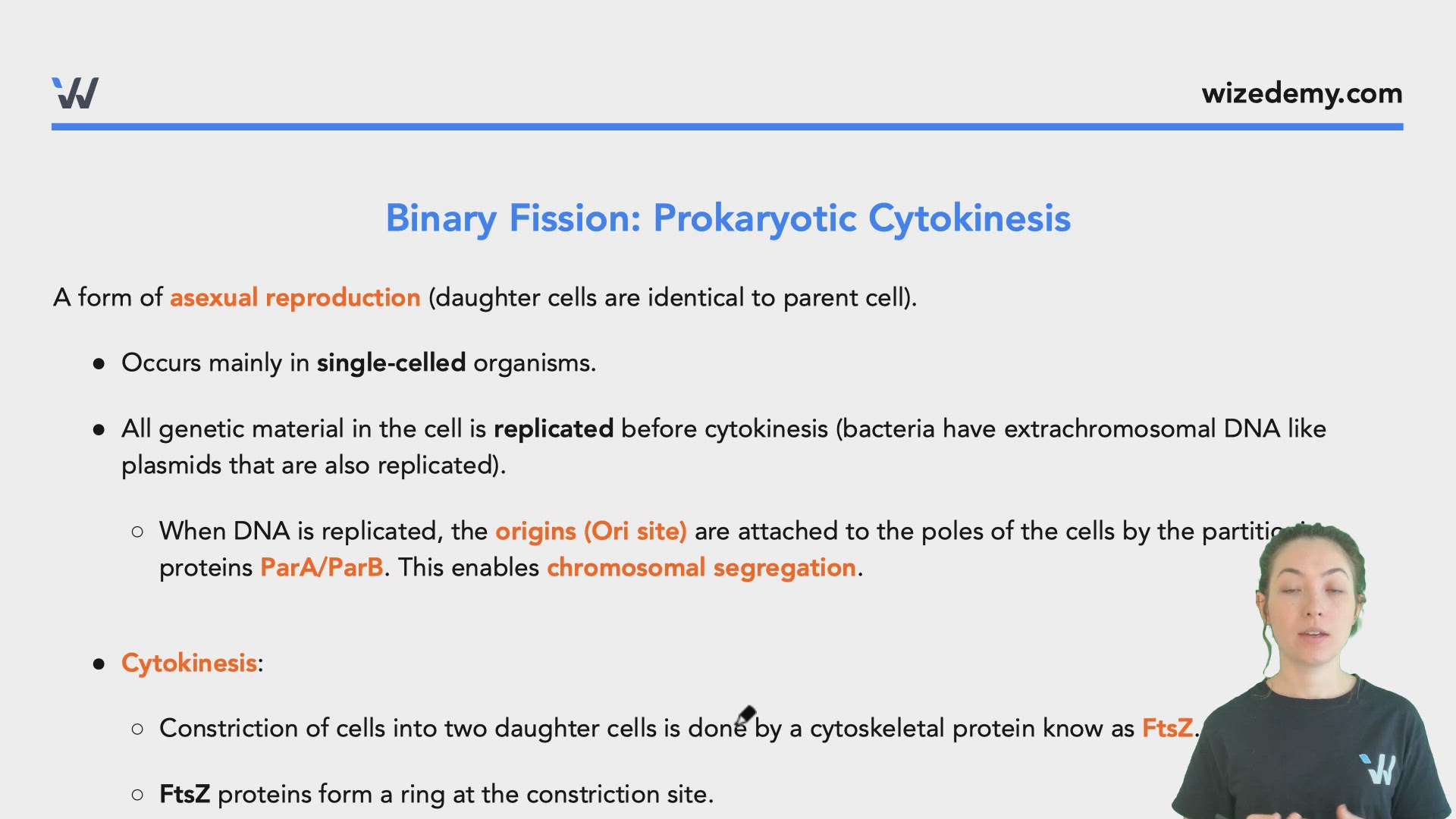
Binary Fission: Prokaryotic Cytokinesis
A form of asexual reproduction (daughter cells are identical to parent cell).
- Occurs mainly in single-celled organisms.
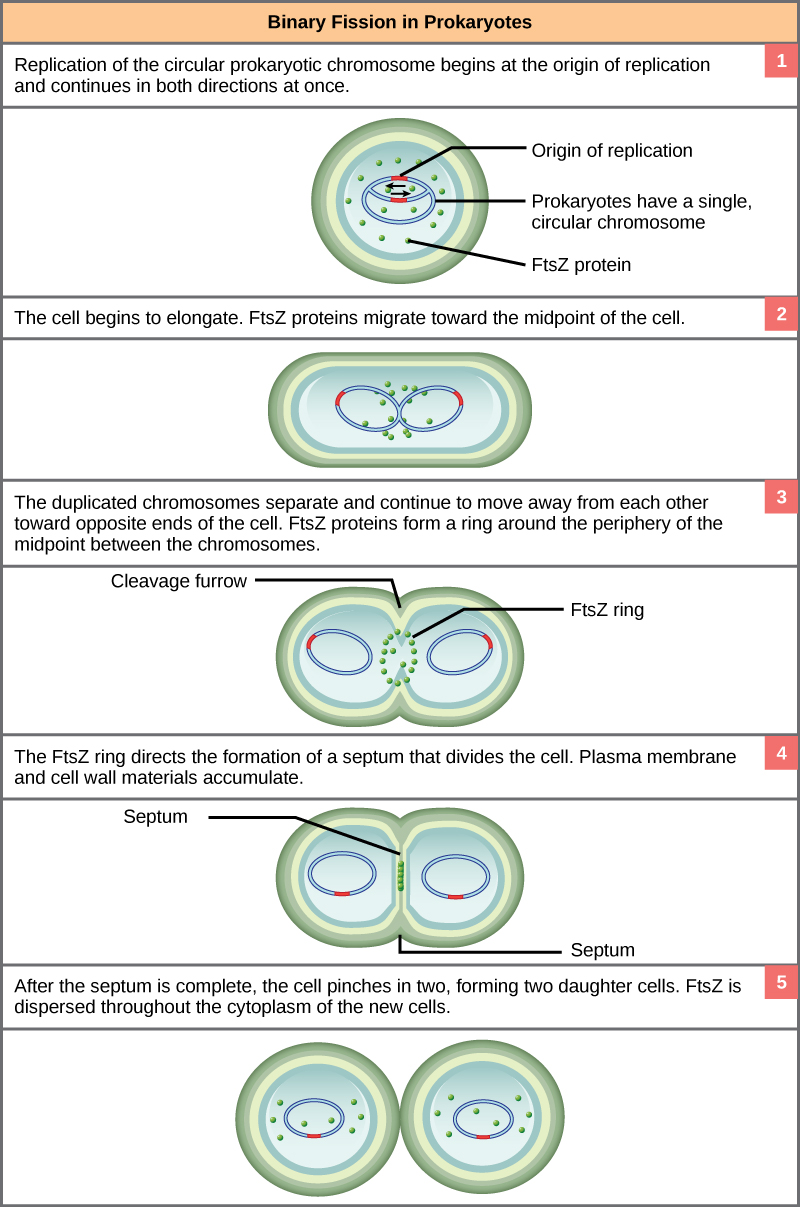
- All genetic material in the cell is replicated before cytokinesis (bacteria have extrachromosomal DNA like plasmids that are also replicated).
- When DNA is replicated, the origins (Ori site) are attached to the poles of the cells by the partitioning proteins ParA/ParB. This enables chromosomal segregation.
- Cytokinesis:
- Constriction of cells into two daughter cells is done by a cytoskeletal protein know as FtsZ.
- FtsZ proteins form a ring at the constriction site.
- The ring contracts to pinch the two cells apart.
Practice: Binary Fission
Which of the following is NOT true about binary fission?
Practice: Bacterial Growth Curve
Label the bacterial growth curve: (one word each)
Hint for L: Number of _________________

Mark Yourself Question
- Grab a piece of paper and try this problem yourself.
- When you're done, check the "I have answered this question" box below.
- View the solution and report whether you got it right or wrong.