Wize University Biology Textbook > Invertebrates (Part 2: Molting)
Nematodes (Roundworms)
Popular Courses
Biology
General Course
General Biology
University Study Guides
DAT
General Course
Grade 11 Biology
Ontario High School
Grade 11 Biology
Canada High School
General Biology
University Study Guides
Biology 20
Alberta High School
BIOL 111
McGill University
BIOL 1201
Western University
Life Sciences 11
British Columbia High School
BIOL 1P91
Brock University
BLG 144
Toronto Metropolitan University
BIOL 1020
University of Manitoba
BIOL 331
University of Calgary
BIOA01H3
University of Toronto
BISC 102
Simon Fraser University
BI110
Wilfrid Laurier University
BIO220H1
University of Toronto
BIOL 201
University of Alberta
BIO 115
Rutgers University
0:00 / 0:00
Phylum Nematoda (Roundworms)
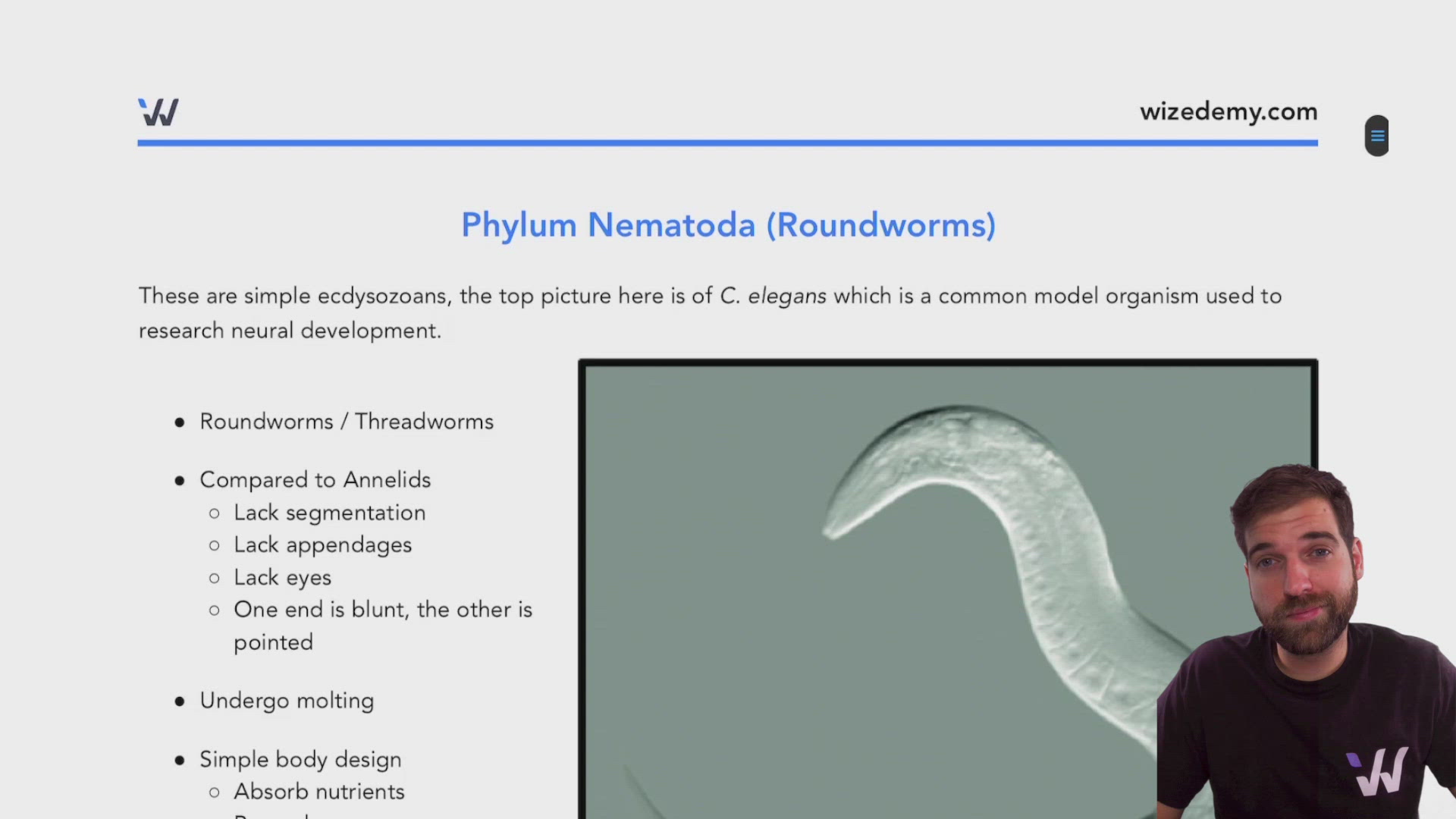
These are simple ecdysozoans, the top picture here is of C. elegans which is a common model organism used to research neural development.

- Roundworms / Threadworms
- Compared to Annelids
- Lack segmentation
- Lack appendages
- Lack eyes
- One end is blunt, the other is pointed
- Undergo molting
- Simple body design
- Absorb nutrients
- Reproduce
- Pseudocoelomate
- Spiral cleavage
- Some hermaphroditic
- Direct developers
- Eutelic: organism grows when cells increase in size, not by adding new cells
- Born with set number of cells
- Removing a cell in embryo will permanently remove the cell
- Movement
- Longitudinal: side to side
- Free living
- In organic substrates
- Soil, freshwater, marine
- Some are parasitic, some are important in medicine
Top: C. elegans
Bottom: Soy Bean Cyst Nematode with Egg
Practice: Nematodes
Which of the following features of Nematodes differentiates them from Annelids? (select all that apply)