Wize University Biology Textbook > Invertebrates (Part 2: Molting)
Arthropoda: Crustaceans (Crabs and Lobsters)
Popular Courses
Biology
General Course
General Biology
University Study Guides
DAT
General Course
Grade 11 Biology
Ontario High School
Grade 11 Biology
Canada High School
General Biology
University Study Guides
BIOL 108
University of Alberta
Biology 20
Alberta High School
BIOL 111
McGill University
BIOL 1201
Western University
Life Sciences 11
British Columbia High School
BIOL 1P91
Brock University
BLG 144
Toronto Metropolitan University
BIOL 331
University of Calgary
BIOL 1020
University of Manitoba
BIOA01H3
University of Toronto
BISC 102
Simon Fraser University
BI110
Wilfrid Laurier University
BIO220H1
University of Toronto
BIOL 201
University of Alberta
0:00 / 0:00
Crustaceans
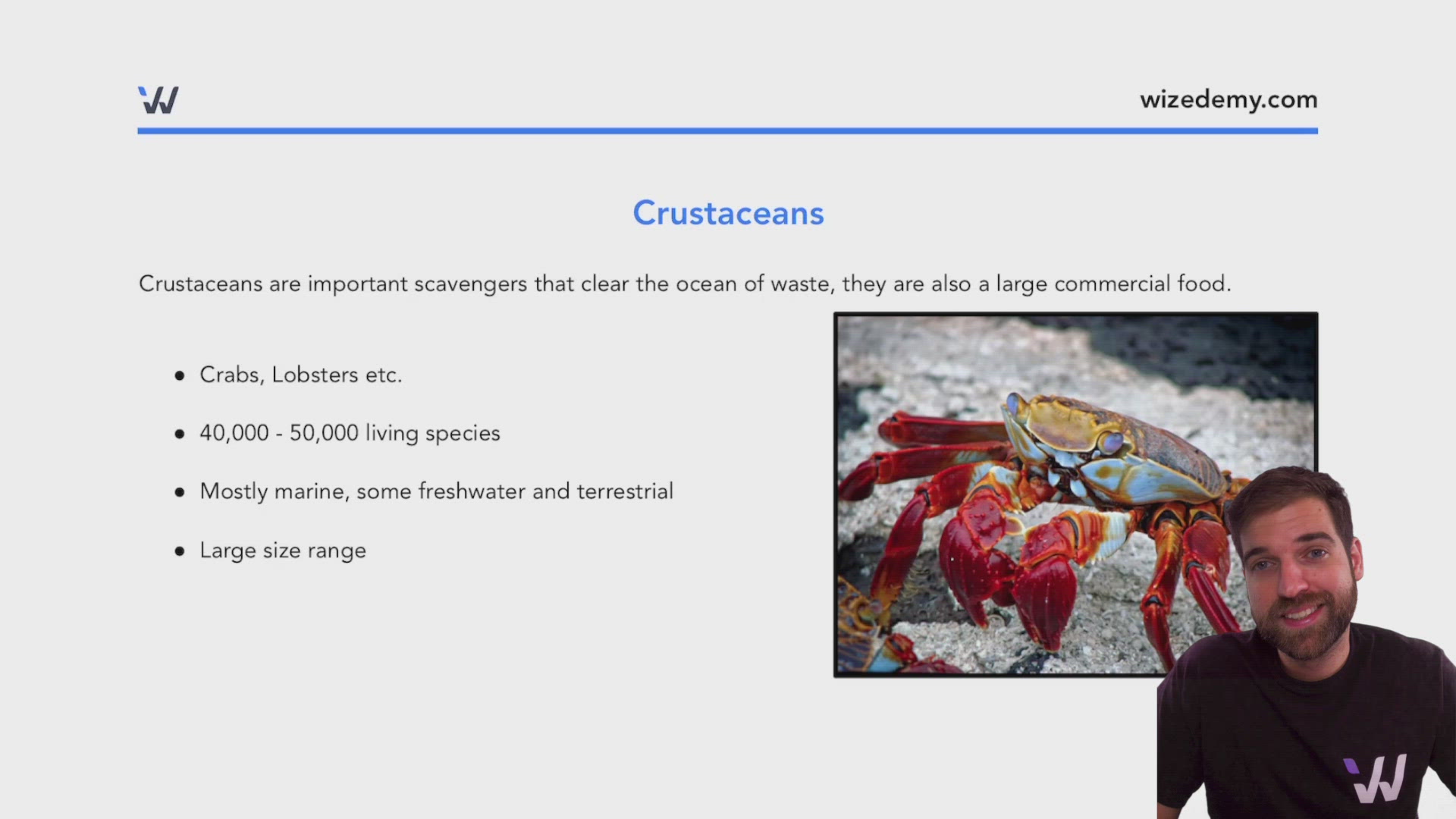
Crustaceans are important scavengers that clear the ocean of waste, they are also a large commercial food.
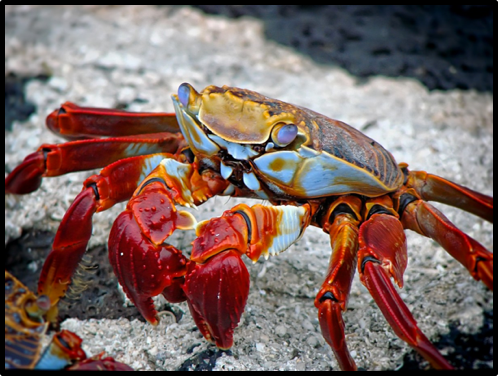
- Crabs, Lobsters etc.
- 40,000 - 50,000 living species
- Mostly marine, some freshwater and terrestrial
- Large size range

Morphology
- 2 pairs of antennae
- Compound eyes on stalks
- Multiple lenses in each eye
- Cephalothorax
- Carapace: shielded cover that protects dorsal and lateral sides of body
- sometimes protects abdomen too
- Mandibles: primary mouthparts
- Single segment for biting and chewing
- 2 or more appendages help guide food to mouth
- Limbs
- Thoracic limbs: for locomotion
- Abdominal limbs: diverse use
- Filter feeding
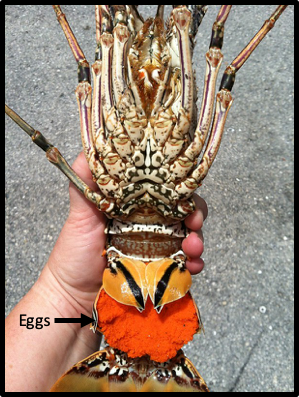
- Holding eggs
- Exoskeleton
- Hardened with calcium carbonate
- Gills
- For gas exchange
- Wide and flat, fluffy
- Highly vascularized
- Thin unsclerotized cuticle
- Some terrestrial crustaceans use trachaea Example: Pillbugs
Crustacean Life Cycle
- Highly variable
- Direct and Indirect development
- Separate sexes
- Except for barnacles (hermaphroditic)
- Copluate to transfer sperm
- Females brood eggs until they hatch
Ecology and Importance
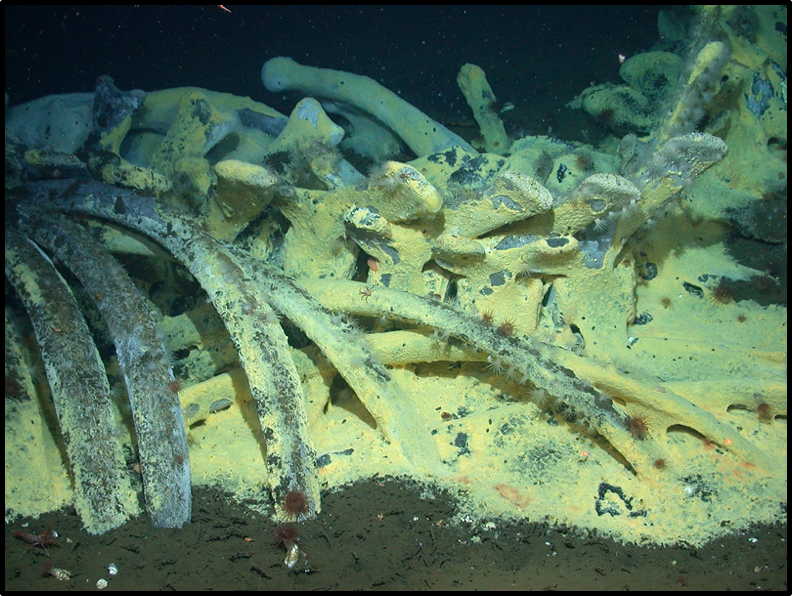
- Important detritivores, scavengers and predators
- Some scavenge dead plant and animal matter
- Some predatory
- Some are commensalists or parasites of verts
- Planktonic crustaceans feed large number of verts Examples: Whales and fish
- Some filter feed
- Motile Examples: fairy shrimp
- Sessile Examples: barnacles
Practice: Crustaceans
Which of the following are true about crustaceans? (select all that apply)
Practice: Crustaceans
Crustaceans ______________ to transfer sperm, then the female _________________ the eggs.