Wize University Biology Textbook > Invertebrates (Part 2: Molting)
Arthropoda: Hexapods (Insects)
Popular Courses
Biology
General Course
General Biology
University Study Guides
DAT
General Course
Grade 11 Biology
Ontario High School
Grade 11 Biology
Canada High School
General Biology
University Study Guides
BIOL 108
University of Alberta
Biology 20
Alberta High School
BIOL 111
McGill University
BIOL 1201
Western University
Life Sciences 11
British Columbia High School
BIOL 1P91
Brock University
BLG 144
Toronto Metropolitan University
BIOL 1020
University of Manitoba
BIOL 331
University of Calgary
BIOA01H3
University of Toronto
BISC 102
Simon Fraser University
BI110
Wilfrid Laurier University
BIO220H1
University of Toronto
BIOL 201
University of Alberta
0:00 / 0:00
Overview of Hexapods
This group contains insects which are the most specious of any animal taxa. Several key innovations have led to an explosive radiation on land.
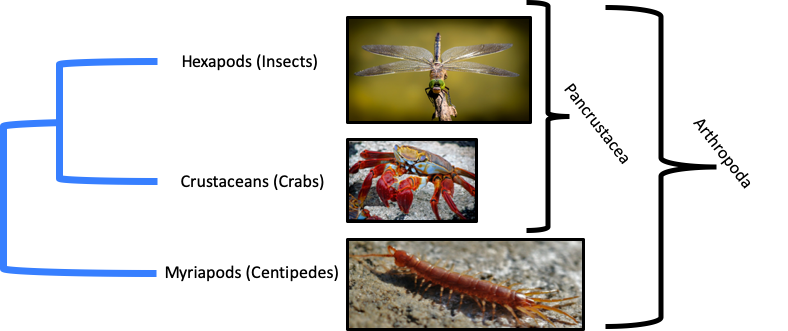
Evolutionary History
- Myriapoda is sister to Pancrustacea
- Pancrustacea contains Hexapods and Crustaceans
- Shared features
- 1 pair of antennae
- Mandibles
- Trachaea
Hexapods
- Insects, springtails etc.
- 6 legged arthropods
- Class Insecta
- Most diverse
- Most species of any animal group
Morphology
- Tagmatization: specialized body parts
- Division of labor
- Head - 1 pair of antennae
- Thorax - 3 pairs of jointed legs (sometimes wings)
- Abdomen - no appendages
Life Cycle
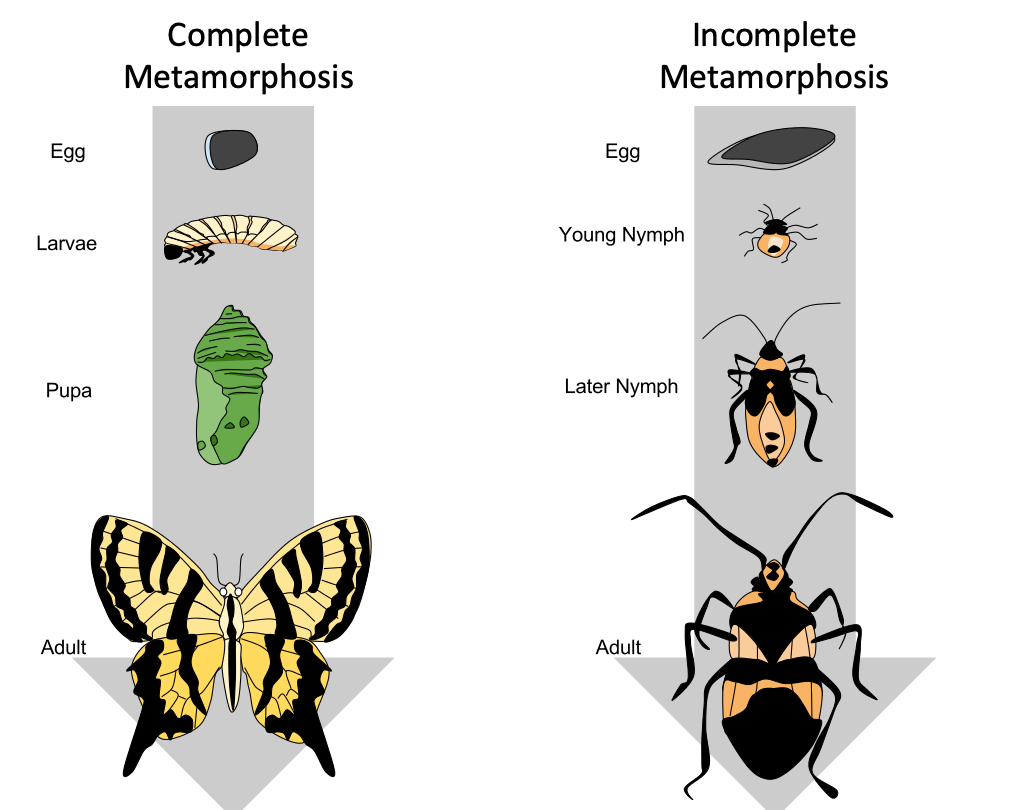
- Metamorphosis: transition of life stages / morphology
- Incomplete metamorphosis
- Juveniles may share some traits with adults
- Wings develop slowly over multiple molts Example: Grasshoppers
- Complete Metamorphosis
- Wings develop at one stage = pupa
- Pupa: stage with protective hardened shell
- Juvenile (larva) has different morphology than adult Examples: Caterpillar -> Butterfly
- Adults and juveniles don't compete over the same food
Molting
- Shed all ectodermally-derived cuticle
- Linings of foregut, hindgut and trachaea
- New cuticle is produced before the molt
- Animal swallows air / water to expand new skin
Reproduction
- Separate sexes (no hermaphrodites)
- Collembolans (springtails) and Apterogytes (silverfish) have indirect sperm transfer
- Leave spermatophore on substrate
- Spermatophore: Sperm package on a stalk
- All Pterogytes copulate
Ecology and Importance
- Important detritivores and decomposers
- Food for many animals
- Are predators, herbivores, vectors and parasites
- Economic impacts
- Forestry, agriculture and medicine
Practice: Hexapods
Which of the following features are present in hexapods? (select all that apply)
Practice: Hexapods
Fill in the blanks.
With ___________ metamorphosis juveniles look similar to adults, and in _________________ metamorphosis the wings develop in one step.
0:00 / 0:00
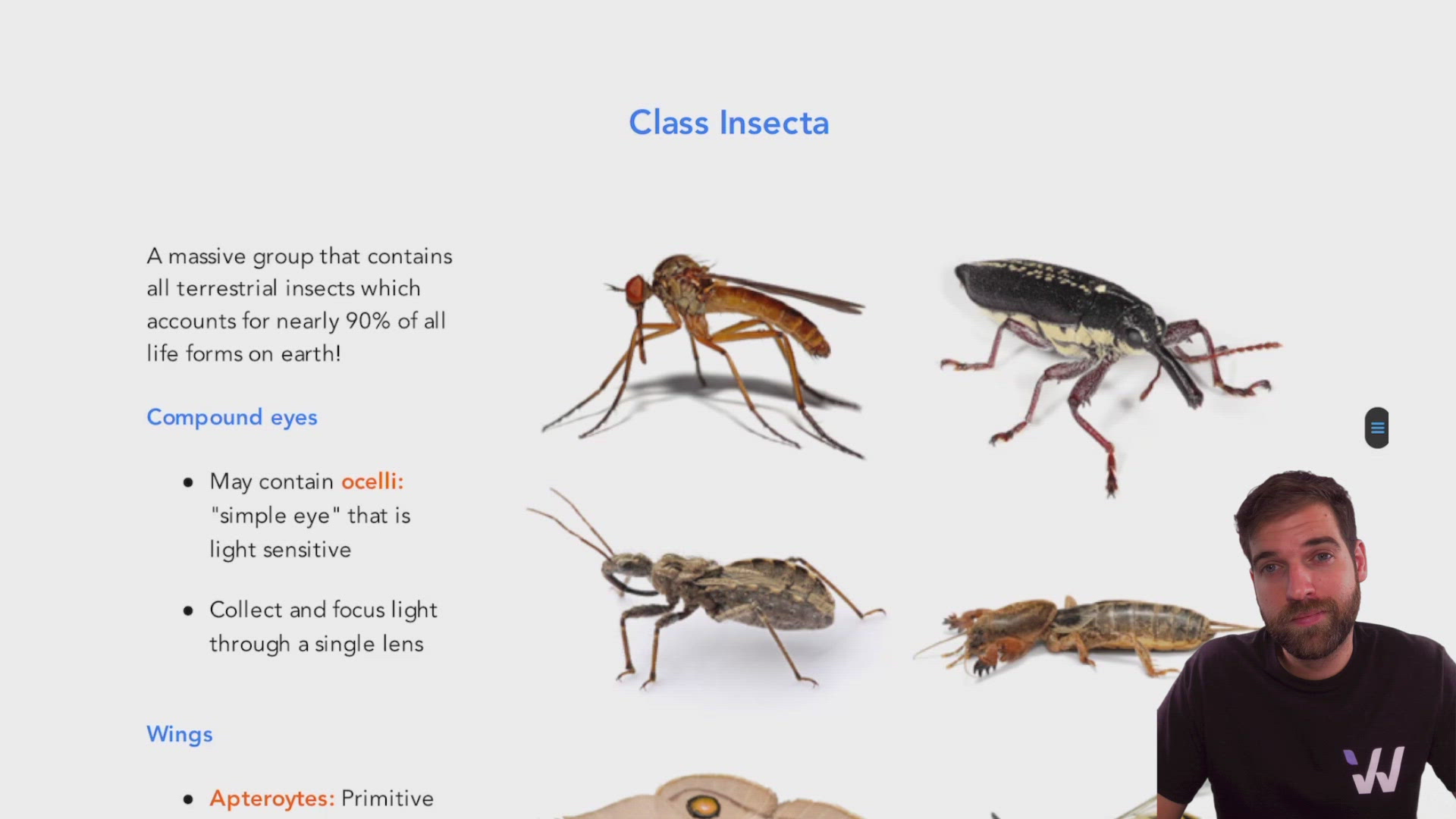
Class Insecta

A massive group that contains all terrestrial insects which accounts for nearly 90% of all life forms on earth!
Compound eyes
- May contain ocelli: "simple eye" that is light sensitive
- Collect and focus light through a single lens
Wings
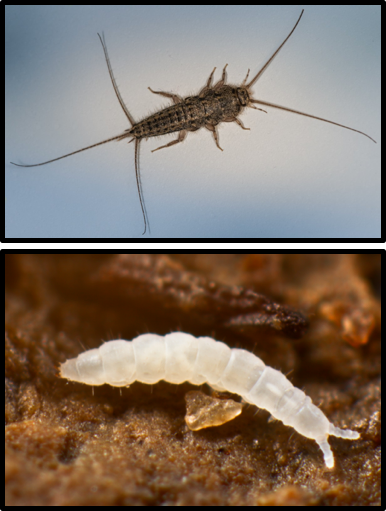
- Apteroytes: Primitive group that lacks wings Examples: Silverfish, springtails
- Most insects have wings as adults
- Wings evolved once and are a synapomorphy of the clade
- Some insects have secondarily lost their wings Examples: Lice, bed bugs, fleas
- Wings are not "appendages" they are extensions of the body
Beneficial Insects
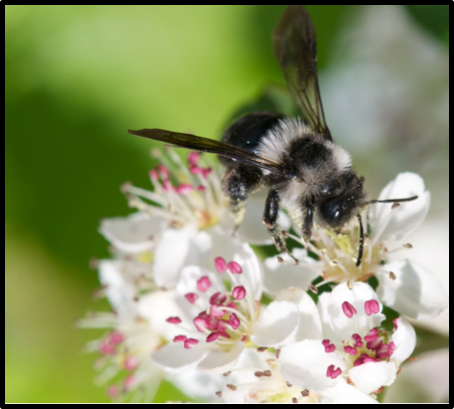
- Most fruit and veggies are pollinated by insects
- Commonly honey bees
- Biological control agents
- Predatory insects eat pest insects Examples: Ladybugs, lacewings, mantises
- Parasitoids of insects
Practice: Insecta
What is the term for the pair of segmented terminal appendages on insects?
Practice: Insecta
What are some of the human benefits of insects? (select all that apply)