Wize University Biology Textbook > Tetrapods (Four Limbs)
Amphibians (Frogs and Salamanders)
Popular Courses
Biology
General Course
General Biology
University Study Guides
DAT
General Course
Grade 11 Biology
Ontario High School
Grade 11 Biology
Canada High School
General Biology
University Study Guides
BIOL 108
University of Alberta
Biology 20
Alberta High School
BIOL 111
McGill University
BIOL 1201
Western University
Life Sciences 11
British Columbia High School
BIOL 1P91
Brock University
BLG 144
Toronto Metropolitan University
BIOL 1020
University of Manitoba
BIOL 331
University of Calgary
BIOA01H3
University of Toronto
BISC 102
Simon Fraser University
BI110
Wilfrid Laurier University
BIO220H1
University of Toronto
BIOL 201
University of Alberta
0:00 / 0:00
Amphibians
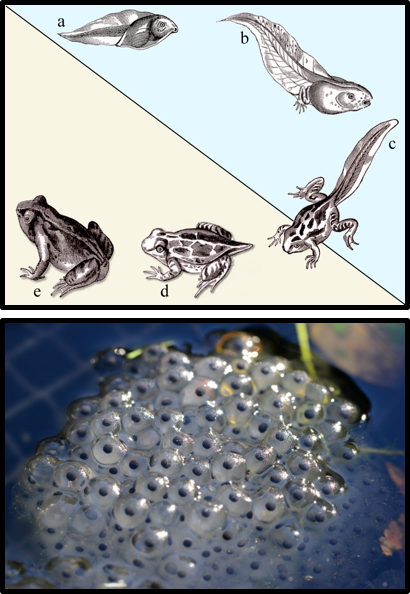
Overview of Amphibians
- Amphi = "both", Bios = "life"
- Have a biphasic lifestyle
- Larval stage
- Tadpole: Frogs
- Larvae: Salamanders
- Fully aquatic
- Lacks legs
- Metamorphosis
- Larvae develop legs, lungs, eardrums, digestive track
- Many have evolved to be direct developers
- Lost the aquatic larval stage
- Fertilization is mostly external
- Some females lay many eggs with little parental care
- Others lay few eggs with great parental care
- Complex social behaviors
- Vocalizations
- Territoriality
- Amphibians are declining rapidly
- Fungal infections (Chytrid)
- Climate change
- Habitat destruction
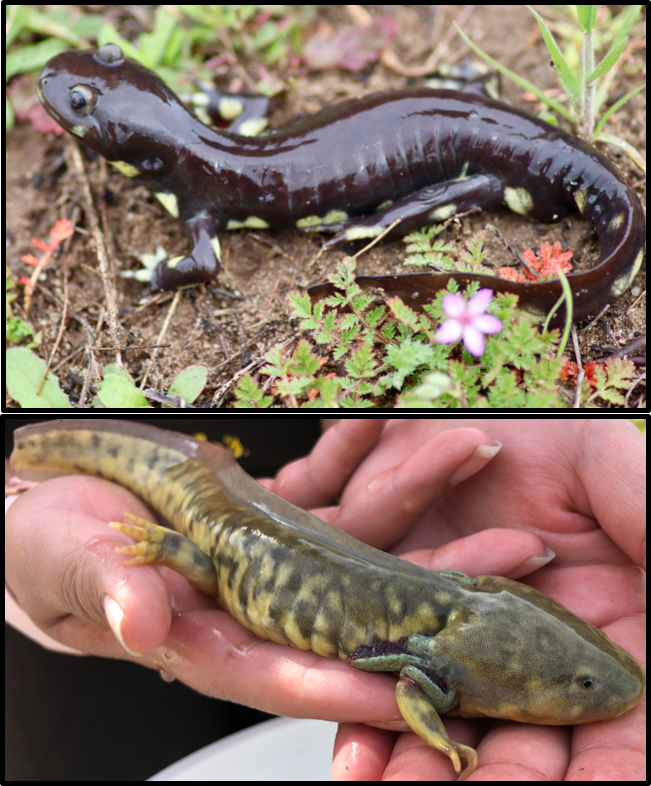
Salamanders
- Urodeles
- ~550 species
- Some fully aquatic
- Some Biphasic life style
- Aquatic youth
- Terrestrial adults
- Paedomorphism: adults retain larval features even though sexually mature
- Walk on land with side to side movement of the body
- Similar to early tetrapod
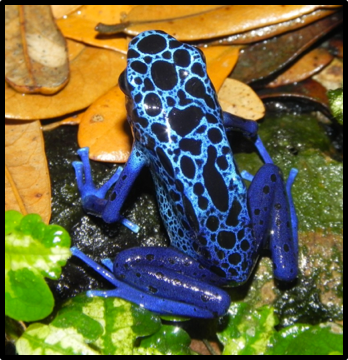
Frogs
- Anurans
- ~5,420 species
- Includes Toads: frogs with leathery skin
- Adapted to drier conditions on land
- Better terrestrial locomotion
- Powerful hind limbs to jump
- Captures prey with sticky tongue
- Defensive toxins and warning colors to deter predators Example: Poison Dart Frogs
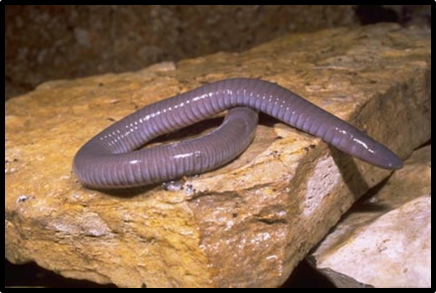
Caecillians
- Apodans
- ~170 species
- Legless
- Blind
- Typically in tropical climates
Practice: Amphibians
What is the term for larval frogs?
Practice: Amphibians
Which of the following develop during amphibian metamorphosis? (select all that apply)