Wize High School Grade 11 Biology Textbook > Plants & Plant Physiology [Under construction]
Seeded Plants: Angiosperms
Overview of Angiosperms
Angiosperm Reproduction
Advantages of Angiosperm Reproduction
Angiosperm Pollination
Monocots and Dicots
Example: Flowers
Practice: Angiosperm Adaptations
Practice: Plant Evolution
Practice: Parts of Flowers
Practice: Double Fertilization
Practice: Fruit Production
Practice: Orchid and the Moth
Popular Courses
Find My Course

0:00 / 0:00
Overview of Angiosperms

- Latin "Angio - sperm" = contained seed
- enclosed fruit
- Flowering plants
- Single phylum
- Anthophyta
- "Anthos" = flower
- largest taxa of seed plants
- Includes smallest and tallest of seed plants
- Reproduction
- Flower and Fruit: novel adaptation
- Most widespread and diverse of plants
- Monoecious: Male and Female parts together on same plant
- Dioecious: Male and Female parts on separate plants

Evolution of Angiosperms
- Non-Vascular Plants (~475 MYA; Paleozoic)
- Seedless Vascular Plants (~420 MYA; Paleozoic)
- Gymnosperms (~300 MYA; late-Paleozoic)
- This is when angiosperms split from gymnosperms (~300 MYA)
- Angiosperms (~145 MYA; mid-Mesozoic)
- Cretaceous Period: (140 - 70 MYA)
- Lots of Angiosperms
- Decline of Gymnosperms
- Related to Bennettitales: extinct seed plants with flower-like structures
Exam Tip
Here it is important to know the relative timeline of plants. Specifically know the order of appearance and the general era in which they dominated.
- Darwin
- Sudden appearance of angiosperms was a mystery
- No obvious pre-cursers to flowers
- possibly because flowers are soft tissue, hard to preserve (fossil)
- Modern evidence shows angiosperms evolved from gymnosperm-like ancestors

0:00 / 0:00
Angiosperm Reproduction
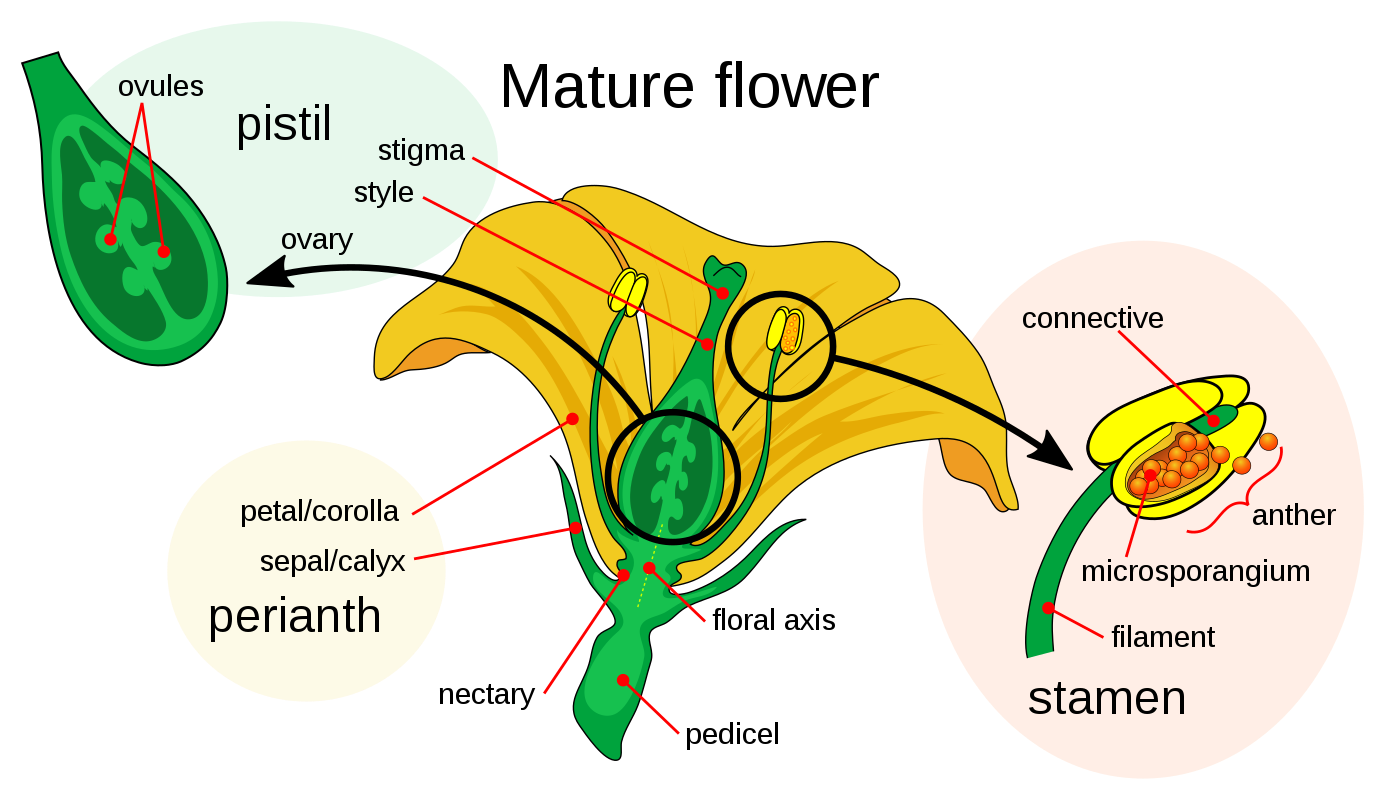
Angiosperm Structures
- Flowers: modified leaves (sporophylls)
- Sepal and Petals: attract pollinators, non-reproductive
- Stamen: filament + anther
- Produces Microspore => male Gametophyte => pollen grain (sperm)
- Anther: produces the pollen
- Pistil: stigma + style + ovary
- Produces Megaspore => female Gametophyte => egg
- Each has 1 stigma, but may have many ovules
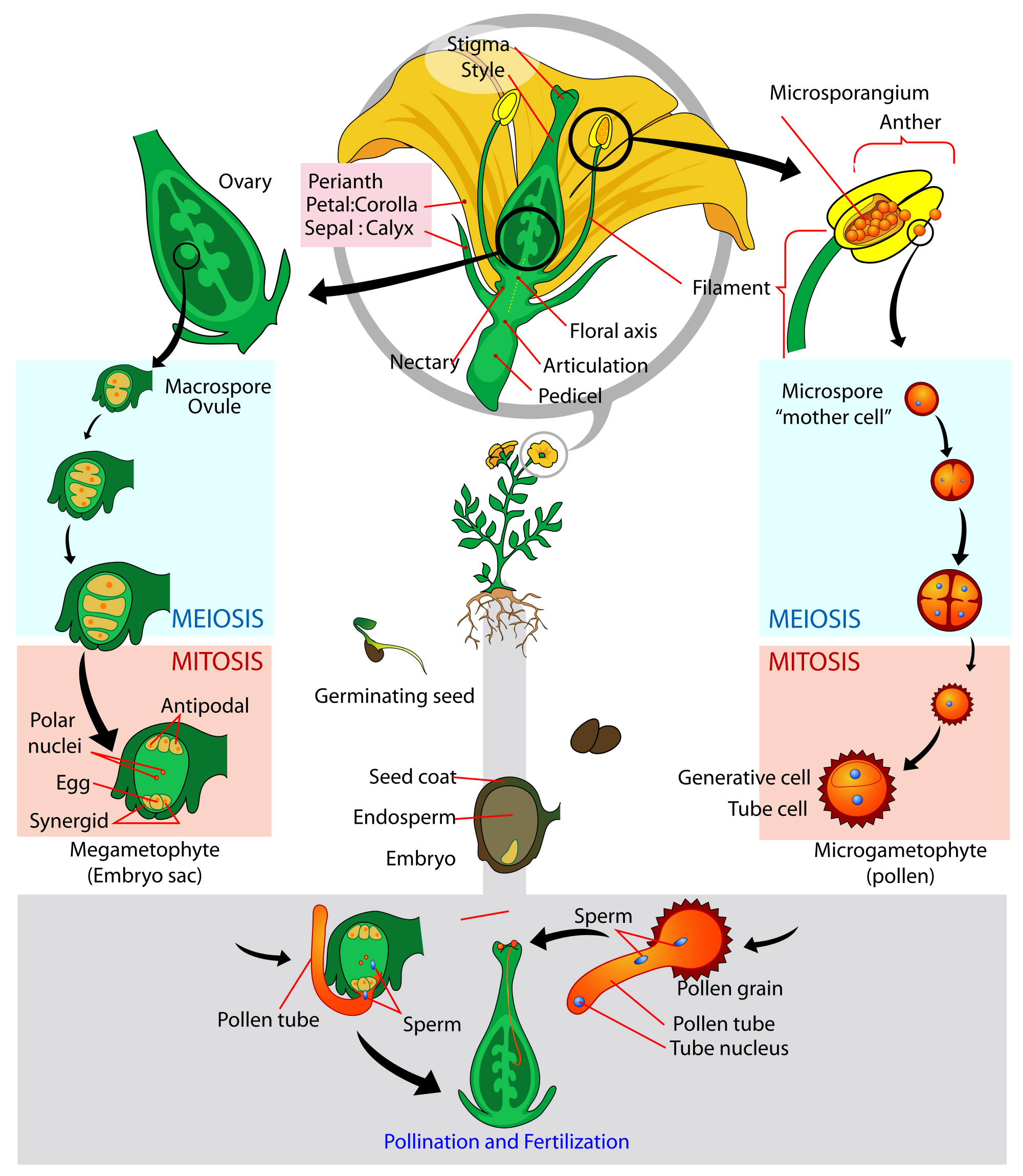
Angiosperm Life Cycle
- Anther produces the male gametophyte (pollen)
- Ovule produces the female gametophyte (megaspore)
- Pollen lands on stigma
- pollen tube grows into ovary
- Double Fertilization: Pollen tube releases 2 sperm
- 1 sperm fertilizes egg
- 1 sperm initiates development of endosperm: stored food
- Triploid Endosperm: 1 sperm + 2 female nuclei combine
0:00 / 0:00
Advantages of Angiosperm Reproduction
- Costly endosperm only created after successful fertilization
- Female gametophytes are smaller (cheaper and faster to produce) Recall: much less costly than moss or fern female gametophytes
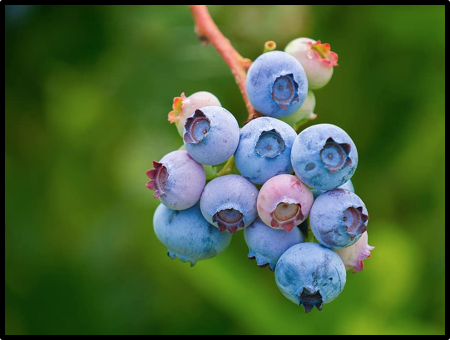
- Fruit: Mature ovary with seed
- May look very different from original plant
- Protects dormant seed
- Attracts animals - aids in dispersal
- Types of seed dispersal
- Wind: seed has "wings"
- Adhesive: seed can stick (plants or animals)
- Fleshy: seeds are tasty, eaten by animals
Importance to humans
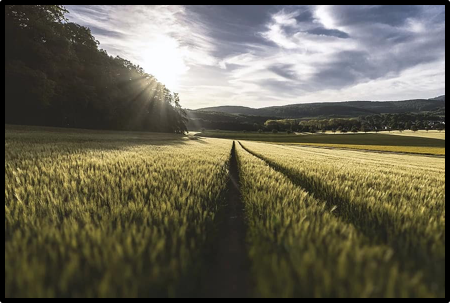
- Large portion of human diet
- 80% of calories from just six species
- Wheat
- Rice
- Corn
- Potatoes
- Cassava
- Sweet Potatoes
- Typically all parts are edible Examples: Seed, Fruit, Leaves, Roots, Tubers, Flowers
- Grown for other culinary purposes Examples: Oil, Spices, Flavoring, Sugar
- Drugs
- Medicinal
- Recreational
0:00 / 0:00
Angiosperm Pollination
Pollination is an incredibly important ecosystem function that can easily be disrupted with habitat loss and development.
- Gymnosperms mostly wind pollinated
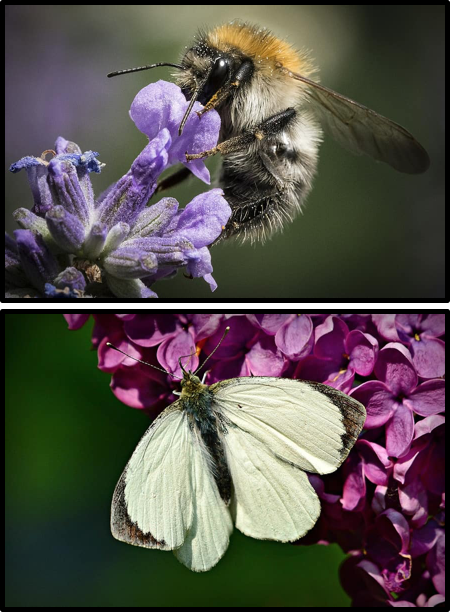
- Angiosperms 80% pollinated by animals
- Some completely dependent on animals
- Evolved mechanisms to attract pollinators
- Bright flowers: daytime, visual attraction
- Smelly flowers: nighttime, usually colorless
- Co-Evolution (plant + pollinator)
- Reciprocal relationship: diversification of plants occurred at the same time as pollinator diversification
- Both exert selective pressures on each other (selective agents)
- Co-evolve
- Symbiotic Relationship:
- Plants spend less energy producing less pollen
- Instead, plants produce flowers, nectar etc. to attract pollinators to spread gametes
- Pollinators receive nectar / pollen (food)
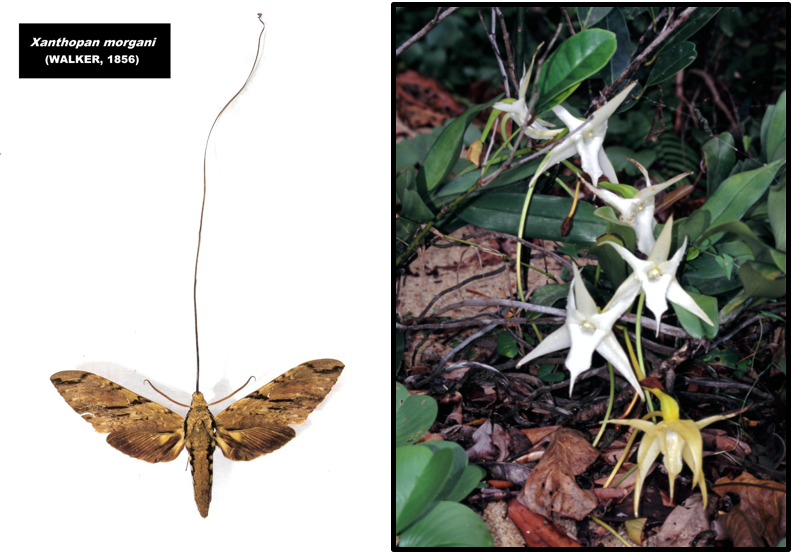
Darwins Orchid Example
- Moth pollinated plant
- Plant has long tube to access nectar
- Moth's tongue was not long enough, so it rubbed its face against pollen (thus spreading pollen between plants)
- Moth evolved longer tongue to reach nectar more easily
- Plant responded by evolving longer tube
- Cycle continues until both species have exaggerated traits
- Also an example of Directional Selection
Practice: Angiosperms
What novel adaptation characterizes angiosperms?
Practice: Plant Evolution
What is the correct chronological order of plant evolution?
Practice: Angiosperms
Which of the following are NOT part of angiosperm flowers?
Practice: Angiosperms
Which of the following DOES NOT occur during double fertilization?
Practice: Angiosperms
Which of the following are NOT advantages of fruit production?
Practice: Angiosperms
Which term best describes the example of the Darwin's Orchid and the Moth pollinator?