Wize High School Grade 11 Chemistry Textbook > Gas Laws
Introduction to Gas Laws

0:00 / 0:00
Measurable Properties of Gases
Volume
- Gases completely fill the container they are placed in; as such when we talk about the volume of a gas we refer to the volume of the container the gas is found in

- SI unit for volume is meter cubed
Temperature
- SI unit for temperature is Kelvin
Absolute Zero
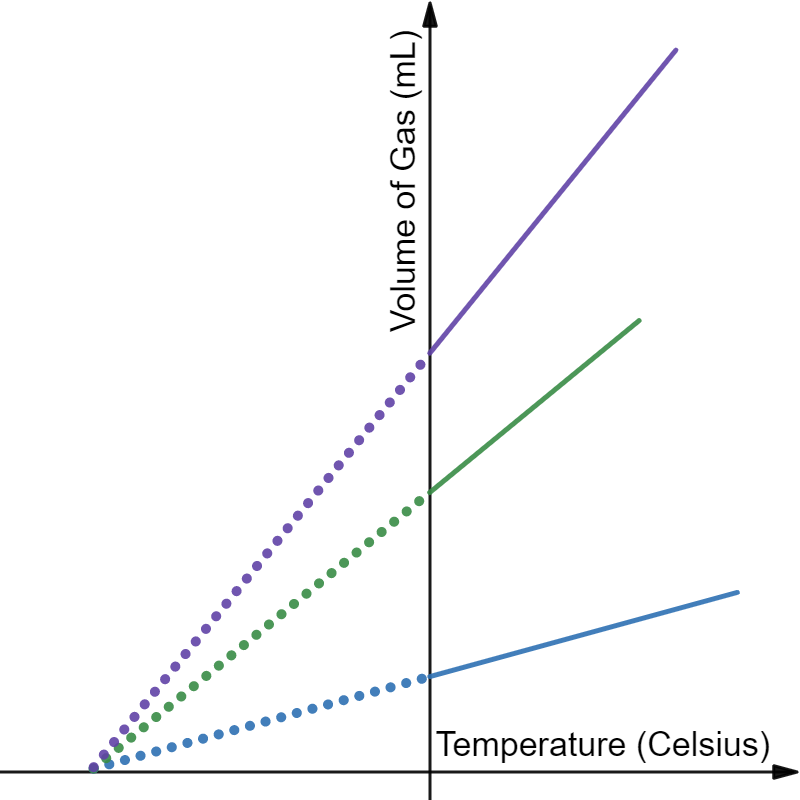
- Absolute zero is the temperature at which the volume of a gas is zero.
- All gases if cooled sufficiently will start to liquify
- The volume of different gases were measured while changing temperature, but keeping pressure constant.
- When those data points were plotted and the lines extrapolated, it was found that they all intercept the temperature axis at the same point
Pressure
- Pressure is a force that acts on a 2-D sheet, typically through the collision of atoms against that surface.
- SI unit of pressure is the pascal
Atmospheric Pressure
- Gas particles in Earth's atmosphere exert a pressure on Earth's surface; this is known as atmospheric pressure
- Atmospheric pressure can be measured using a barometer
- The atmospheric pressure measured at sea level is 760mmHg (millimeters mercury) or 1atm (atmosphere)
- To convert between units of pressure:

STP and SATP Conditions
- STP = Standard Temperature and Pressure
- T= 0°C
- P = 101.325kPa
- SATP = Standard Ambient Temperature and Pressure
- T= 25°C
- P = 100kPa
0:00 / 0:00
Gas Laws
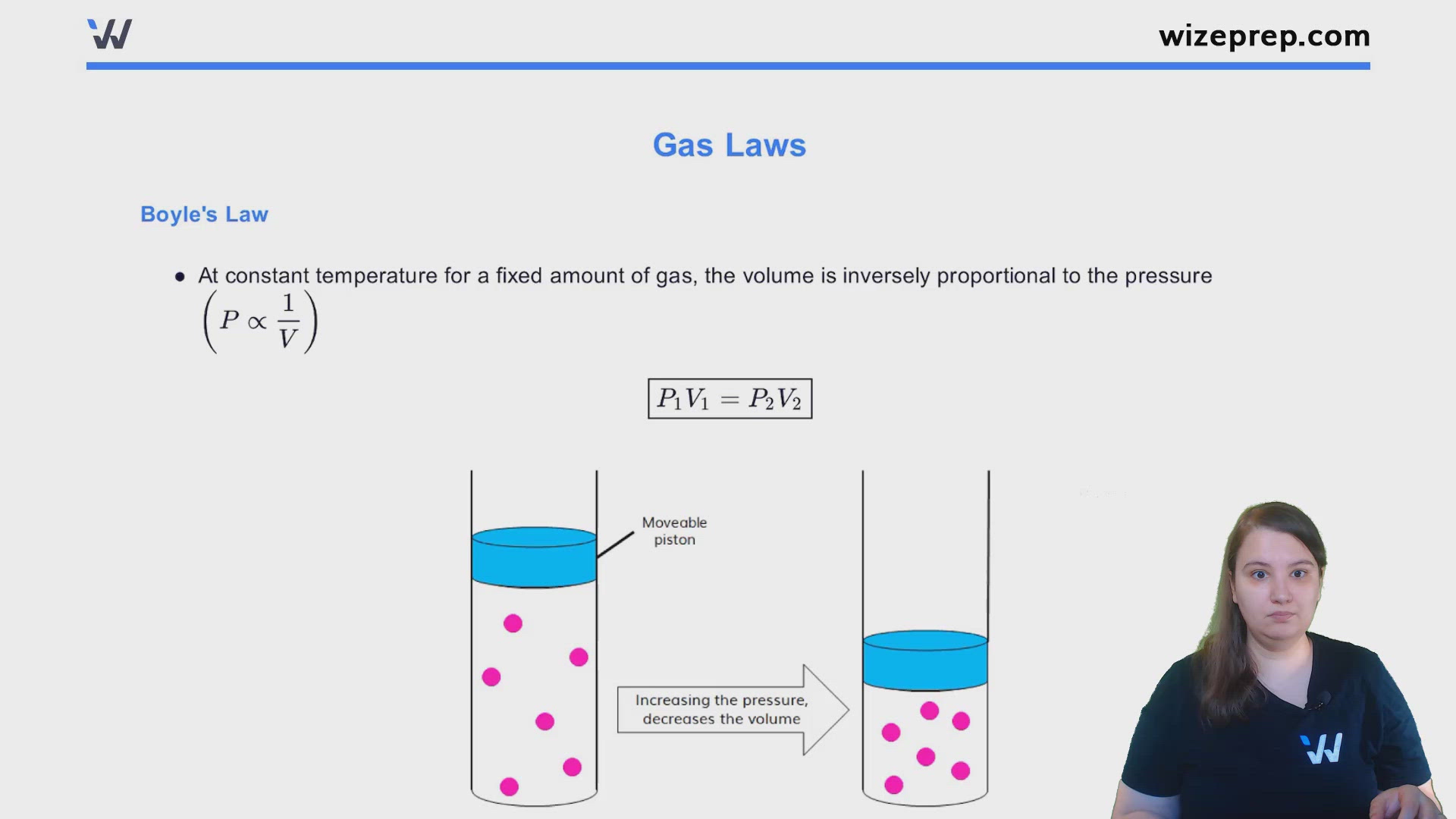
Boyle's Law
- At constant temperature for a fixed amount of gas, the volume is inversely proportional to the pressure

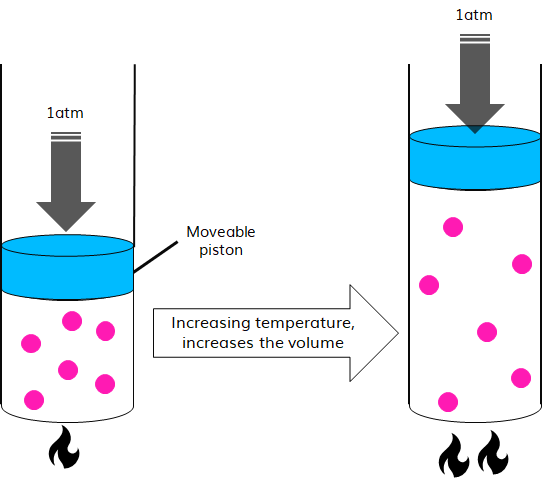
Charles' Law
- At constant pressure for a fixed amount of gas, the volume increases with increasing temperature
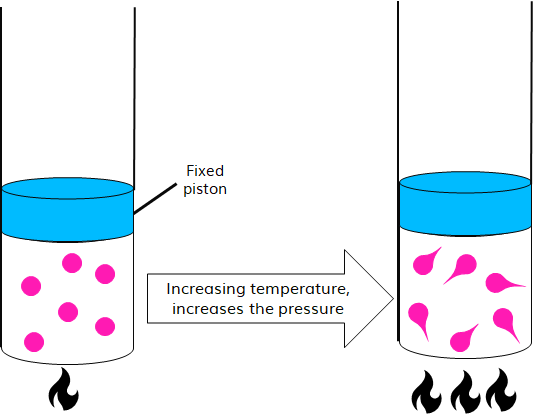
Gay-Lussac's Law
- At constant volume for a fixed amount of gas, the pressure is proportional to the absolute temperature
The Combined Gas Law
- For a fixed amount of gas, the ratio is constant:
0:00 / 0:00
Molar Volume
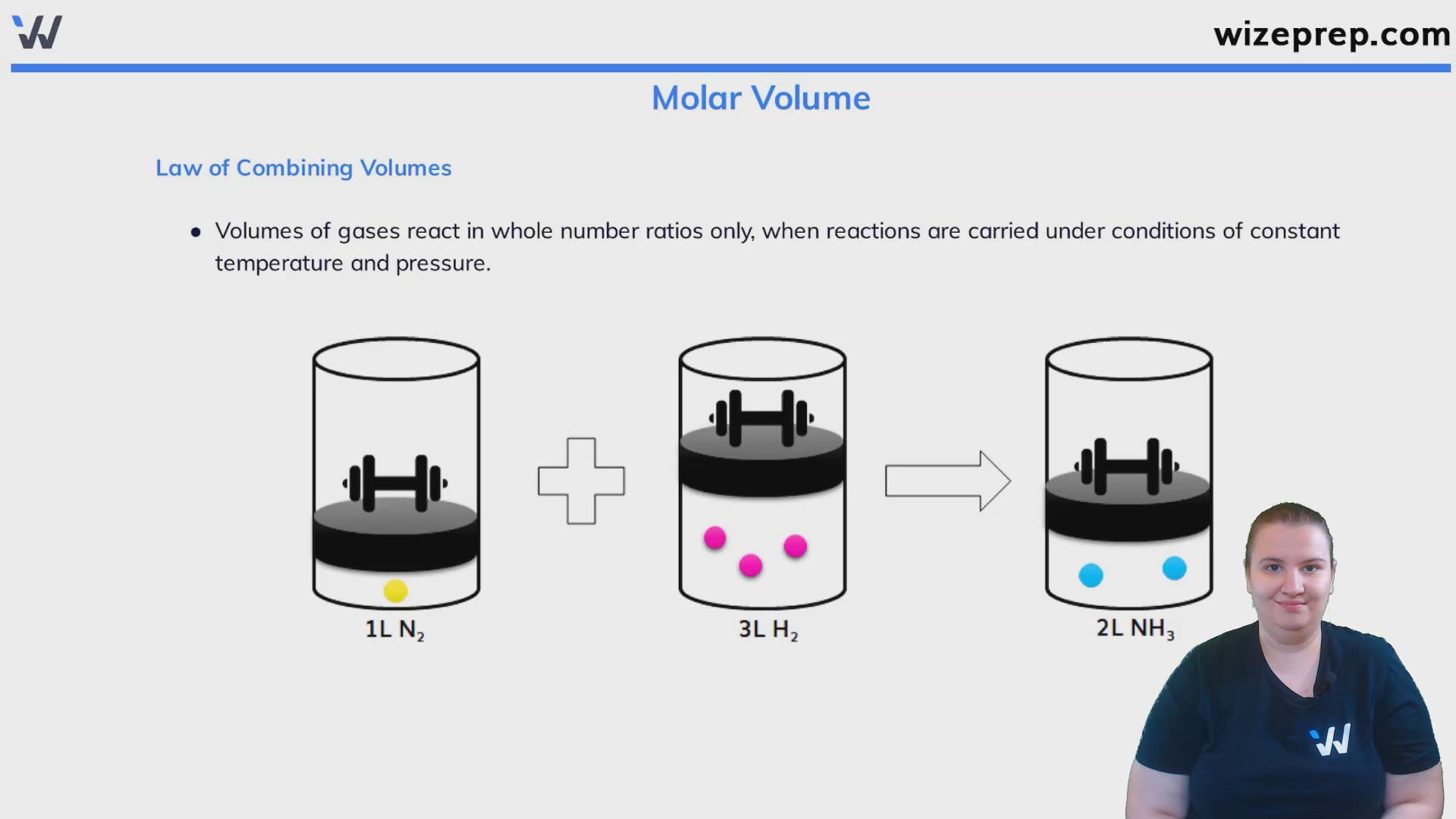
Law of Combining Volumes
- Volumes of gases react in whole number ratios only, when reactions are carried under conditions of constant temperature and pressure.

Avogadro's Law
- At a given pressure and constant temperature, equal volumes of gas contain the same number of molecules ()

Molar Volume
- Molar volume is the volume occupied by 1mol of any gas at a specified temperature and pressure
- Under STP conditions, one mole of any gas occupies 22.4L
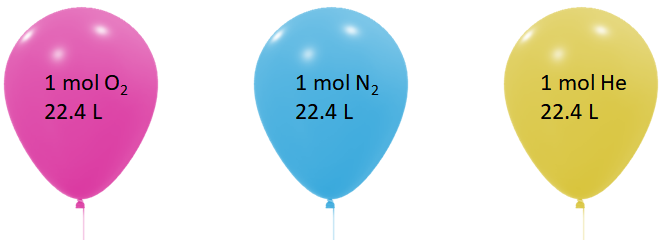
- Under SATP conditions, one mole of any gas occupies 24.8L

0:00 / 0:00
Example: Pressure Conversions
The atmospheric pressure at an altitude of 15000m above sea level is 429mmHg. What is this pressure in atm? What about kPa?
We know that 760mmHg = 1atm, or in a ratio
Then, to convert from mmHg to atm:
We know that 760mmHg = 101.325kPa, or in a ratio
Then, to convert from mmHg to kPa:

0:00 / 0:00
Example: Gas Laws
Suppose we have a gas in a flexible container that can expand or contract. How will the volume of the container be affected by the following changes? Assume the amount of gas is kept constant.
- Pressure is doubled at constant temperature
- Temperature is doubled at constant pressure
1. Pressure and volume are inversely proportional, when one increases the other decreases. If we double the pressure inside a container, the volume will decrease by half
2. Temperature and volume are directly proportional, when one increases the other increases as well. If we double the temperature, the gas will expand and the volume will double as well.

0:00 / 0:00
Example: Molar Volume
You have two vessels, one containing 0.5mol of He and the other containing 0.5mol of Xe. Both gases are at a temperature of 93.8K and under a pressure of 132kPa. Answer the following questions:
- Which vessels contains more atoms of gas?
Each vessel has the same number of moles, therefore they will both have the same number of atoms.
- Which gas has the greater volume?
Volume will be the same in both vessels. According to Avogadro's law, equal number of particles have the same volume at the same temperature and pressure.
- Which gas has the greater mass?
Xe is heavier, so the vessels containing Xe will have a greater mass.
Practice: Gas Laws
Boyle's law states that the product of the volume and pressure of a gas is constant if which of the following variables is constant?
Which of the following relationships is/are CORRECT for gases?
Practice: Combined Gas Law
A 5.0L sample of gas is collected at 400mmHg and 727ºC. What is the volume if the temperature were cooled to 77ºC and the pressure increased to 700mmHg?