Electron Affinity (EA)
Electron affinity is the amount of energy involved with adding an electron to an atom or ion.
When adding an electron, do we get a cation or an anion? ________!
- If EA is negative → energy is released/absorbed: ________
- If this is the case, would the atom go to a higher/lower E state? ________
- This means the atom has become more/less ________ stable as a result of adding an electron
- Did this atom like or dislike having an electron added to it? ________
- If EA is positive → energy is released/absorbed: ________
- If this is the case, would the atom go to a higher/lower E state? ________
- This means the atom has become more/less stable________ stable as a result of adding an electron
- Did this atom like or dislike having an electron added to it? ________
- This means that unless specified otherwise, when asked which element would have the largest electron affinity, assume they mean largest NEGATIVE electron affinity.
- This would mean that the element really liked getting an electron and lost energy, resulting in a more stable form.
The Periodic Trend
In general, as Zeff increases, the incoming electron experiences a greater electrostatic attraction and stabilization leading to a greater (negative) electron affinity

What about noble gases?
Do you think a noble gas would have a positive or negative electron affinity? ________
- Are noble gases stable? ________
- Would a noble gas want another electron added? ________
- If you tried to add an electron to a noble gas would that require energy or release energy? ________
Example: Increasing Electron Affinity
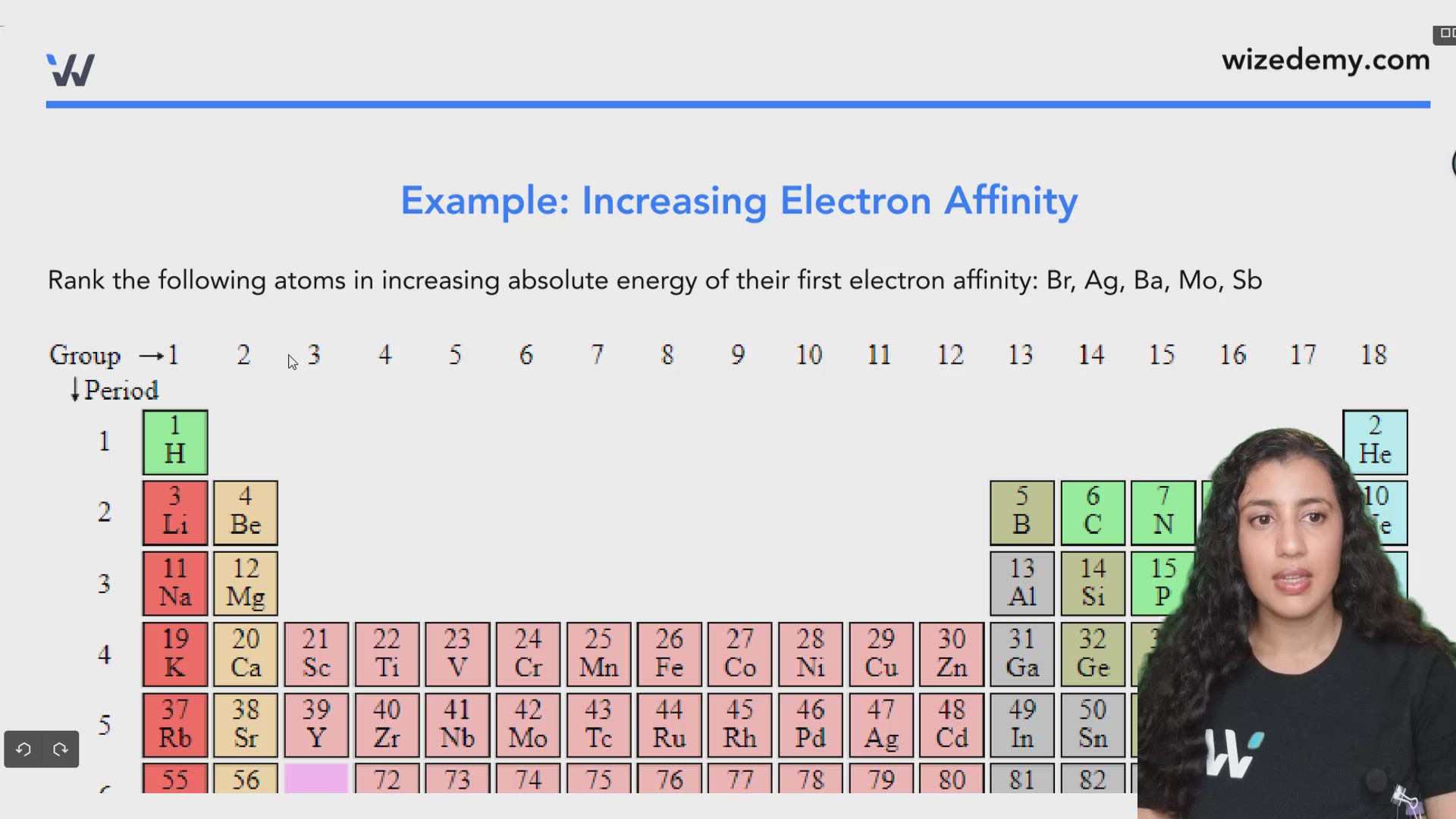
Rank the following atoms in increasing absolute energy of their first electron affinity: Br, Ag, Ba, Mo, Sb

Ba < Mo < Ag < Sb < Br