0:00 / 0:00
Corrosion and Prevention
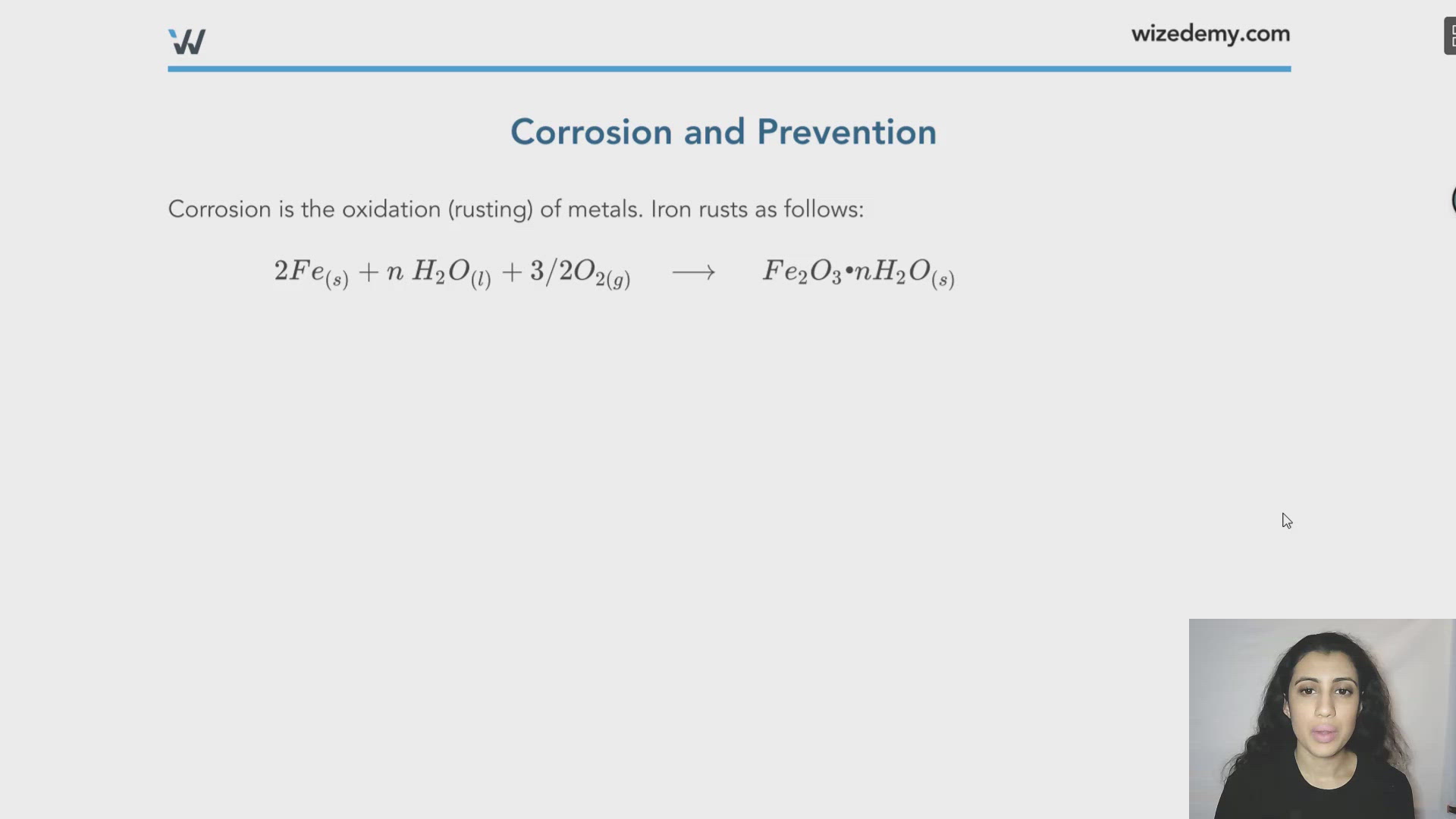
Corrosion is the oxidation (rusting) of metals.
Iron rusts as follows:

1) Oxidation of Fe yields electrons that travel through the metal (anodic site)
2) Electrons that traveled through the metal reduce O2 and form water (cathodic site)
3) Fe2+ migrates through the water drop and reacts with O2 and H2O to form rust
Corrosion prevention:
1. Coating
- Galvanizing: Zn Coating - this helps because Zinc is more easily oxidized than Fe is.
- Zn acts as the anode instead of Fe!
- If this is the case, how do the reduction potentials of Fe2+ and Zn2+ compare?
- Zn2+ has a lower reduction potential than Fe2+and Zn(s) has a higher oxidation potential than Fe(s)
- Na2CrO4 should not be used to coat iron because it is toxic!
2. Cathodic protection (sacrificial anode)
- Instead of coating the iron with another metal, a second metal is just placed in electrical contact with the first metal and we call the second metal the "sacrificial anode"
- Attach more active metals (e.g. Mg) to a material (e.g. iron tank/pipe) to be protected.
- Mg is a better reducing agent than iron and will be oxidized first. The iron then becomes the cathode!
Given the following Ered, which would be more suitable to protect iron against corrosion, Al(s) or Pb(s)?
Al3+ + 3e- --> Al(s) Ered=-1.66V
Fe2+ + 2e- --> Fe(s) Ered=-0.45V
Pb2+ + 2e- -->Pb(s) Ered=-0.13V
For this question we have to think about what happens to Fe during corrosion. During corrosion is Fe oxidized or reduced?
Oxidized
So if we are trying to protect against corrosion do we want Fe to be oxidized or reduced?
Reduced
Now looking at the Ered, which metal would help to prevent corrosion?
Al(s)