0:00 / 0:00
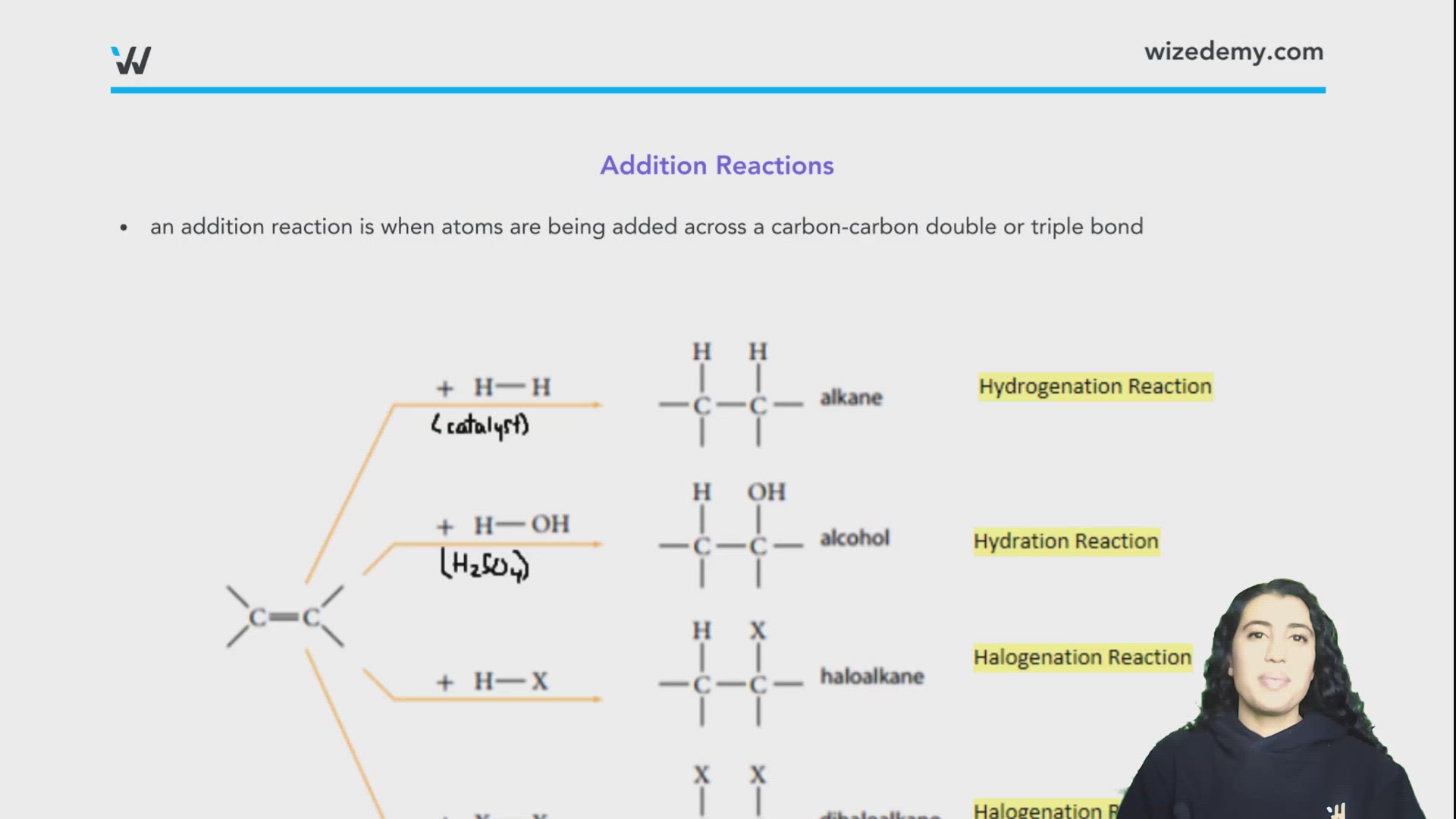
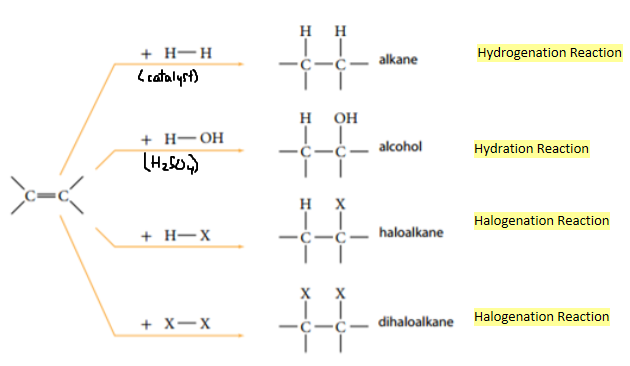
Addition Reactions
- an addition reaction is when atoms are being added across a carbon-carbon double or triple bond
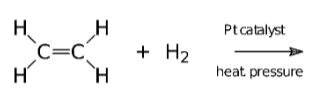
Example: What is the product? (Draw the structural formula and provide its name)
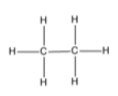
ethane
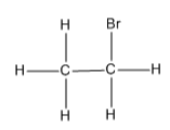
Example: What is the product? (Draw the structural formula and provide its name)
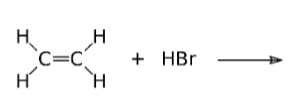
1-bromoethane
0:00 / 0:00
Markovnikov's Rule
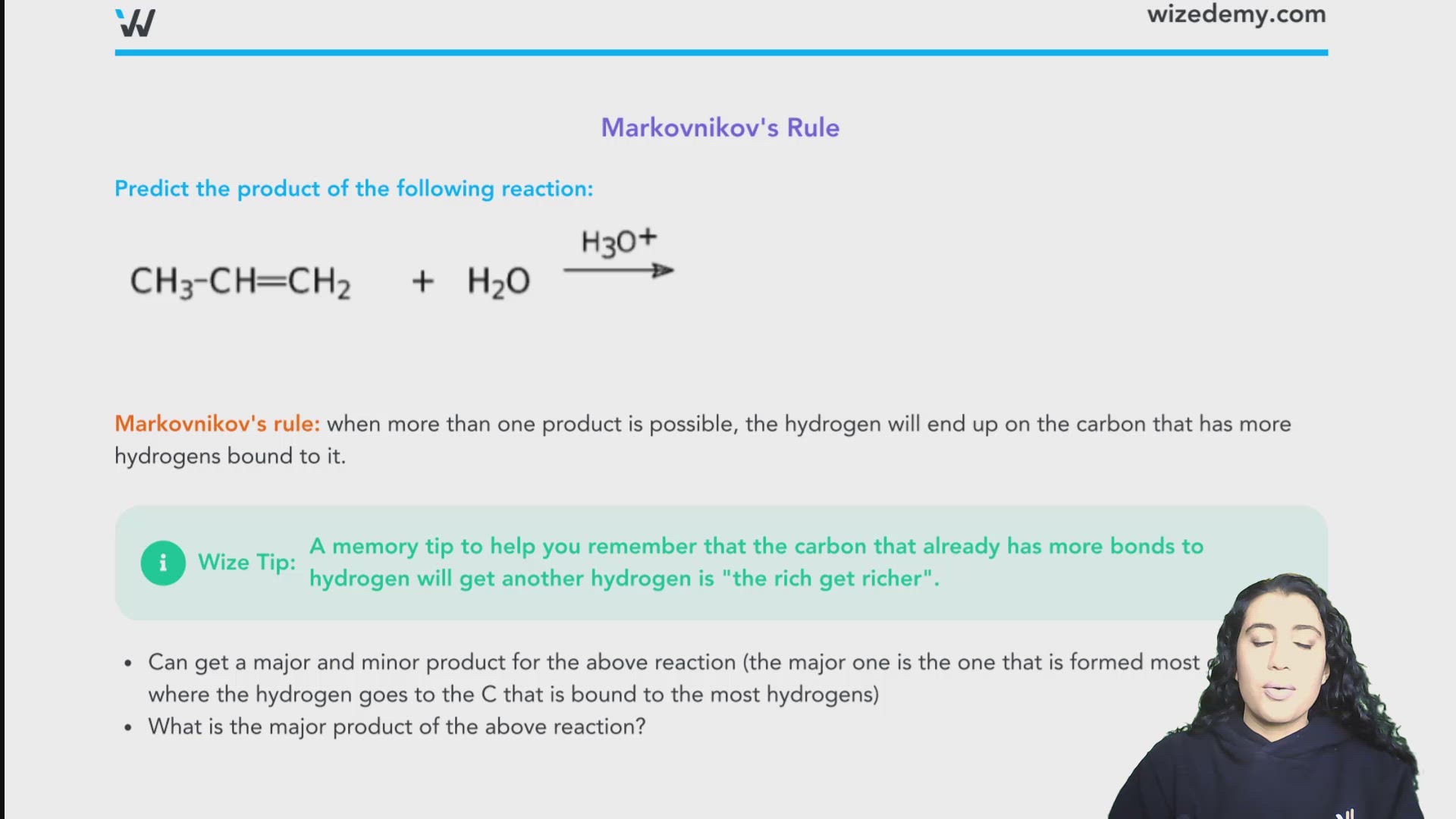
Predict the product of the following reaction:
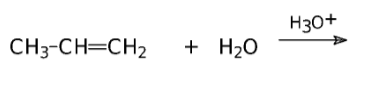
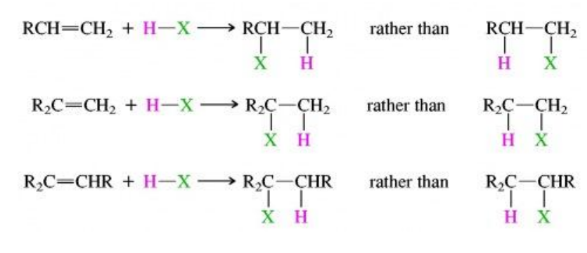
Markovnikov's rule: when more than one product is possible, the hydrogen will end up on the carbon that has more hydrogens bound to it.
Wize Tip
A memory tip to help you remember that the carbon that already has more bonds to hydrogen will get another hydrogen is "the rich get richer".
- Can get a major and minor product for the above reaction (the major one is the one that is formed most of the time where the hydrogen goes to the C that is bound to the most hydrogens)
- What is the major product of the above reaction?
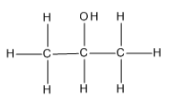
When reacting with a hydrogen and an electronegative element, Markovnikov's rule applies:
Example: Predict the product of the following reaction

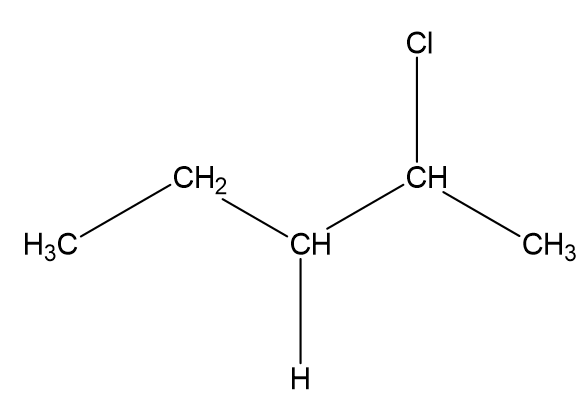
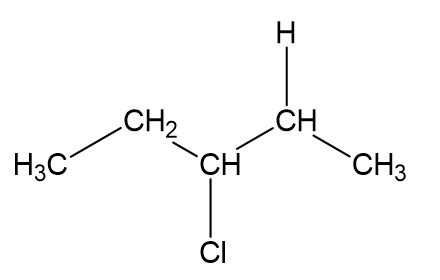
Here we get a 50/50 mix of both products since both Cs that make up the double bond have the same # of hydrogens.

0:00 / 0:00
Addition Reactions For Alkenes Vs Alkynes
Alkenes + X2 -> Dihaloalkanes
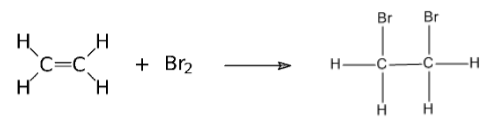
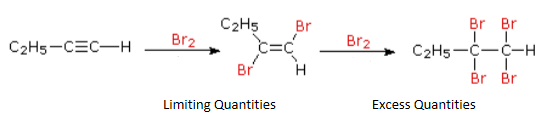
Alkynes Can React Differently Depending on if the X2 is in limiting or excess quantities:
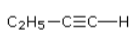
Example: React the following molecule with HCl in limiting and excess quantities of HCl:

Draw out and name the product (indicate major and minor products if applicable).
2-methylpent-2-ene + HBr
Enter the name of the major product below: