Wize High School Grade 9 Math Textbook > Powers & Exponents
Exponent Rules for Fractions & Products
Popular Courses
Algebra I
US High School
Grade 9 Math
Canada High School
DAT
General Course
Math 10C
Alberta High School
Grade 9 Math (De-streamed)
Ontario High School
Foundations of Math and Pre-Calculus 10
British Columbia High School
Math 9
Alberta High School
QMS 110
Toronto Metropolitan University
MATH 157
Simon Fraser University
MA129
Wilfrid Laurier University
Mathematics 9
British Columbia High School
MA100
Wilfrid Laurier University
MATH 0098
Baton Rouge Community College
0:00 / 0:00
Exponent Rules for Fractions & Products
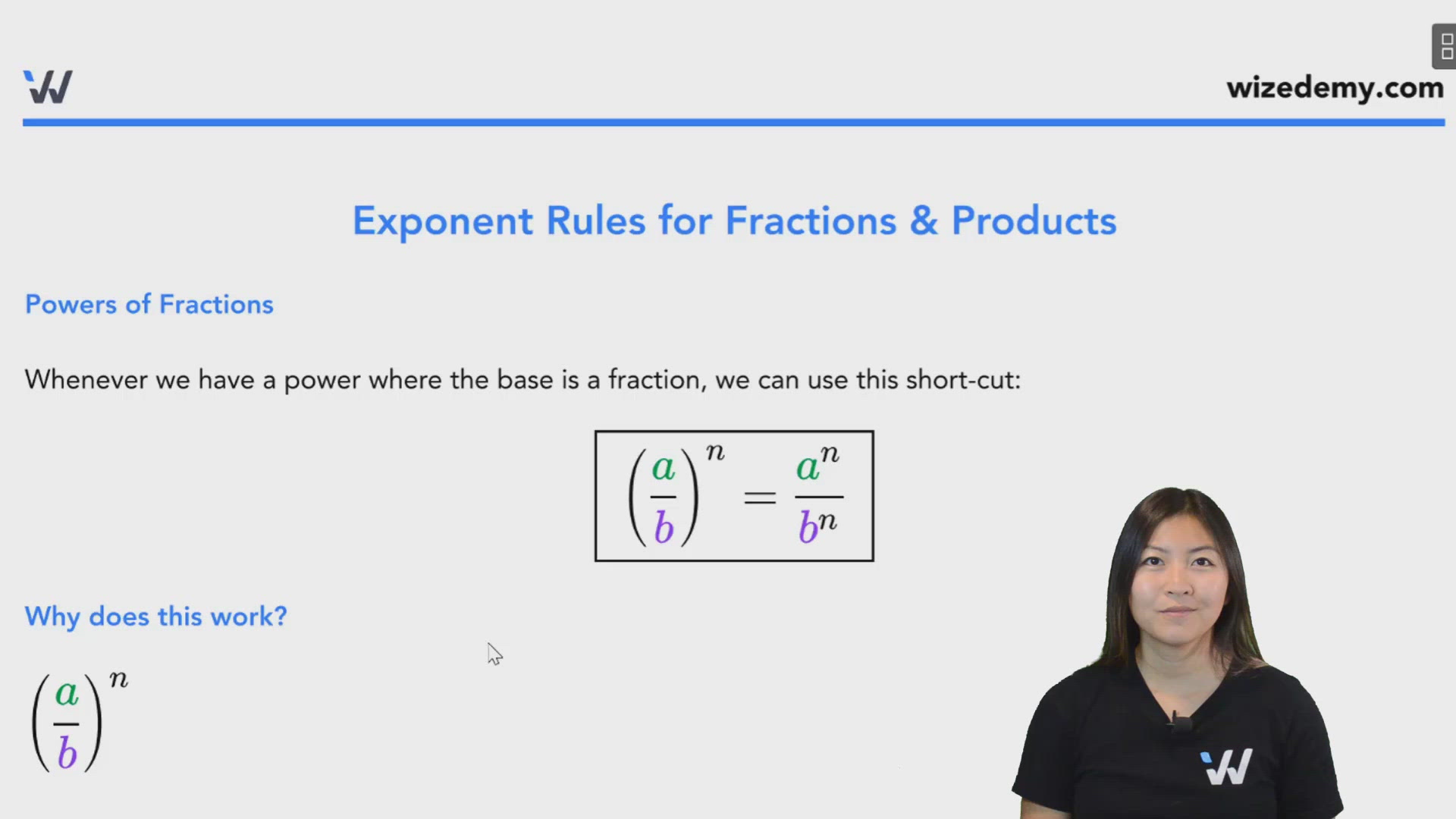
Powers of Fractions
Whenever we have a power where the base is a fraction, we can use this short-cut:
Why does this work?
Wize Tip
If is negative, then
- is positive if is an even exponent
- is negative if is an odd exponent
Powers of Products
Whenever we have a power where the base is a product, we can use this short-cut:
Why does this work?
0:00 / 0:00
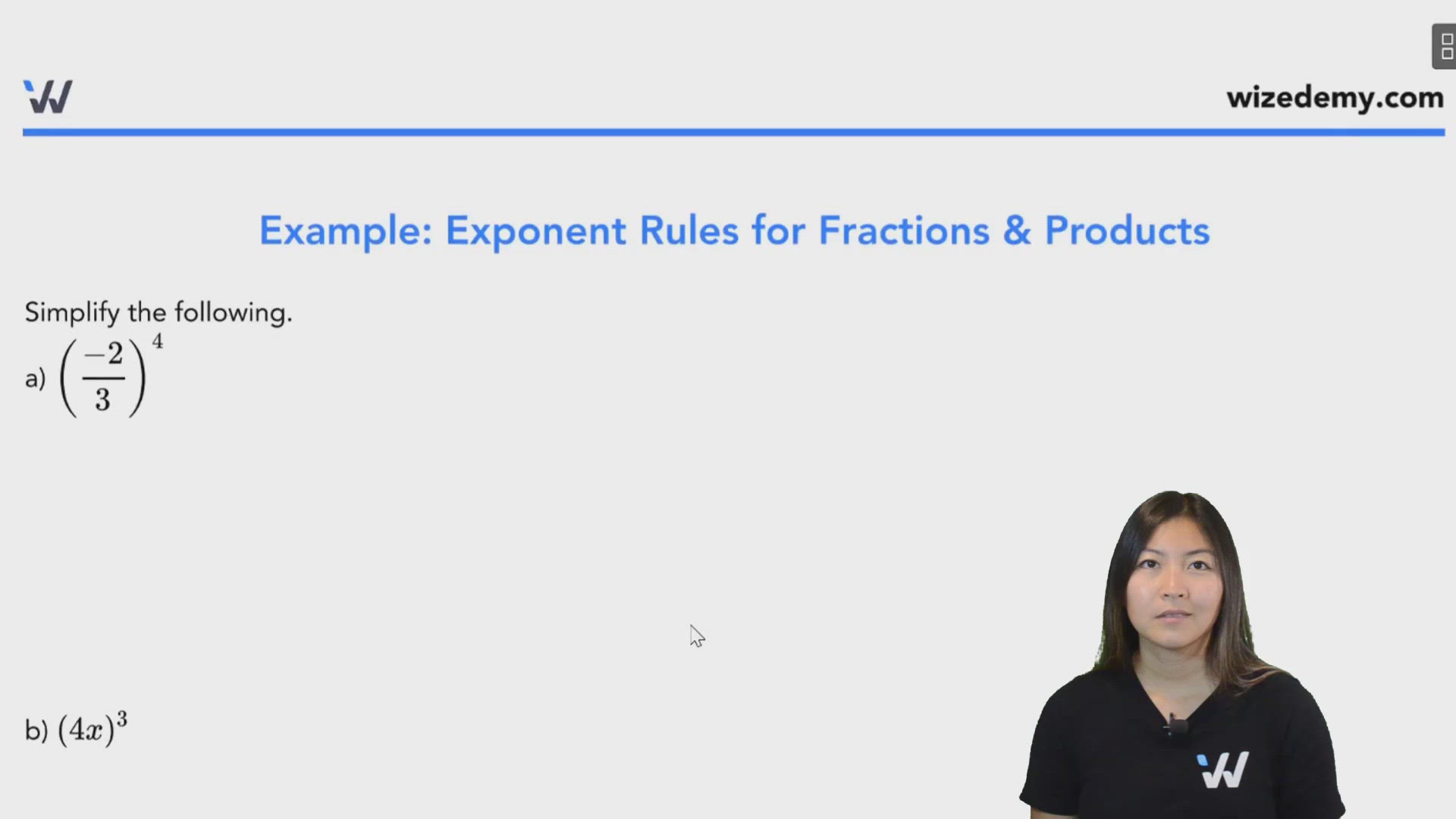
Example: Exponent Rules for Fractions & Products
Simplify the following.
a)
or
b)
Practice: Power of Fractions
Simplify the following without using a calculator.
a)
b)
c)
d)
Practice: Power of Products
Simplify the following without using a calculator.
a)
b)
c)
Practice: Power of Fractions and Products
Simplify , then evaluate the expression for and .
Practice: Rubik's Cube
The Rubik's cube is one of the most well-known puzzle toys in the world. It was first created by a Hungarian design teacher, Erno Rubik in 1974.
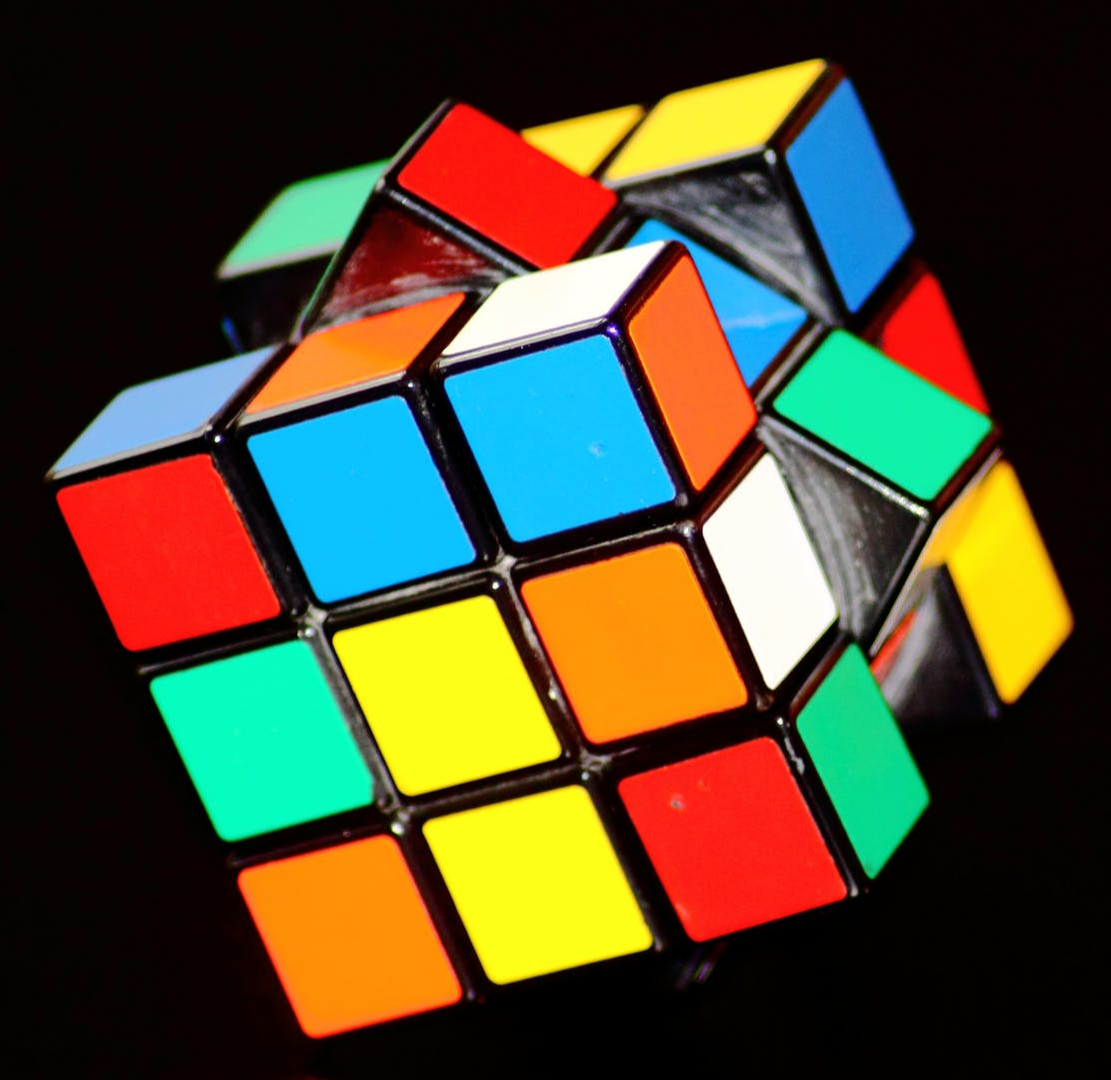
Three friends, Max, Feliks, and Sankavi each have a different sized Rubik's cube. Max's cube has dimensions cm by cm by cm. The side length of Feliks' cube is half that of Max's cube. The side length of Sankavi's cube is 1.3 times that of Max's cube.
a) Write a simplified expression for the volume of Max's cube.
b) Write a simplified expression for the volume of Feliks' cube.
c) Write a simplified expression for the volume of Sankavi's cube.