
Transformations of Logarithmic Functions
Let be the transformed function of where a, b, c, h, k are real numbers. Then:
Example
The graph of has the following transformations:
- Horizontal:
- Expansion by a factor of 2
- Translation 1 unit right
- Vertical:
- Reflection about the x-axis
- Expansion by a factor of 2
- Translation 1 unit up
Parent Function:
Table of values for parent function:
Transformed Function:
Table of values for transformed function:
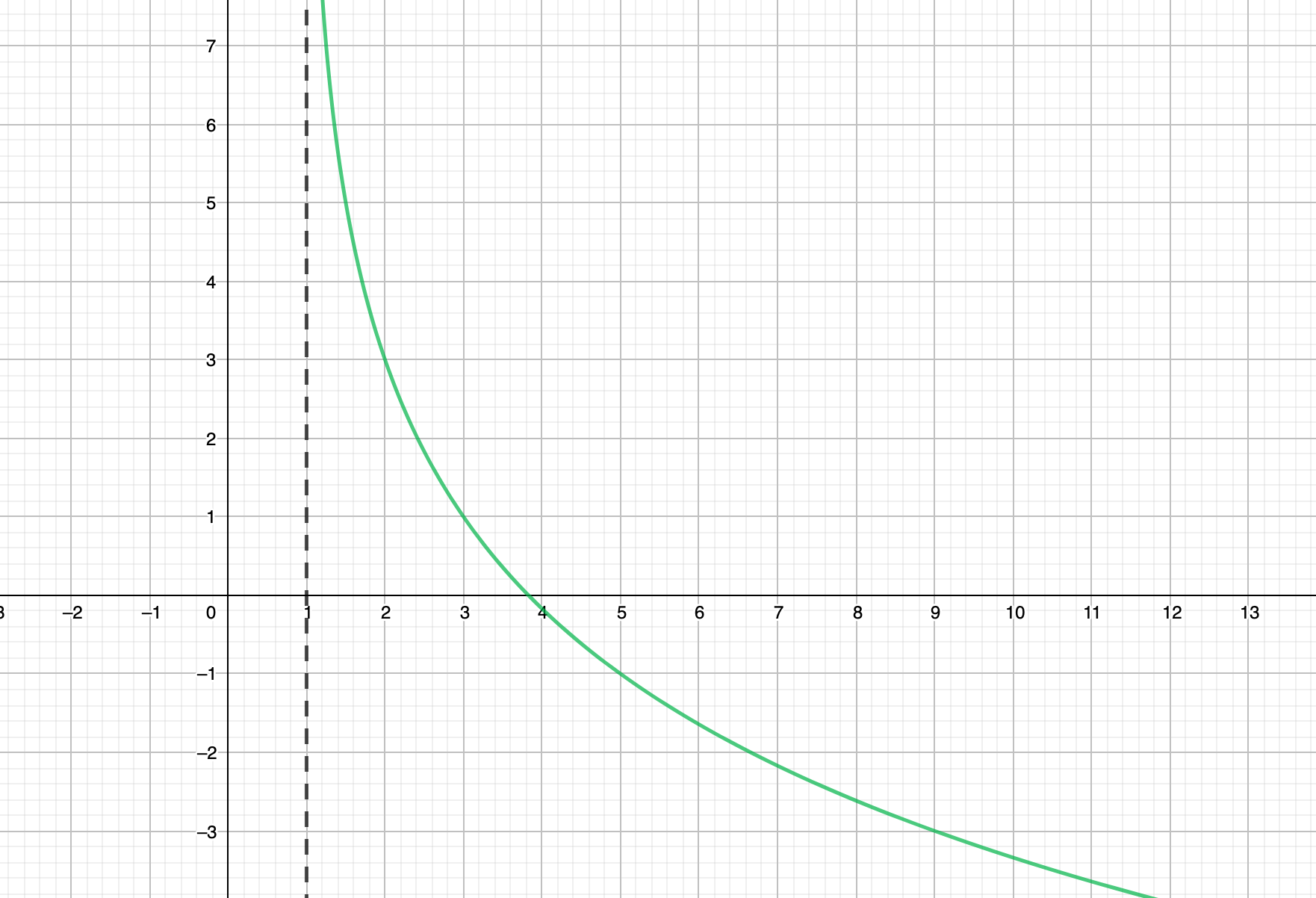
The vertical asymptote is
The domain is
The range is

Example: Transformations of Logarithmic Functions
Sketch a graph of the function , stating the transformations, any asymptotes, the domain, and the range.
The function can be rewritten as .
The Transformations
Horizontal
- Compression by a factor of
- Translation 2 units right
Vertical
- Reflection about the x-axis
- Expansion by a factor of 2
- Translation 1 unit up
Table of Values for the Parent Function
Table of Values & Graph for the Transformed Function
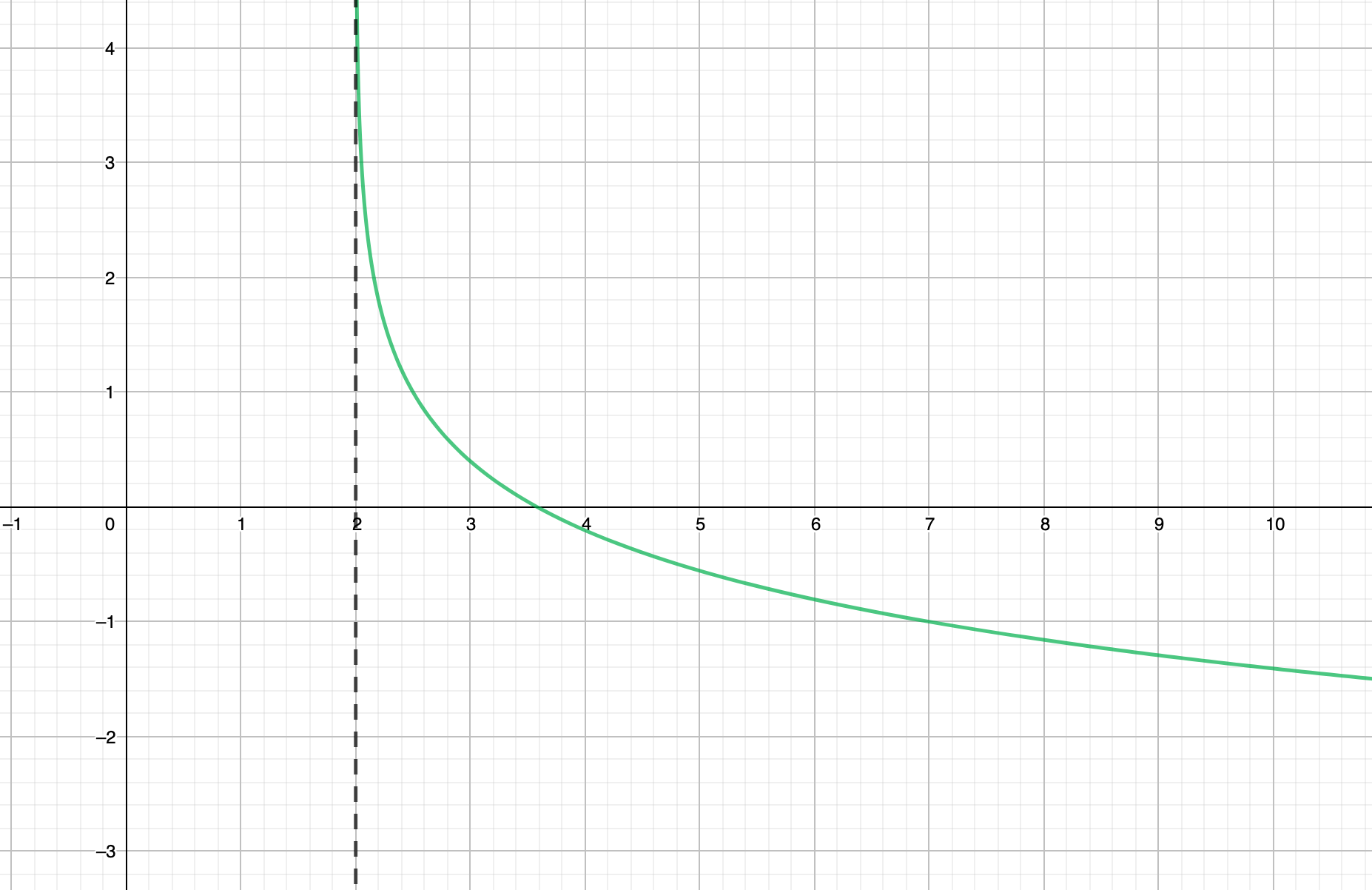
Vertical Asymptote:
Domain:
Range: