Wize High School Grade 10 Math Textbook > Vertex Form of a Quadratic Equation
Graphing Quadratics in Vertex Form

0:00 / 0:00
Graphing Quadratics in Vertex Form
Recall that the graph of is a "U-shape" graph that passes through the origin.
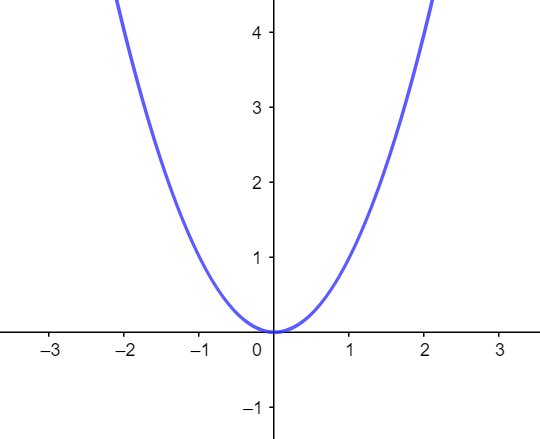
Summary of Transformations
We can graph a quadratic relation in the vertex form by starting with the base graph , and applying the following transformations.
Vertex
The vertex of a quadratic relation in the vertex form is .

0:00 / 0:00
Example: Graphing Quadratics in Vertex Form
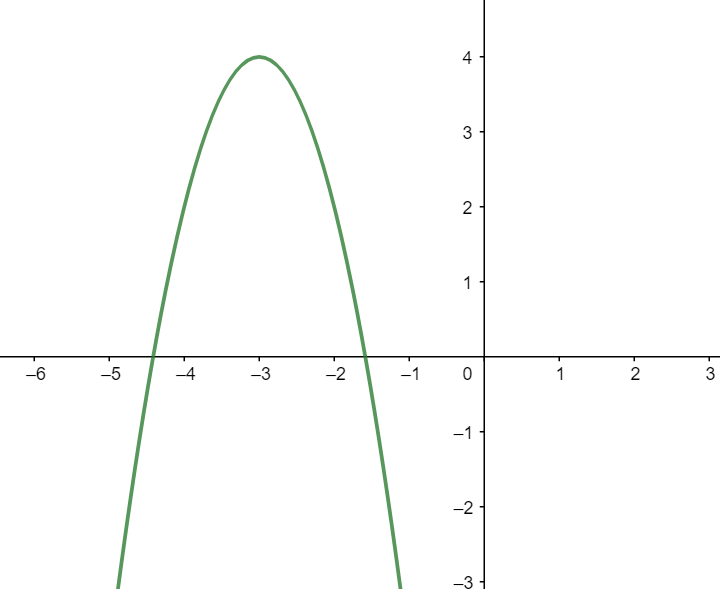
Given the quadratic relation ,
a) identify the transformations that you would apply to to obtain this graph.
- Horizontal shift 3 units to the left
- Vertical stretch by a factor of 2
- Vertical reflection along the axis
- Vertical shift 4 units up
b) identify the vertex and axis of symmetry.
The vertex is at the point in the vertex form.
So, the vertex is and the axis of symmetry is .
b) graph the quadratic relation.
Practice: Graphing Quadratics in Vertex Form
Select All of the transformations that need to be applied to the graph of to obtain the graph of

Mark Yourself Question
- Grab a piece of paper and try this problem yourself.
- When you're done, check the "I have answered this question" box below.
- View the solution and report whether you got it right or wrong.
Practice: Graphing Quadratics in Vertex Form
Graph .
Practice: Graphing Quadratics in Vertex Form
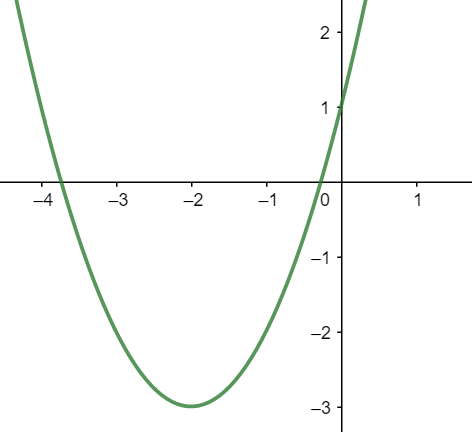
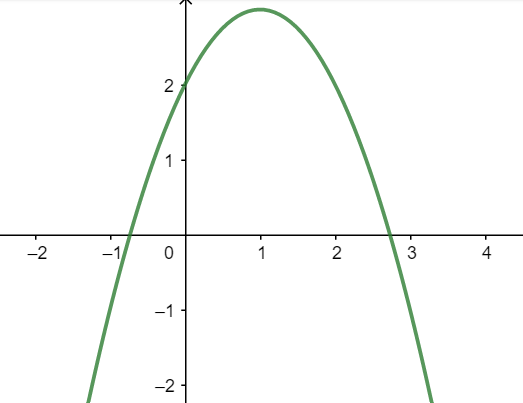
Graph the following quadratic relations and match it to its correct graph.
A.
B.
C.
D.
E.
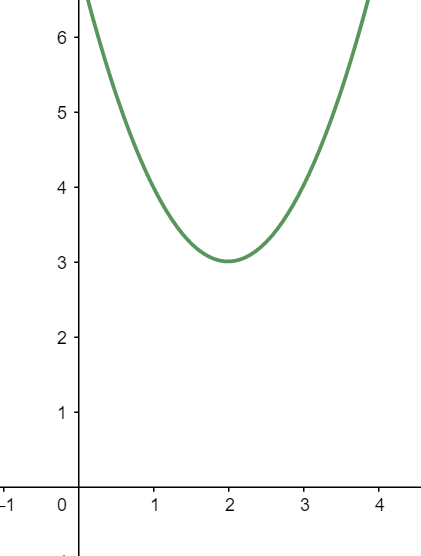
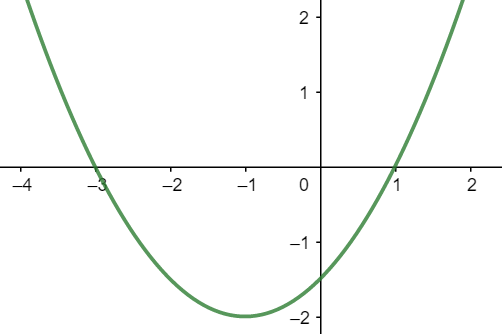
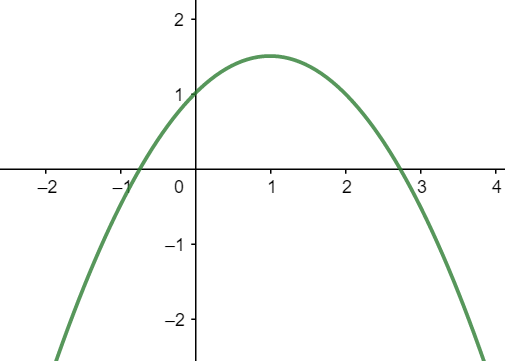
Practice: Graphs of Quadratic Vertex Form
The height of a bird is given by , where is the height in meters, is the time in seconds after the bird leaves it's nest.
a) What is the maximum height of the bird?
b) When does the bird reach its maximum height?
c) How high is the nest off the ground? (Hint: the bird leaves the nest at time )
d) Graph the height of the bird.
Mark Yourself Question
- Grab a piece of paper and try this problem yourself.
- When you're done, check the "I have answered this question" box below.
- View the solution and report whether you got it right or wrong.
Practice: Transformations of Quadratic Graphs
The graph of is being transformed, where the point becomes . Describe a possible set of transformations that apply in this situation and determine the new equation of the quadratic graph.