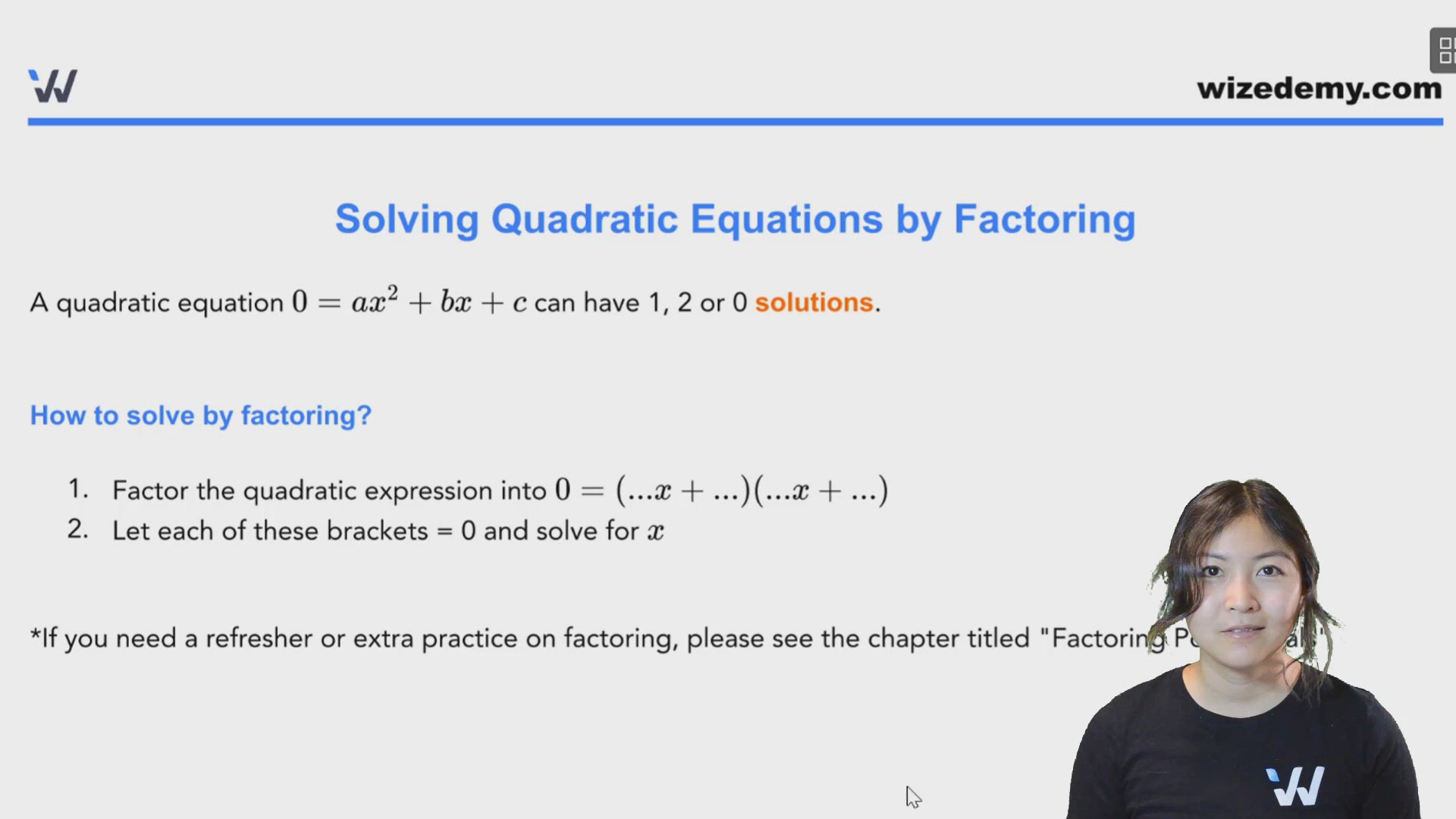
Solving Quadratic Equations by Factoring
A quadratic equation can have 1, 2 or 0 solutions.
How to solve by factoring?
- Factor the quadratic expression into
- Let each of these brackets = 0 and solve for
*If you need a refresher or extra practice on factoring, please see the chapter titled "Factoring Polynomials"
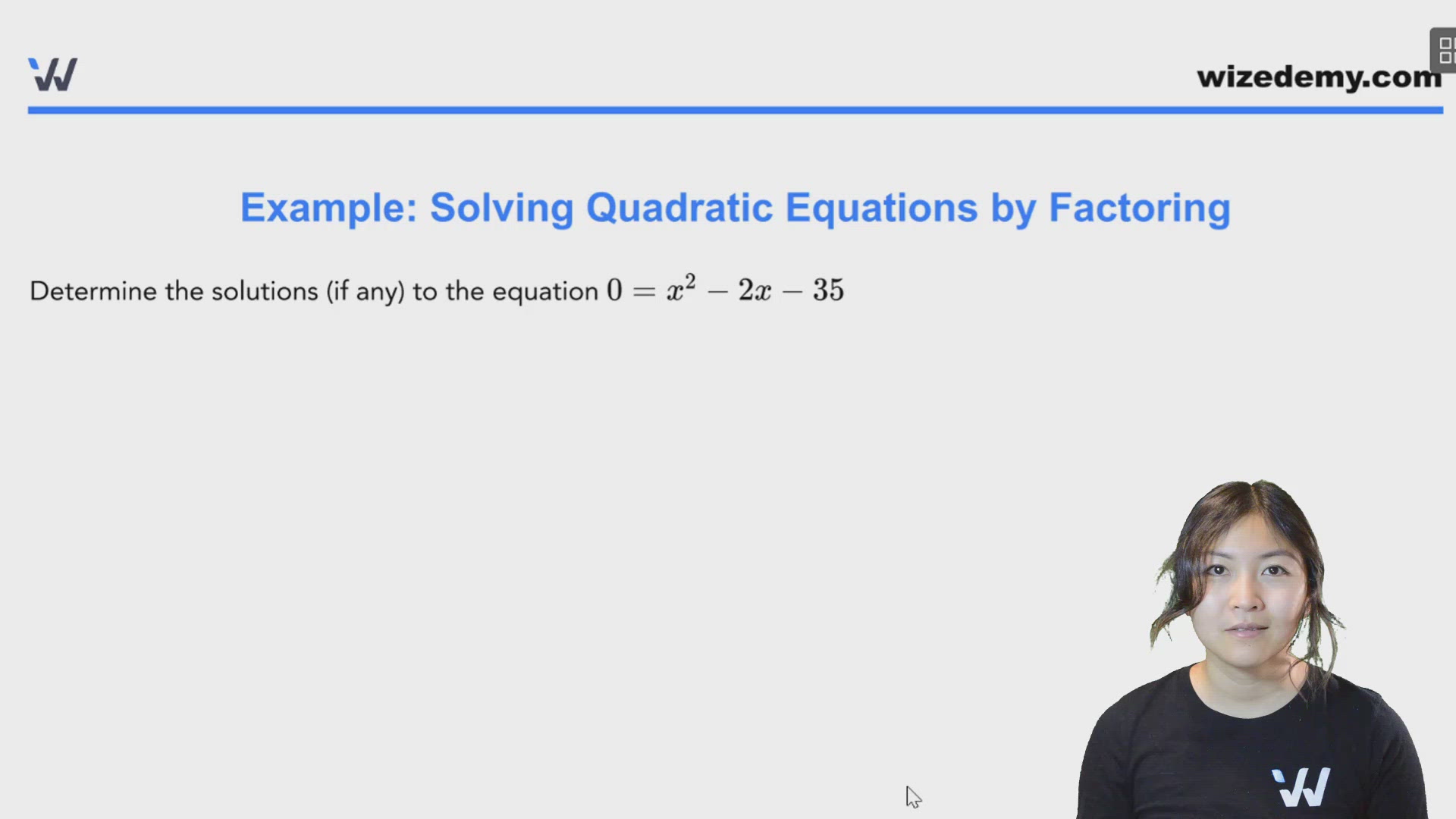
Example: Solving Quadratic Equations by Factoring
Determine the solutions (if any) to the equation
1. We already have 0 on one side of the equation, so we now have to factor the right side of the equation:
2. From the equation, we see that , and .
- We need two numbers and that multiply to and add to .
- These numbers are and
- So, the factored form is
3. Solve the equation:
4. The solutions are and
We can check this by substituting each x value into the original equation:
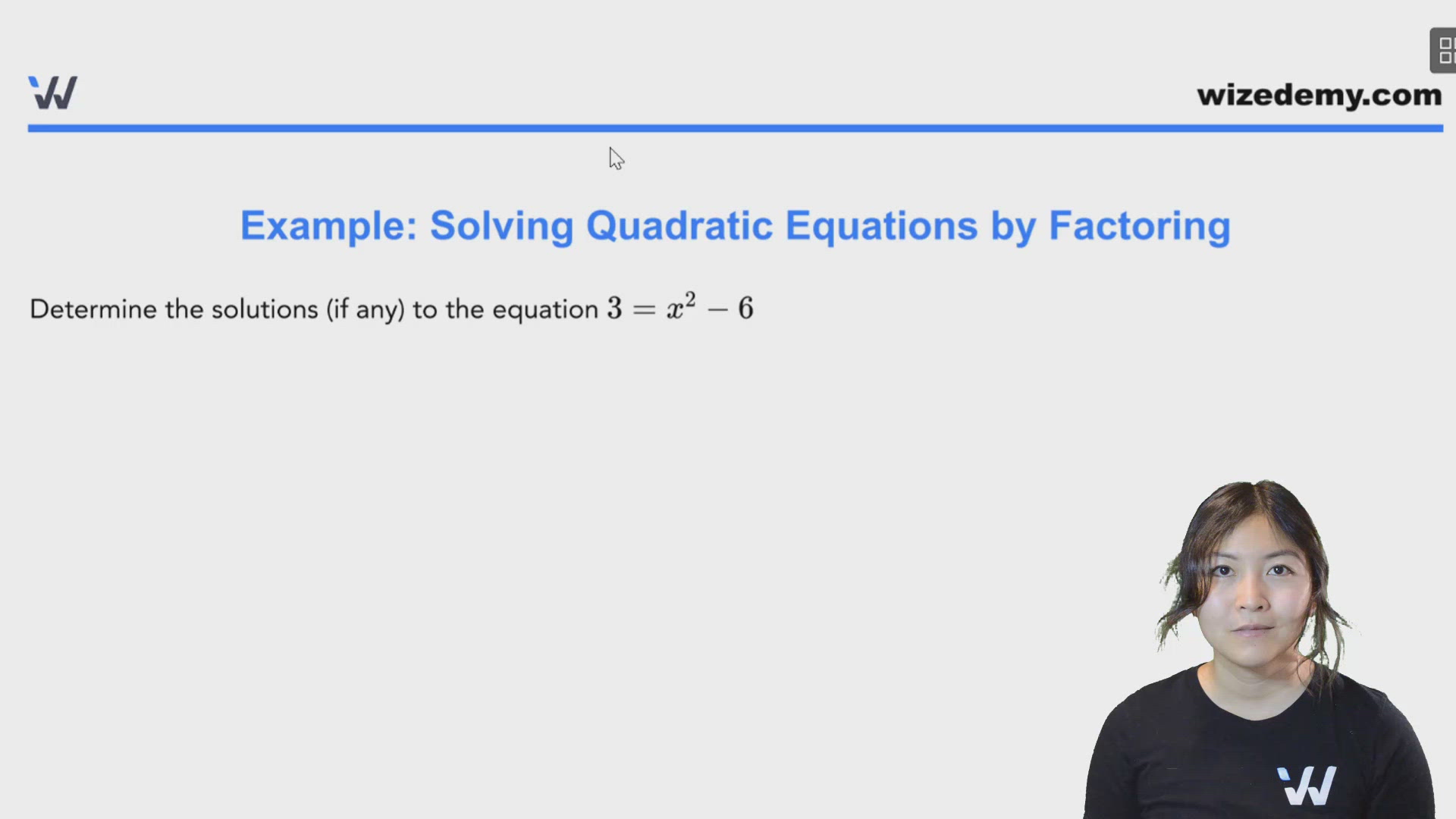
Example: Solving Quadratic Equations by Factoring
Determine the solutions (if any) to the equation
1. Rearrange the equation:
2. From the equation, we see that this is a difference of squares
- Rewriting the quadratic expression on the right:
- Recall the difference of squares formula
- The factored form is
3. Solve the equation:
4. The solutions are and
We can check this by substituting each x value into the original equation:
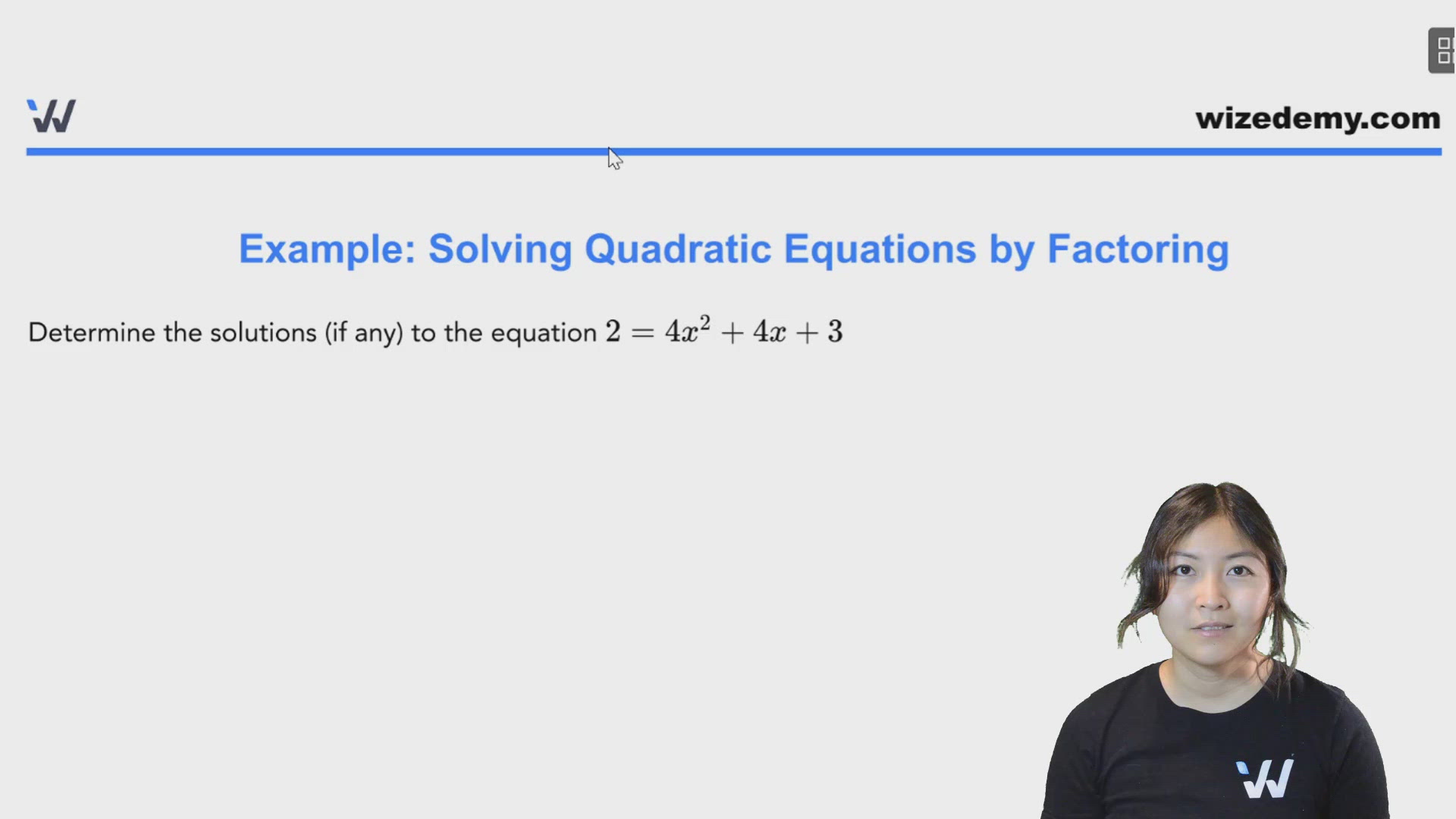
Example: Solving Quadratic Equations by Factoring
Determine the solutions (if any) to the equation
1. Rearrange the equation:
2. From the equation, we see that , and
- We need two numbers and that multiply to and add to
- These numbers are and
- Rewrite the quadratic expression:
- Factor this expression:
*Alternative, you could have recognized this as a perfect square trinomial and factored it using the short-cut:
3. Solve the equation:
4. There is only one solution
We can check this by substituting each x value into the original equation: