Wize High School Grade 10 Math Textbook > Solving Quadratic Equations
Solving Quadratic Equations by Factoring
Popular Courses
Grade 10 Math
Canada High School
Algebra I
US High School
DAT
General Course
Grade 10 Principles of Mathematics
Ontario High School
QMS 110
Toronto Metropolitan University
Grade 10 Foundations of Mathematics
Ontario High School
MATH-1980
University of Windsor
MATH 1314
Tarrant County College District
MATH 202
Concordia University
MATH 1148
Ohio State University
MTH 116
Michigan State University
MATH 1302
University of Texas at Arlington
0:00 / 0:00
Solving Quadratic Equations by Factoring
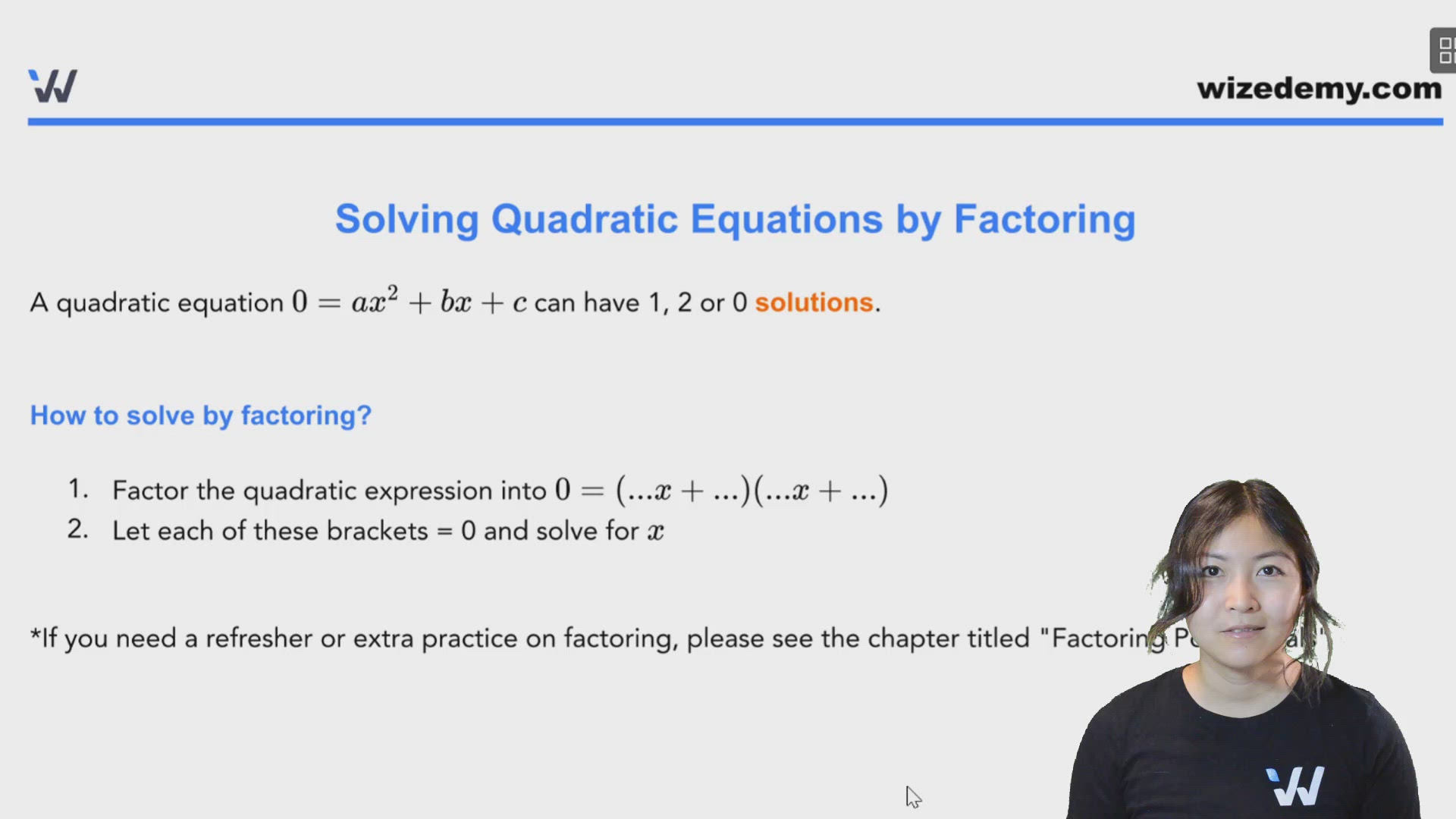
A quadratic equation can have 1, 2 or 0 solutions.
How to solve by factoring?
- Factor the quadratic expression into
- Let each of these brackets = 0 and solve for
*If you need a refresher or extra practice on factoring, please see the chapter titled "Factoring Polynomials"
0:00 / 0:00
Example: Solving Quadratic Equations by Factoring
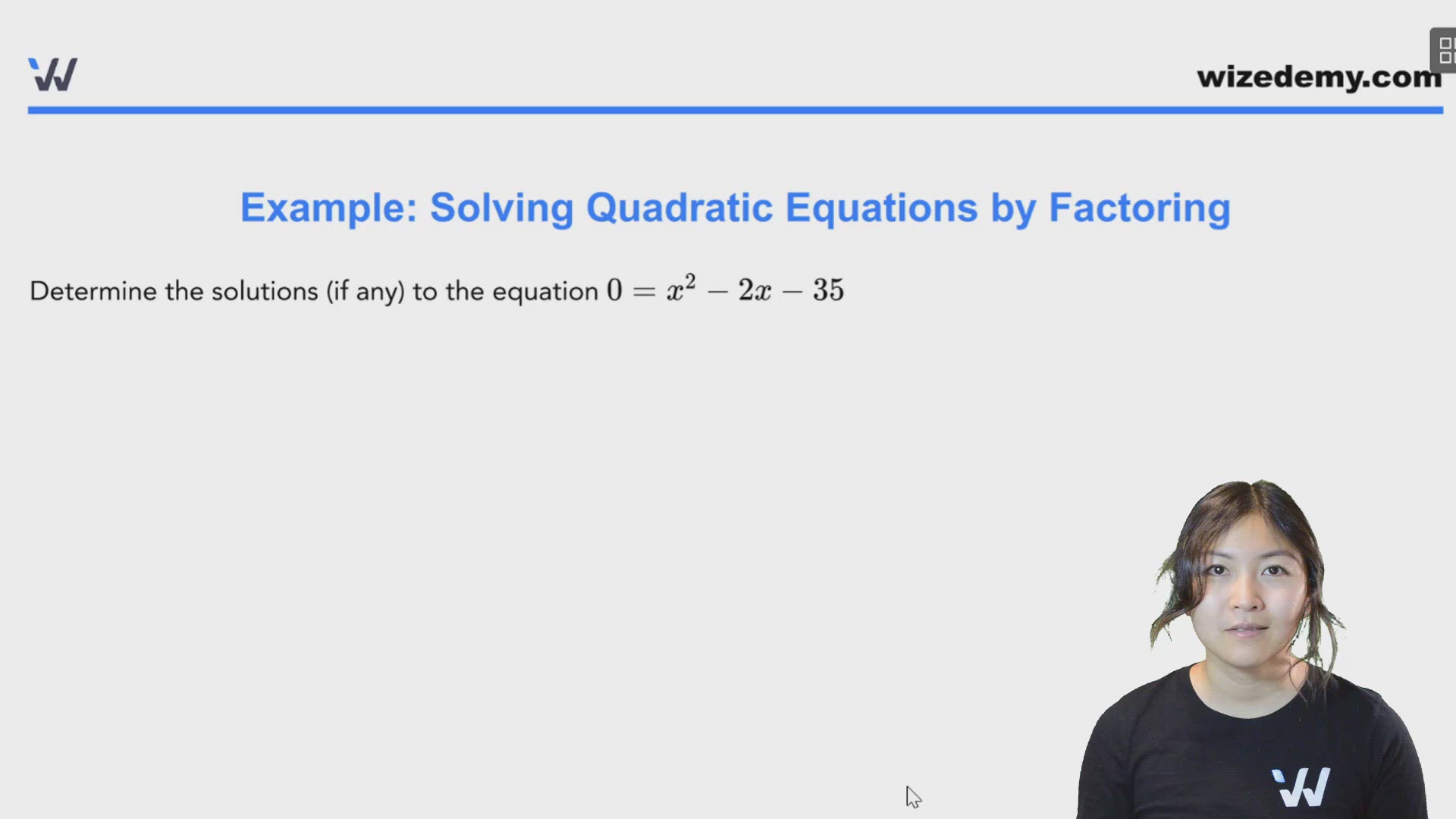
Determine the solutions (if any) to the equation
1. We already have 0 on one side of the equation, so we now have to factor the right side of the equation:
2. From the equation, we see that , and .
- We need two numbers and that multiply to and add to .
- These numbers are and
- So, the factored form is
3. Solve the equation:
4. The solutions are and
We can check this by substituting each x value into the original equation:
Practice: Solving Factored Quadratic Equations
Solve the following equations (find the value that makes the left side of the equation = the right side of the equation)
a)
b)
c)
0:00 / 0:00
Example: Solving Quadratic Equations by Factoring
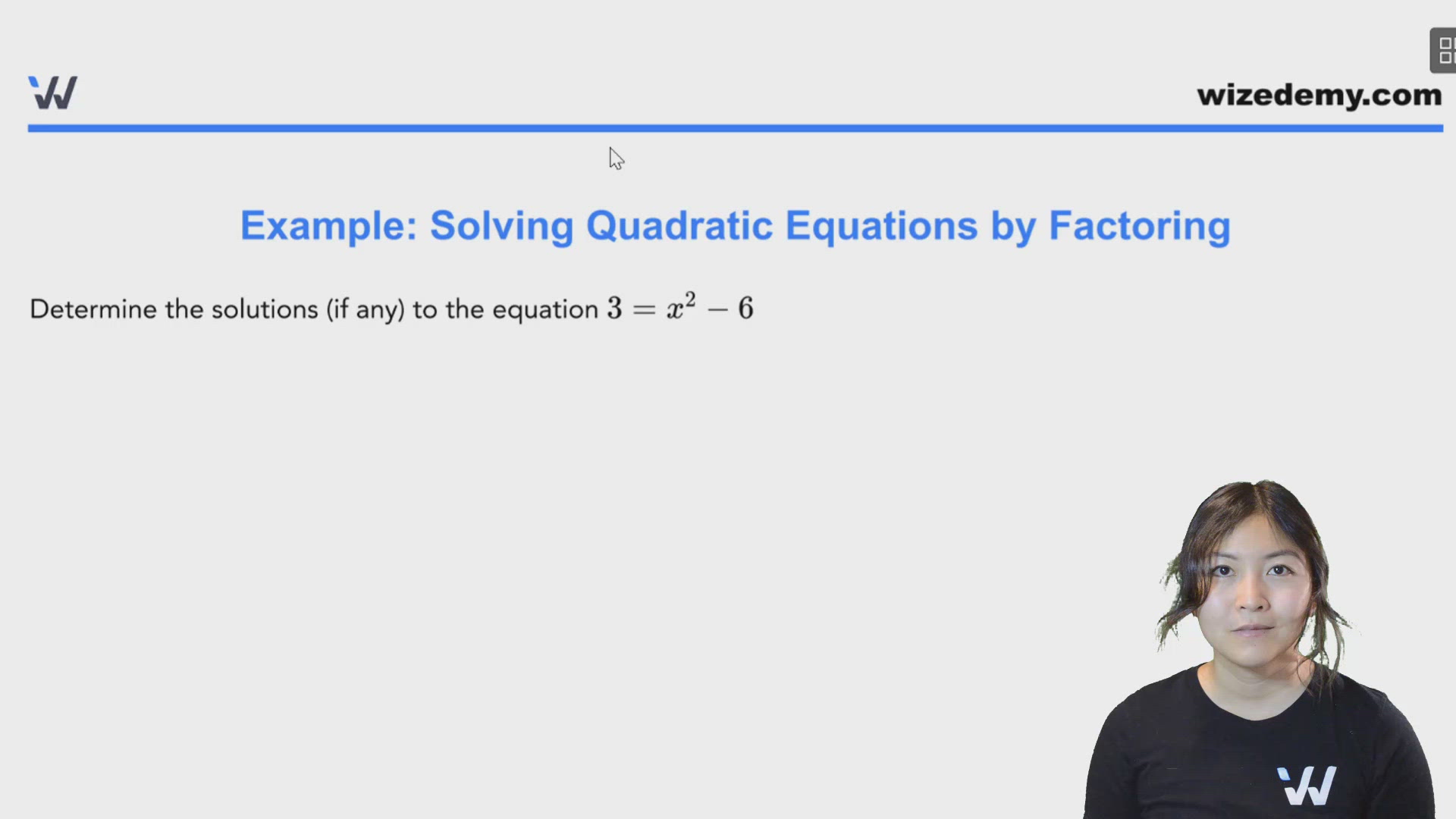
Determine the solutions (if any) to the equation
1. Rearrange the equation:
2. From the equation, we see that this is a difference of squares
- Rewriting the quadratic expression on the right:
- Recall the difference of squares formula
- The factored form is
3. Solve the equation:
4. The solutions are and
We can check this by substituting each x value into the original equation:
0:00 / 0:00
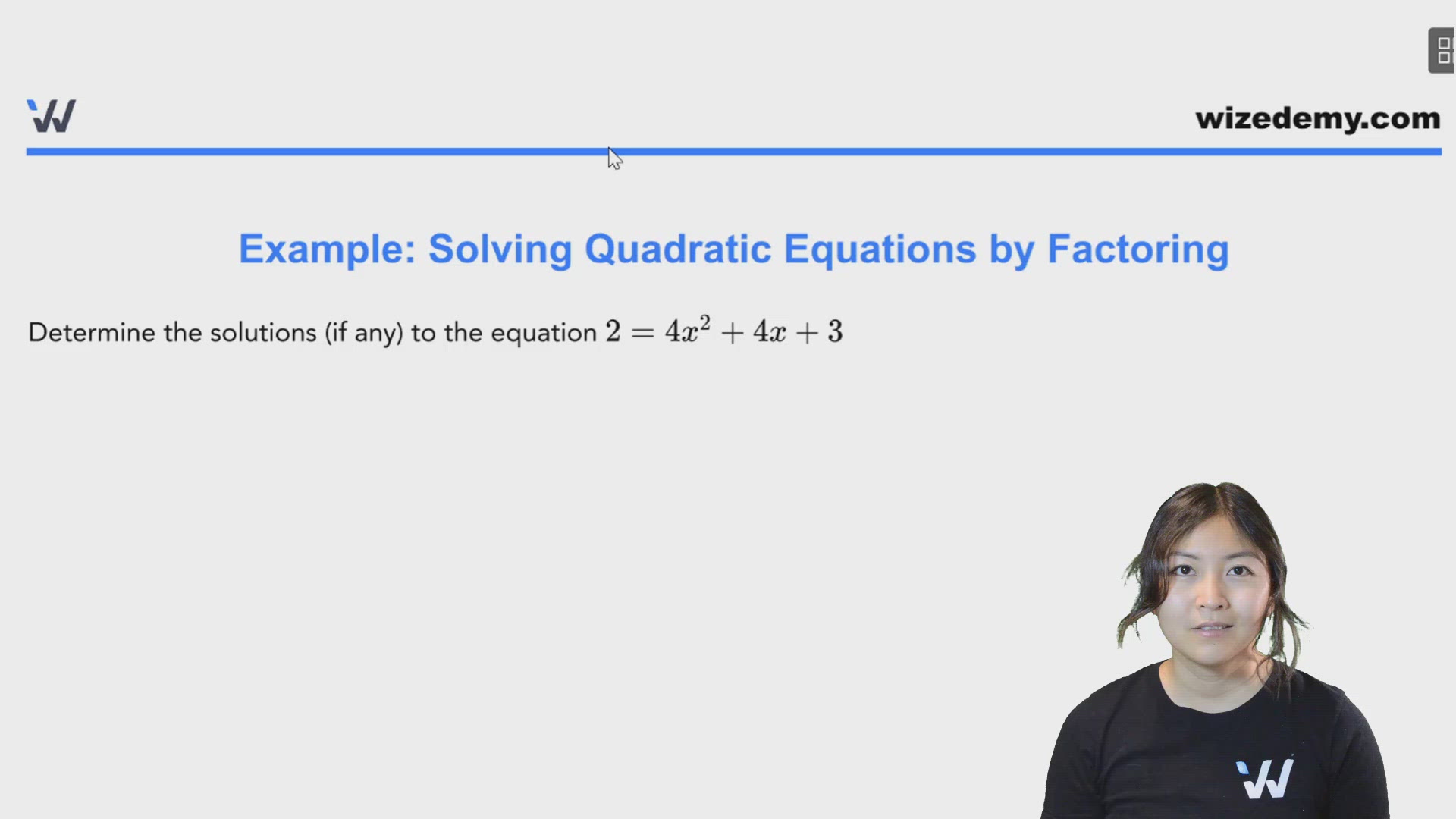
Example: Solving Quadratic Equations by Factoring
Determine the solutions (if any) to the equation
1. Rearrange the equation:
2. From the equation, we see that , and
- We need two numbers and that multiply to and add to
- These numbers are and
- Rewrite the quadratic expression:
- Factor this expression:
*Alternative, you could have recognized this as a perfect square trinomial and factored it using the short-cut:
3. Solve the equation:
4. There is only one solution
We can check this by substituting each x value into the original equation:
Practice: Solving Quadratic Equations by Factoring
Determine the roots (zeros or x-intercepts) of the following equations:
a)
b)
Practice: Solving Quadratic Equations
A local movie theatre's profit is modeled by the equation , where represents the profit on any given day, and represents the ticket prices.
a) At what ticket price(s) will the movie theatre break even? (the theatre does not make money and does not lose money)
b) Determine the movie ticket price that maximizes profit, and determine the maximum profit.
c) At what ticket price(s) will the profit be $640?


Mark Yourself Question
- Grab a piece of paper and try this problem yourself.
- When you're done, check the "I have answered this question" box below.
- View the solution and report whether you got it right or wrong.
Practice: Applications with Quadratic Equations
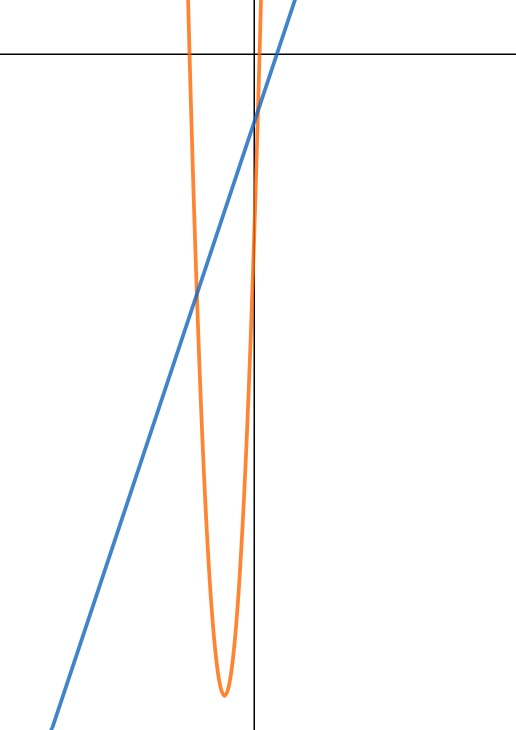
Find the intersection between the line and the parabola , algebraically.