Wize High School Grade 10 Math Textbook > Trigonometry of Right Triangles
Finding Angle Measures in a Right Triangle
Popular Courses
DAT
General Course
Grade 10 Math
Canada High School
Geometry
US High School
Grade 10 Principles of Mathematics
Ontario High School
Math 10C
Alberta High School
Foundations of Math and Pre-Calculus 10
British Columbia High School
MATH 201
Concordia University
Grade 10 Foundations of Mathematics
Ontario High School
MATH 1149
Ohio State University
MTH 116
Michigan State University
MAC 1114C
University of Central Florida

0:00 / 0:00
Finding Angles Using Primary Trig Ratios
Recall
If we know 1 angle and 1 other side length in a right angle triangle, we can calculate the other missing side lengths.
How about calcuating missing angles?
If we know any 2 side lengths in a right angle triangle, we can use the inverse trig ratios , and to calculate the missing angle. The inverse trig ratio "undoes" the primary trig ratios:
*In some math books, you'll see some people use instead of , instead of , and instead of .
Wize Tip
A trig ratio takes in an angle and produces a ratio, but an inverse trig ratio takes in a ratio and produces an angle.
- means that takes in and returns the ratio
- means that takes in the ratio and returns
Calculator Time!
Watch Out!
*Make sure your calculator is in the correct degree (D) mode.
Use your calculator to evaluate the following:
1.)
30°
2.)
72.54°
3.)
45°
4.)
120°
Practice: Inverse Trig Ratios
Use your calculator to evaluate the following.
a)
b)
c)

Practice: Using Inverse Trig Ratios to Find an Angle
Solve for the following angles.
a)
b)
c)
d)
0:00 / 0:00
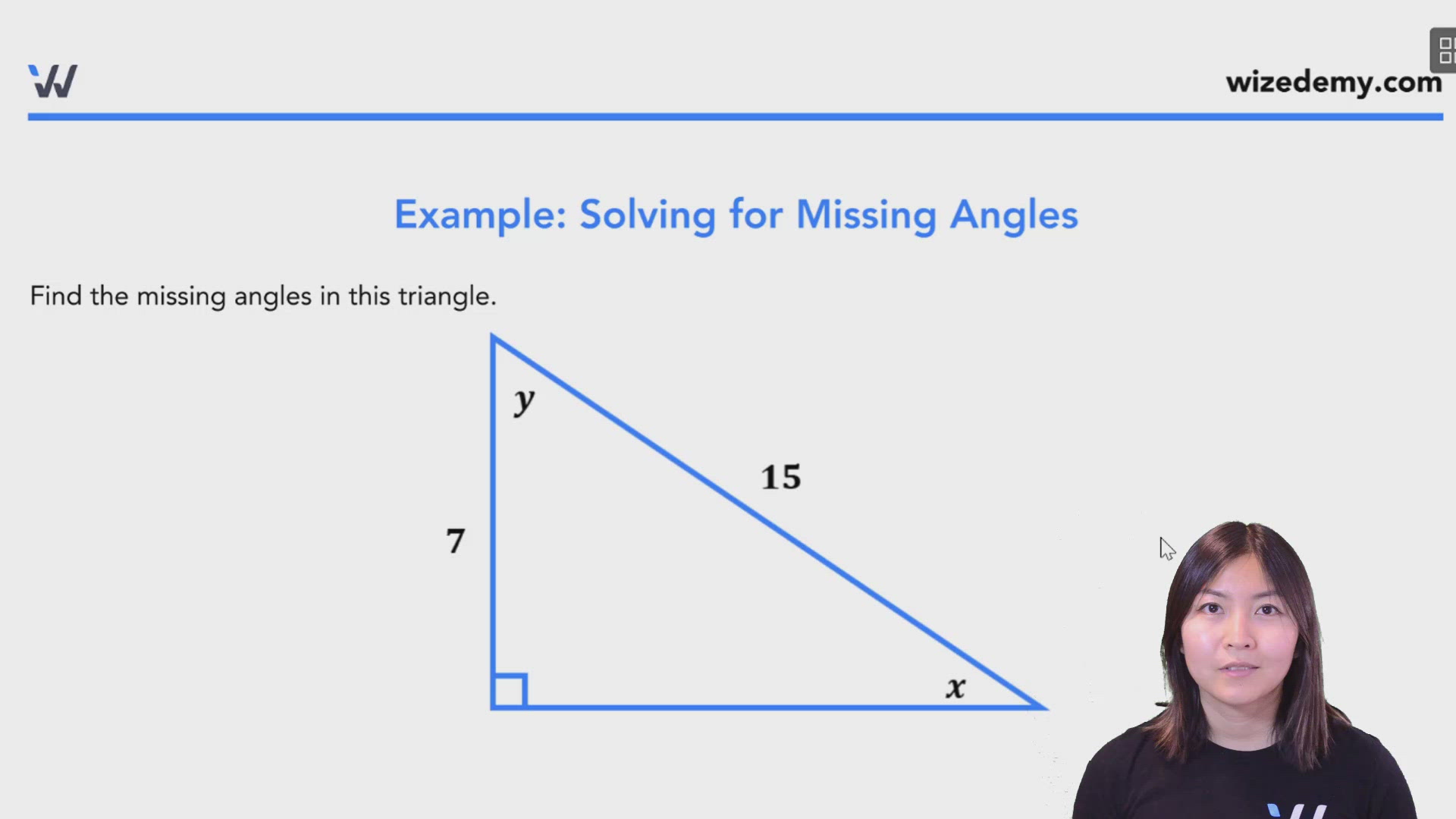
Example: Solving for Missing Angles
Find the missing angles in this triangle.
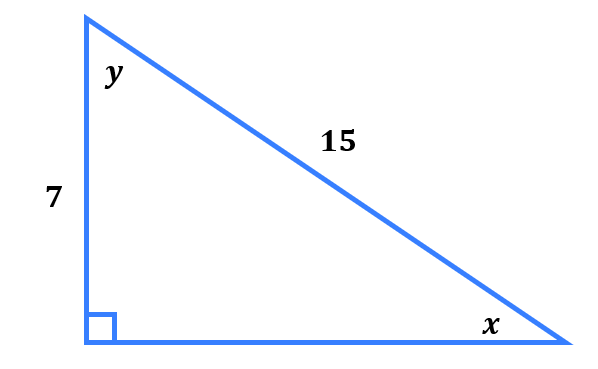
Let's start by finding
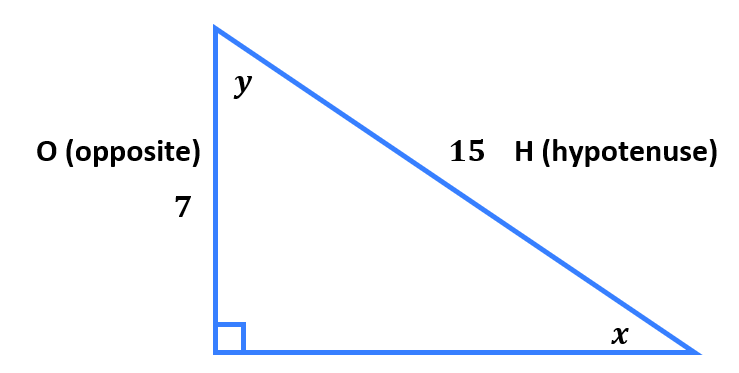
The give sides are the opposite side and hypotenuse side, so we use the ratio:
Finding
Method 1 (easier way)
The interior angles in a triangle must add up to :
Method 2 (using inverse trig ratios again)
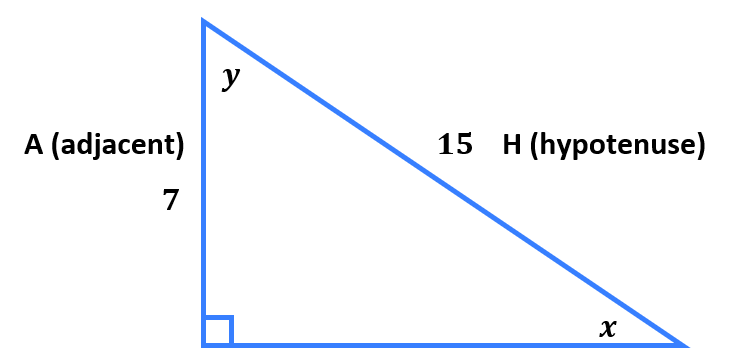
We could use the ratio:
Practice: Solving for Missing Angles
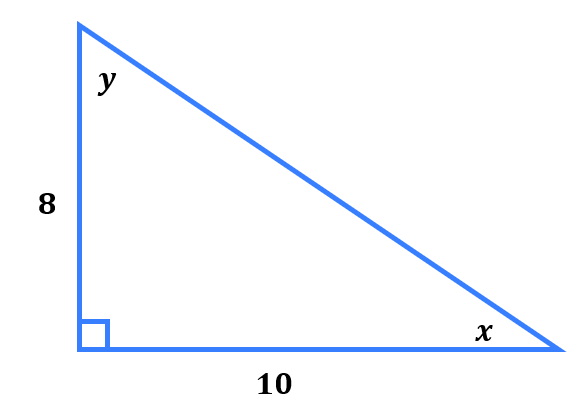
Find the missing angles.