Wize High School Grade 12 Calculus Textbook > Vectors
Introduction to Vectors

0:00 / 0:00
What are Points?

We can represent any position in 2D using the Cartesian coordinates
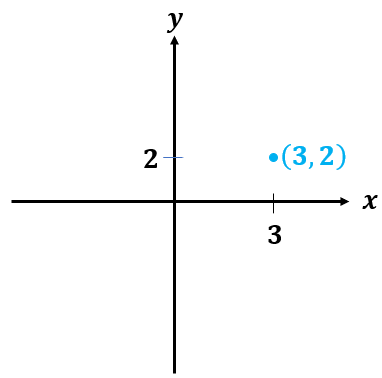
Wize Concept
The 2D or space contains the and axes.
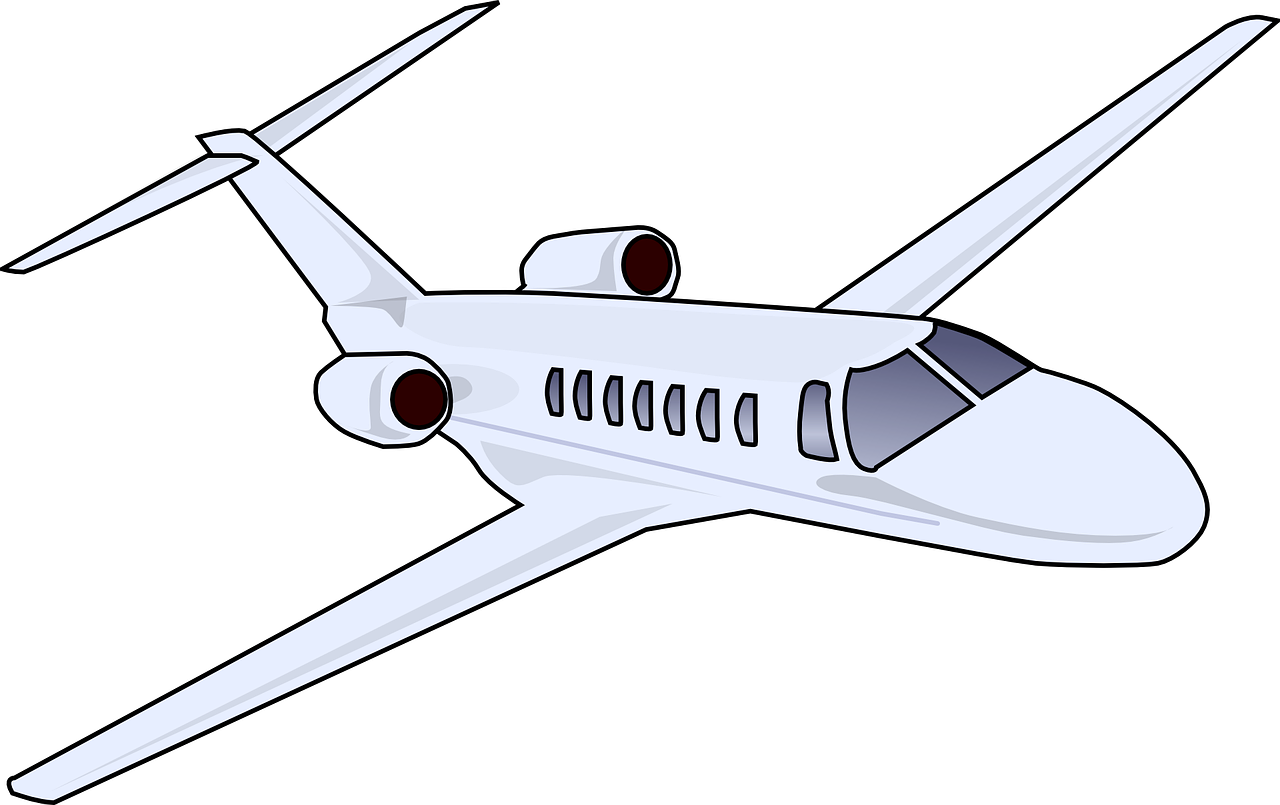 How could we describe the position of a plane in the sky?
We can represent any position in 3D using the coordinates
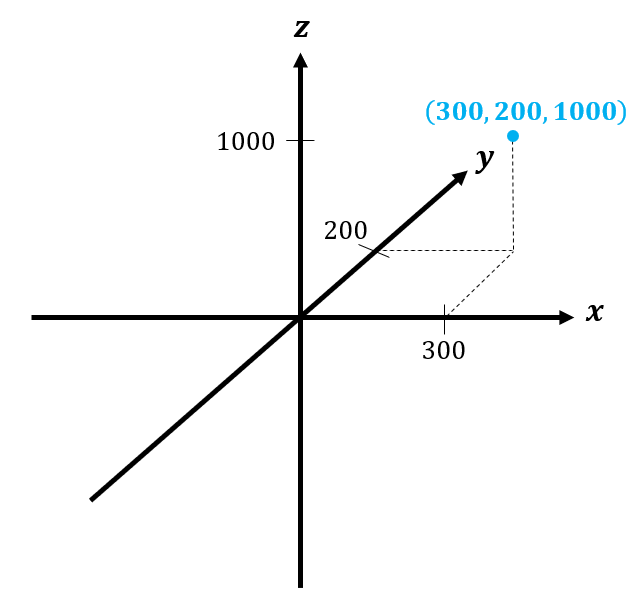
❓ How do we know which directions are the positive axes pointing in?
Use the right-hand rule!

In we have the following special planes:
- The -plane contains all points wherez=0
- The -plane contains all points wherey=0
- The -plane contains all points wherex=0
Wize Concept
The 3D or space contains the , , and axes.
What are Scalars?
A scalar is a quantity with magnitude only → it is just a numerical number!
Examples
- Distance: The library is 2 km from your house
- Speed: The car is travelling at 110 km/h
- Length/height: LeBron is 206 cm tall
- Mass: Peter Griffin is 270 lbs
What are Vectors?
If you had to tell your friend where a treasure is, we can give them the coordinates of the treasure, or you can give them the directions to the treasure!

Vectors allow us to describe a quantity that involves both magnitude and direction → a number and a direction!
Examples
- Displacement: The library is 2 km N30oW from your home
- Velocity: The car is travelling at 110 km/h E
- Force: We need to apply a force of 50 N 25o above the ground to move the box
- Acceleration: The car accelerates at a rate of W (the velocity is increasing constantly)
Practice: Scalar VS Vector?
Each of the following is either a scalar or a vector quantity.
Select all of the vector quantities in the list.
0:00 / 0:00
2D Vectors
Cartesian Form of a Vector
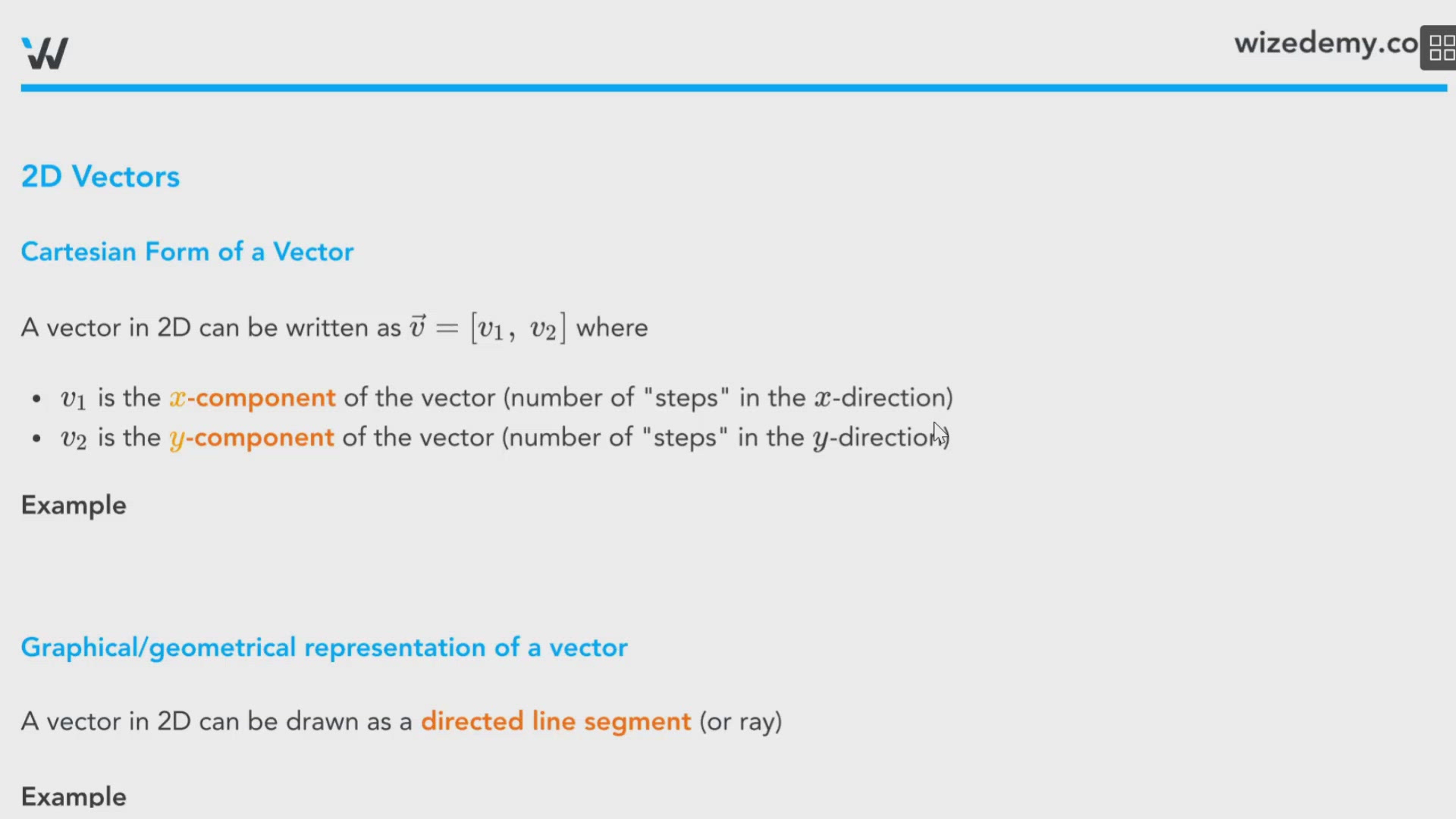
A vector in 2D can be written as where
- is the -component of the vector (number of "steps" in the -direction)
- is the -component of the vector (number of "steps" in the -direction)
Example
Graphical/geometrical representation of a vector
A vector in 2D can be drawn as a directed line segment (or ray)
Example
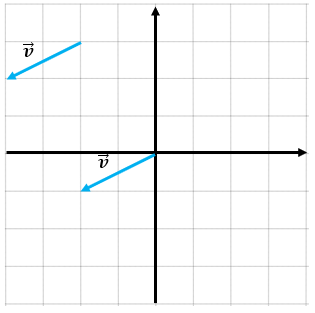
is the directed line segment that goes 2 units in the negative x direction (left) and 1 unit in the negative y direction (down)
Polar Form of a Vector
A vector in 2D can be described as the magnitude and direction
Example
is a vector with length and angle measured counter clockwise from the positive x-axis
Definitions w/ Vectors
Equal vectors are vectors that have the same magnitude and directions.
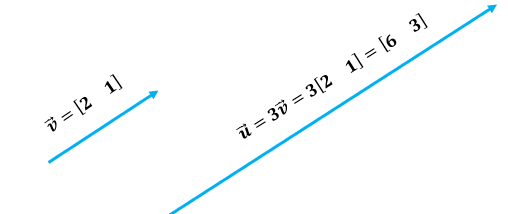
Parallel/collinear vectors are scalar multiples of one another.
Example: and are parallel
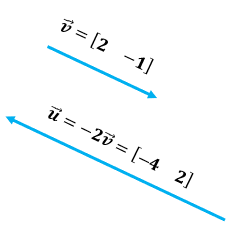
Opposite vectors are negative scalar multiples of one another.
Example: and are opposite
Position vector
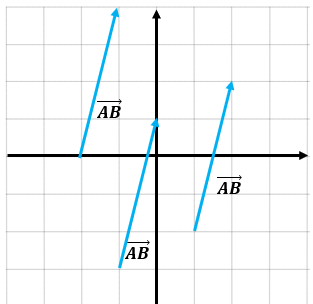
is a position vector that points from point to point .
Example: Draw the position vector that points from the point to the point
Wize Tip
We can label the vector with a single lower case letter .
Practice: 2D Vectors
Given the diagram below, answer the following questions.
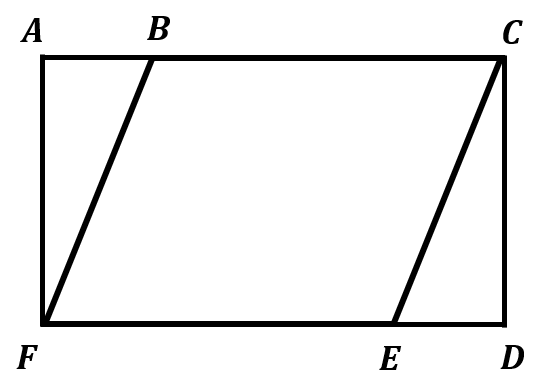
Which of the following vector(s) is/are the same (equal) as ?
0:00 / 0:00
Polar → Cartesian Form
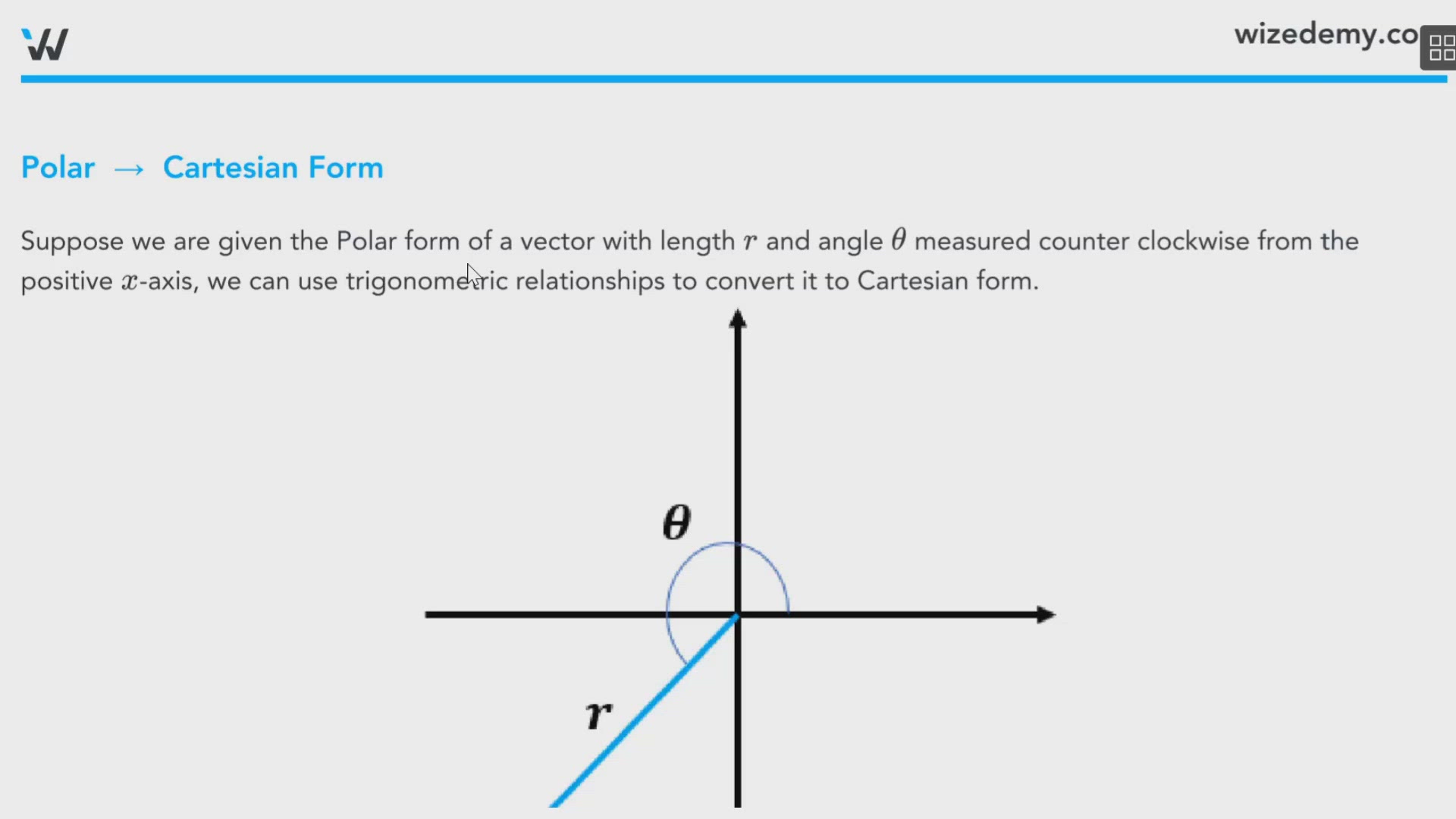
Suppose we are given the Polar form of a vector with length and angle measured counter clockwise from the positive -axis, we can use trigonometric relationships to convert it to Cartesian form.
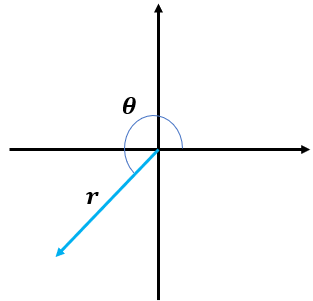
Write it Down
Cartesian Form → Polar Form
Suppose we are given the Cartesian form of a vector , we can use trigonometric relationships to convert it to polar form.
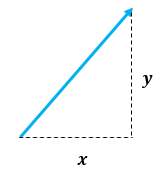
Write it Down
*measured from the x-axis
Did you Know?
There are many ways to represent directions (a.k.a bearings). Here are a few common ones that all mean the same thing!
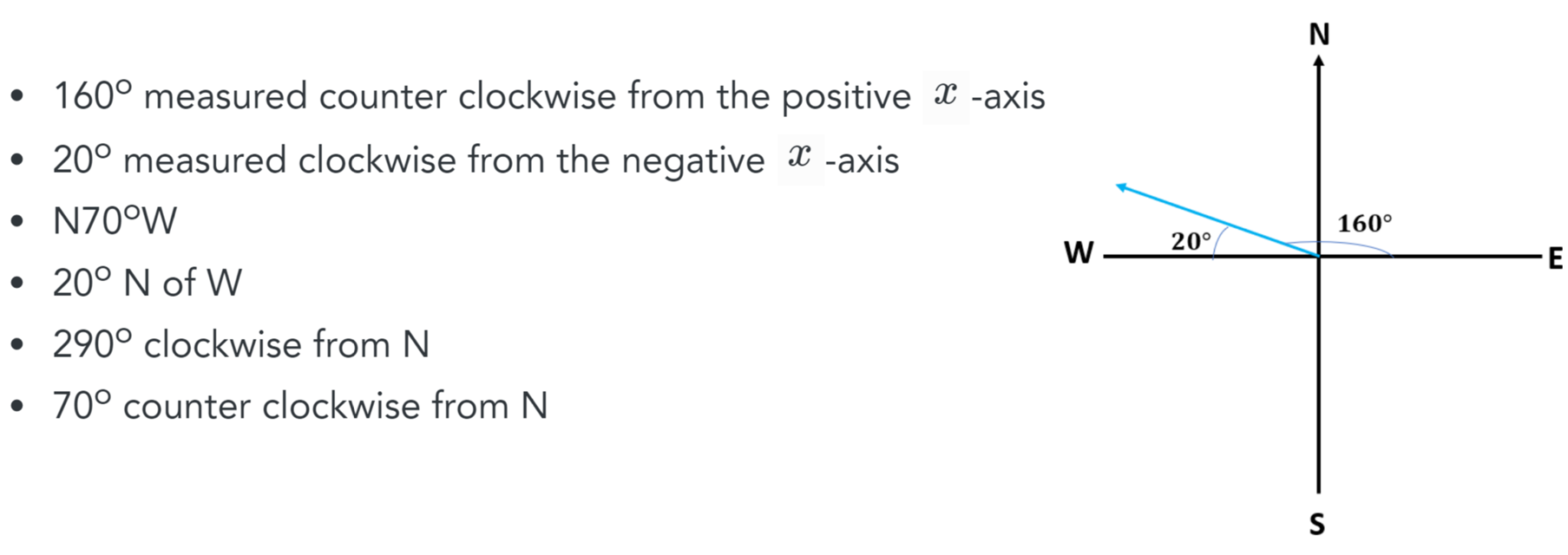
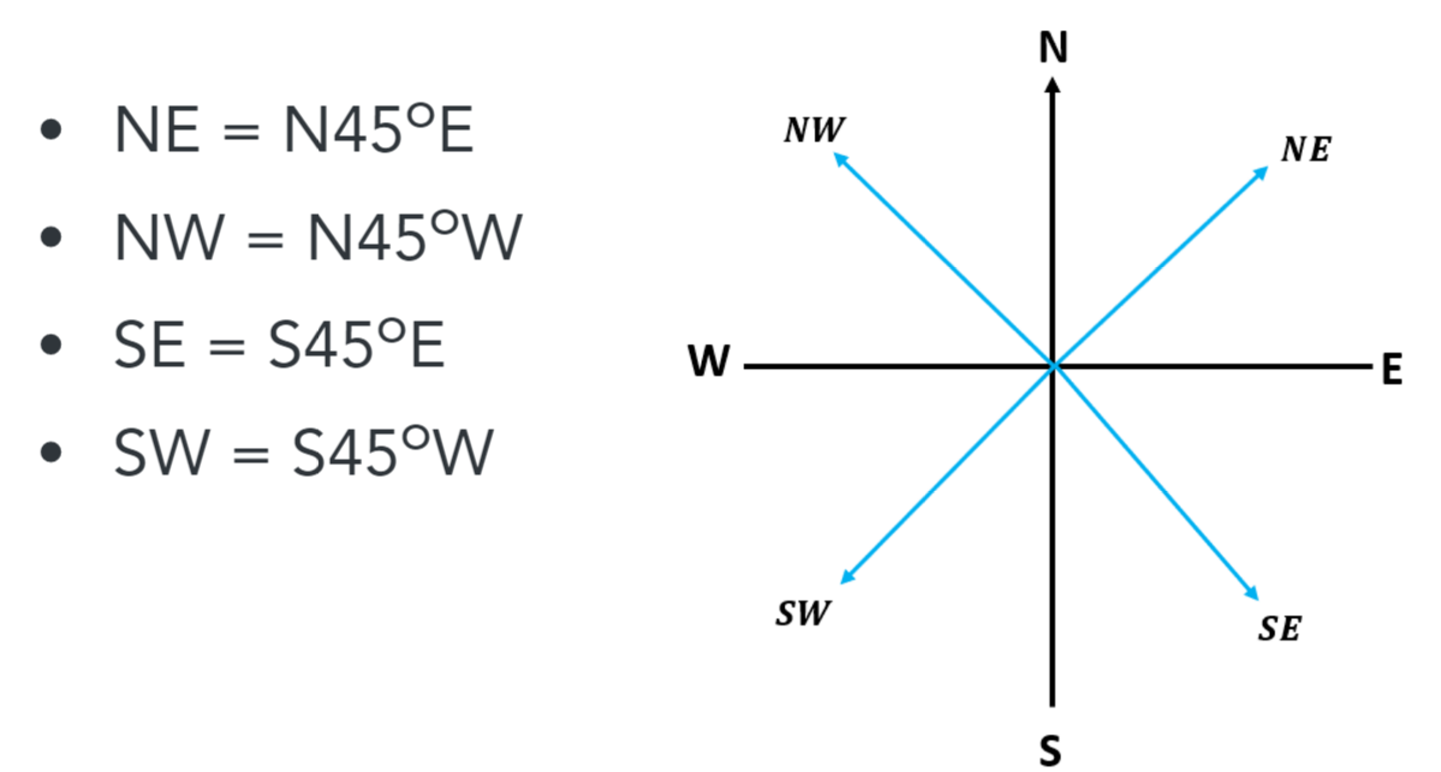
Don't let these special angles trick you!
0:00 / 0:00
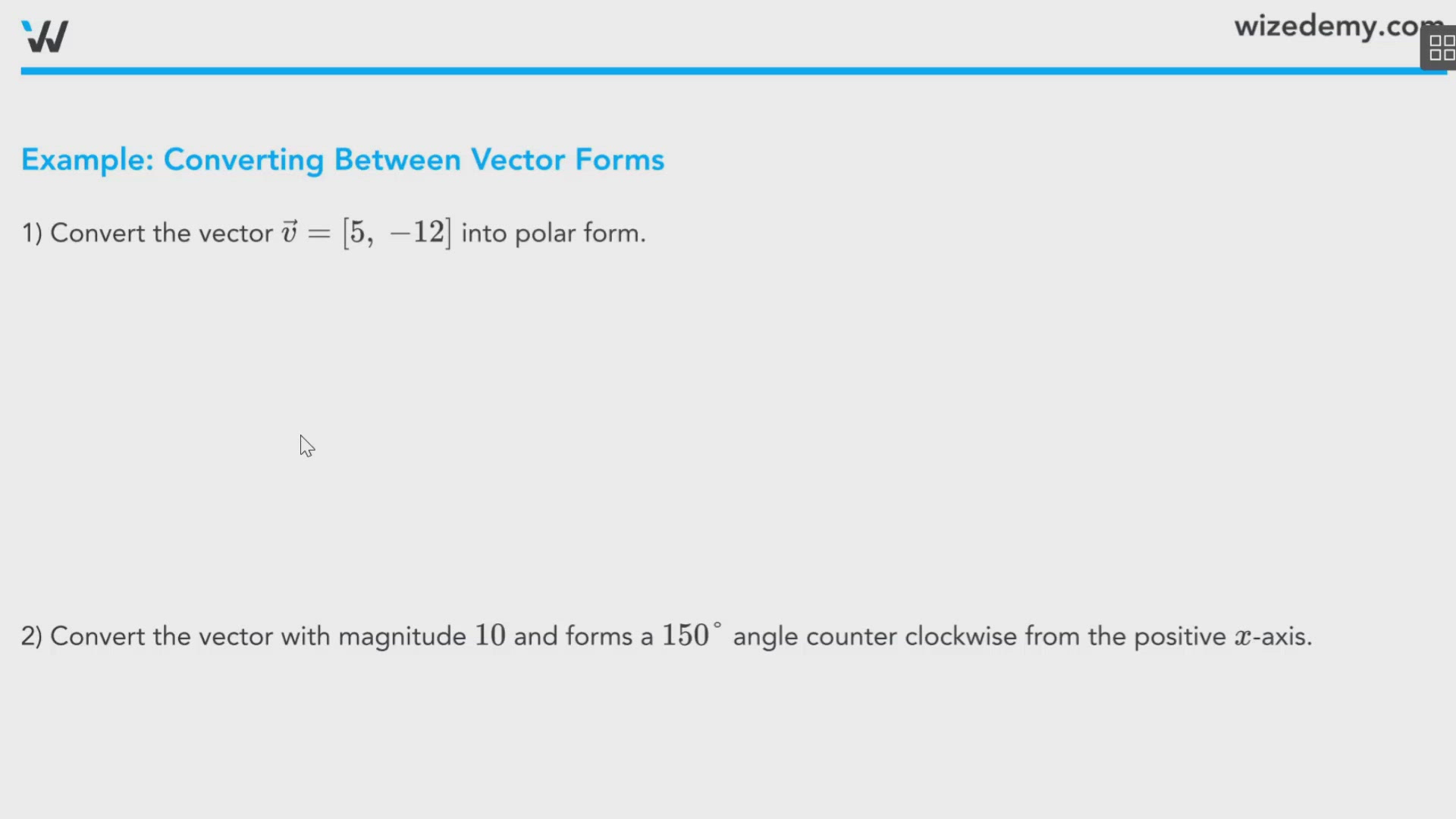
Example: Converting Between Vector Forms
1) Convert the vector into polar form.
(since this angle is negative, it means that it is measured clockwise from the positive x-axis)
Therefore, this vector has a magnitude of 13 and is 67.38o measured clockwise from the positive x-axis.
2) Convert the vector with magnitude and forms a angle counter clockwise from the positive -axis.
Therefore, this vector in Cartesian form is
Practice: Cartesian → Polar
The velocity of a car is described by the vector km/h.
Describe the speed (magnitude) and direction of this car.
Practice: Polar → Cartesian
In a car accident involving a Honda Civic and a Ford, the Civic's momentum is 65200 kg m/s N25oW. Write this vector in Cartesian form
0:00 / 0:00
3D Vectors
Cartesian Form of a Vector
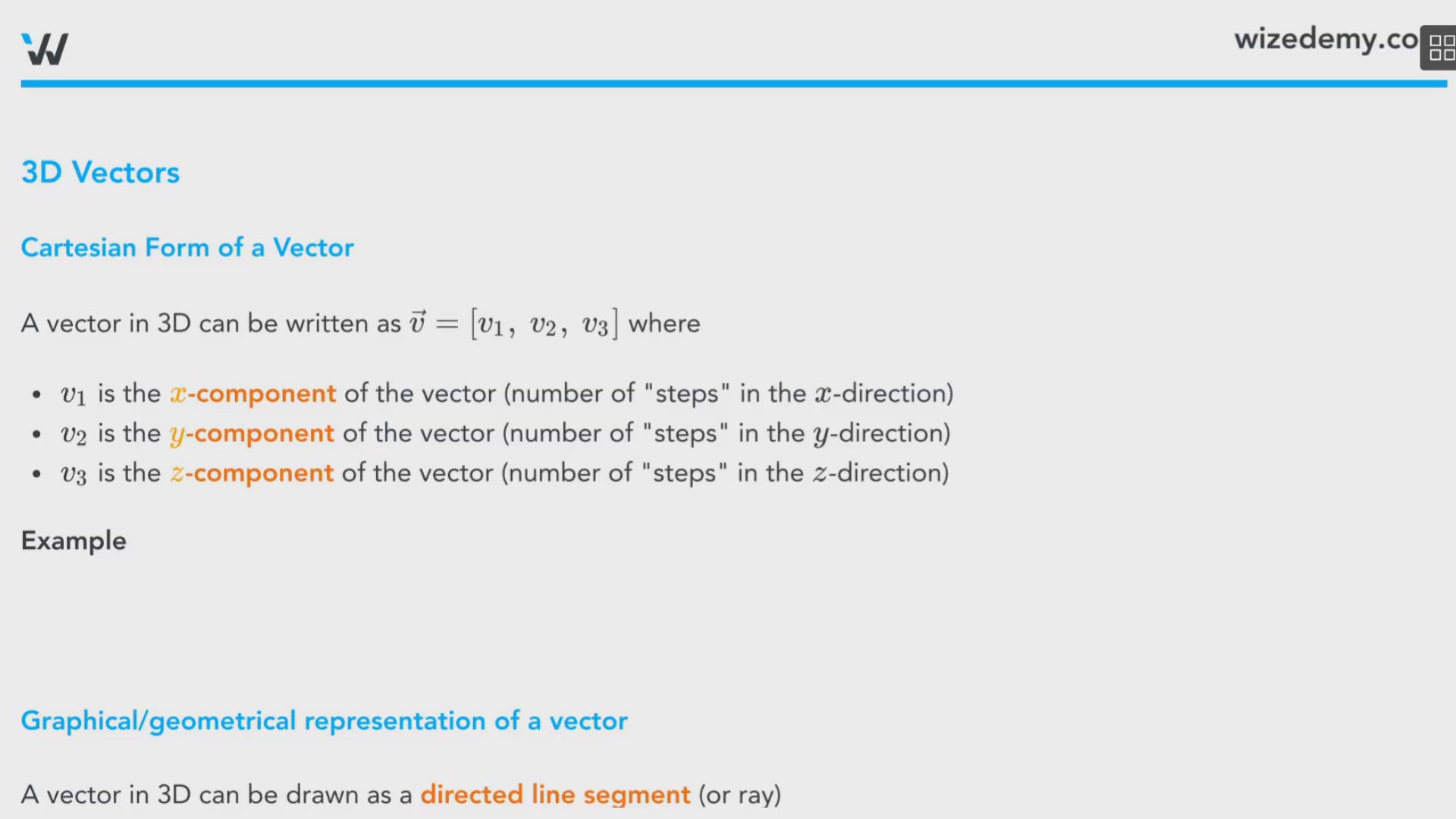
A vector in 3D can be written as where
- is the -component of the vector (number of "steps" in the -direction)
- is the -component of the vector (number of "steps" in the -direction)
- is the -component of the vector (number of "steps" in the -direction)
Example
Graphical/geometrical representation of a vector
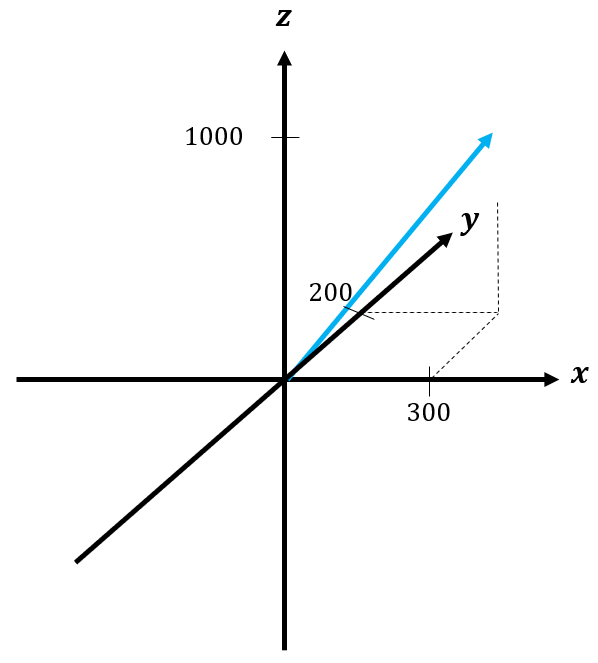
A vector in 3D can be drawn as a directed line segment (or ray)
Example
Wize Tip
The definitions for parallel, opposite, and position vectors in 3D are the same as those in 2D.
Watch Out!
Unlike vectors in 2D, we cannot represent 3D vectors with just a magnitude and angle, we actually need 3 angles -- one for each of the axes.