Wize High School Grade 12 Calculus Textbook > Curve Sketching
Increasing & Decreasing Intervals

0:00 / 0:00
Increasing & Decreasing Intervals
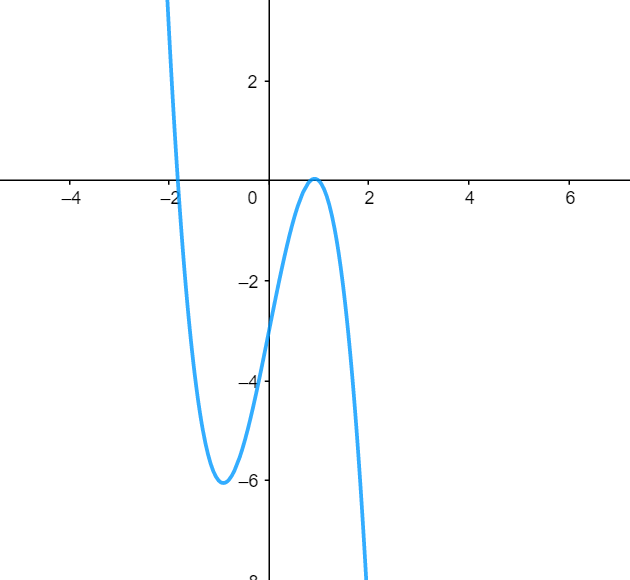
A function is increasing on an interval if the graph rises from left to right → on this interval.
A function is decreasing on an interval if the graph falls from left to right → on this interval.
Example
Identify the increasing and decreasing intervals in the graph below.
How to identify increasing and decreasing intervals?
1. Find , set it equal 0 and solve for
2. Create a number line with the values found in step 1
3. Determine the intervals in which the function is increasing () and decreasing ()
Example
Determine when the function is increasing, and when it's decreasing.
1.
2.

3. Pick values within each interval and sub it into :
- :
- :
- :
- :

Therefore, the function is decreasing when and the function is increasing when .
0:00 / 0:00
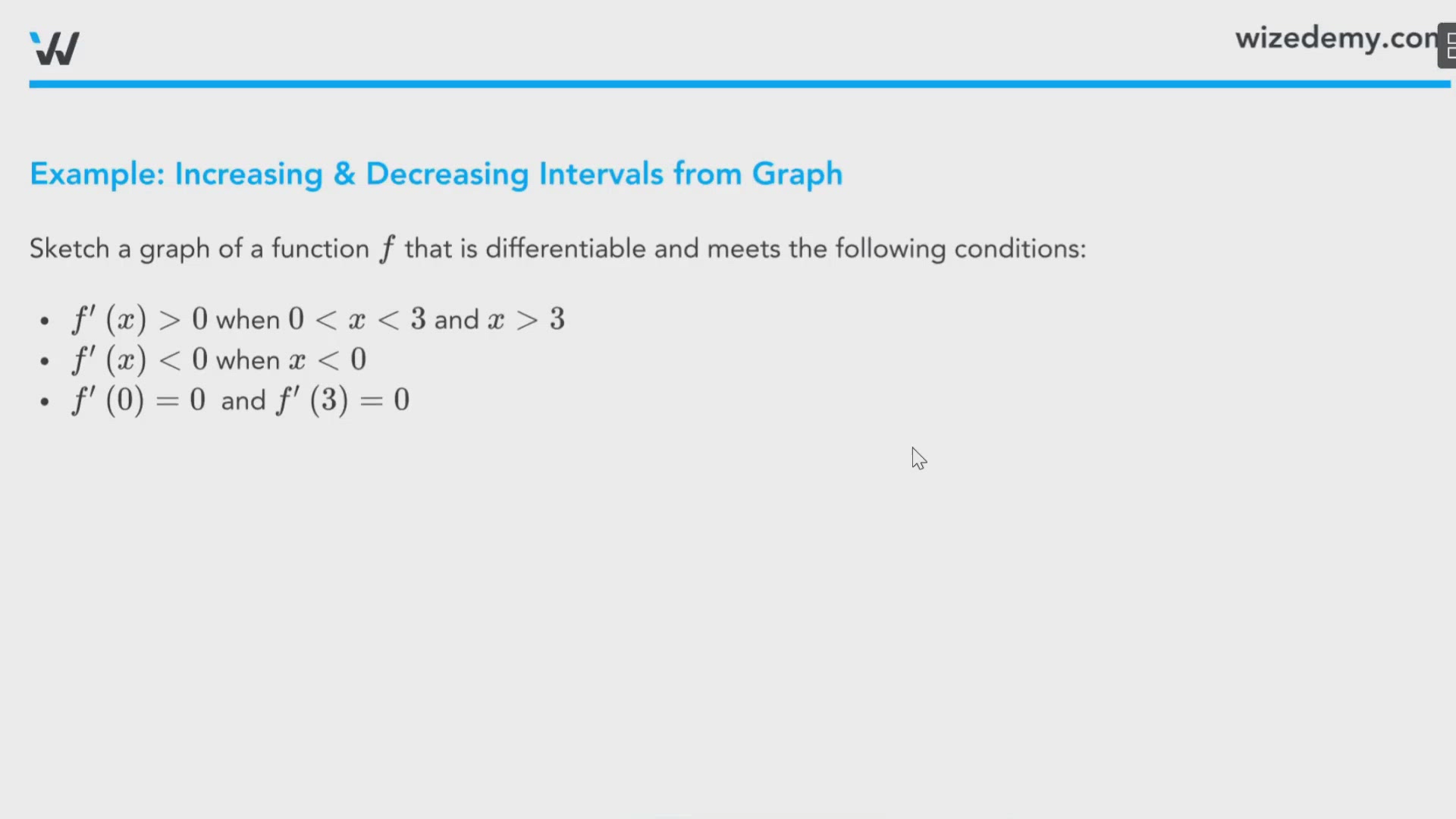
Example: Increasing & Decreasing Intervals from Graph
Sketch a graph of a function that is differentiable and meets the following conditions:
- when and
- when
- and

Practice: Increasing & Decreasing Intervals
Find the intervals of increase and decrease for the following functions.
0:00 / 0:00
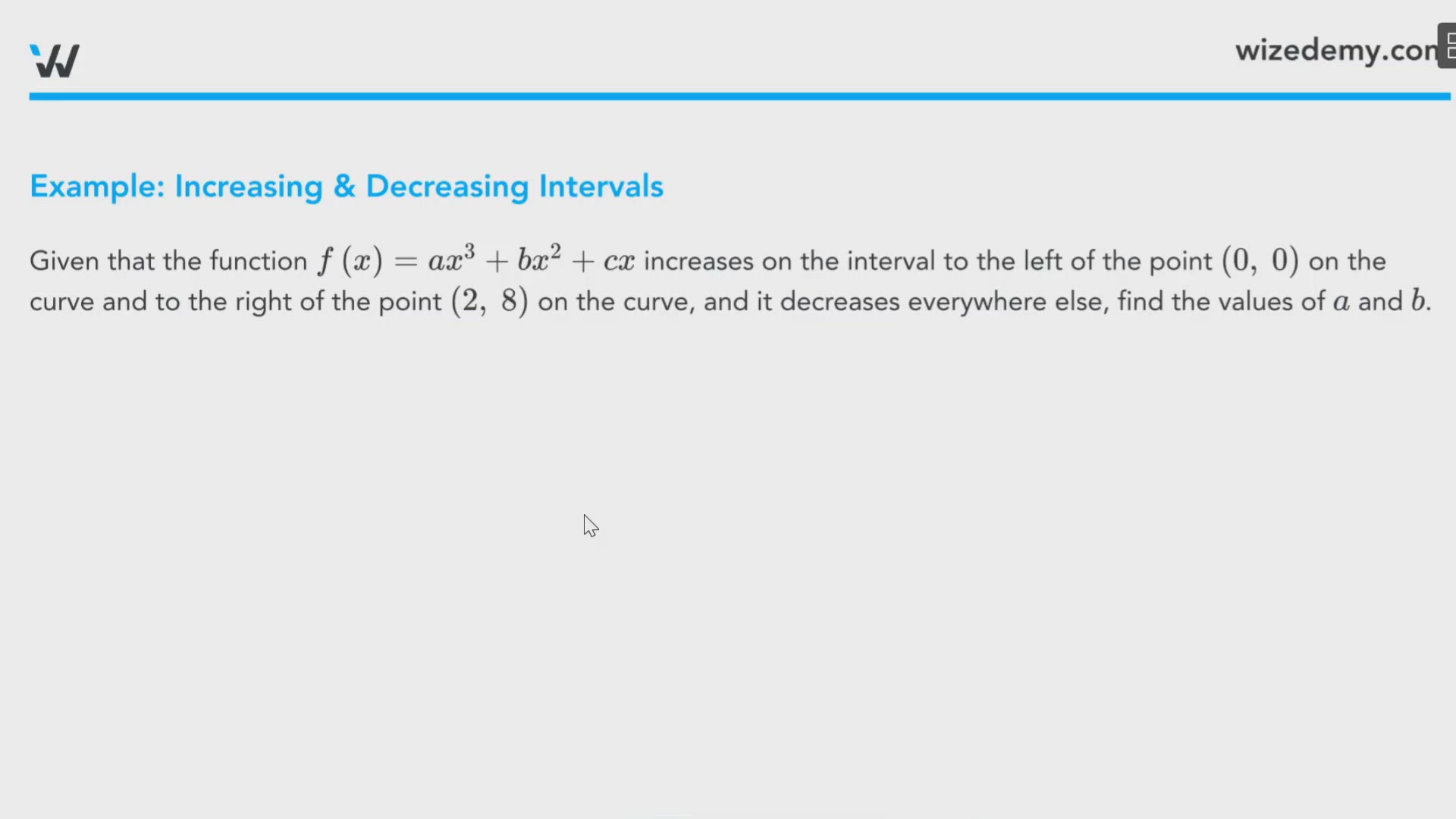
Example: Increasing & Decreasing Intervals
Given that the function increases on the interval to the left of the point on the curve and to the right of the point on the curve, and it decreases everywhere else, find the values of and .
The point is on the curve:
This doesn't provide us with any useful information.
The point is on the curve:
- equation 1
Now we need to use the information about increasing and decreasing intervals:
The curve turns around at the point and .
- : - equation 2
- : - equation 3
Substitute equation 2 into equations 1:
Combine this with
→ and
0:00 / 0:00
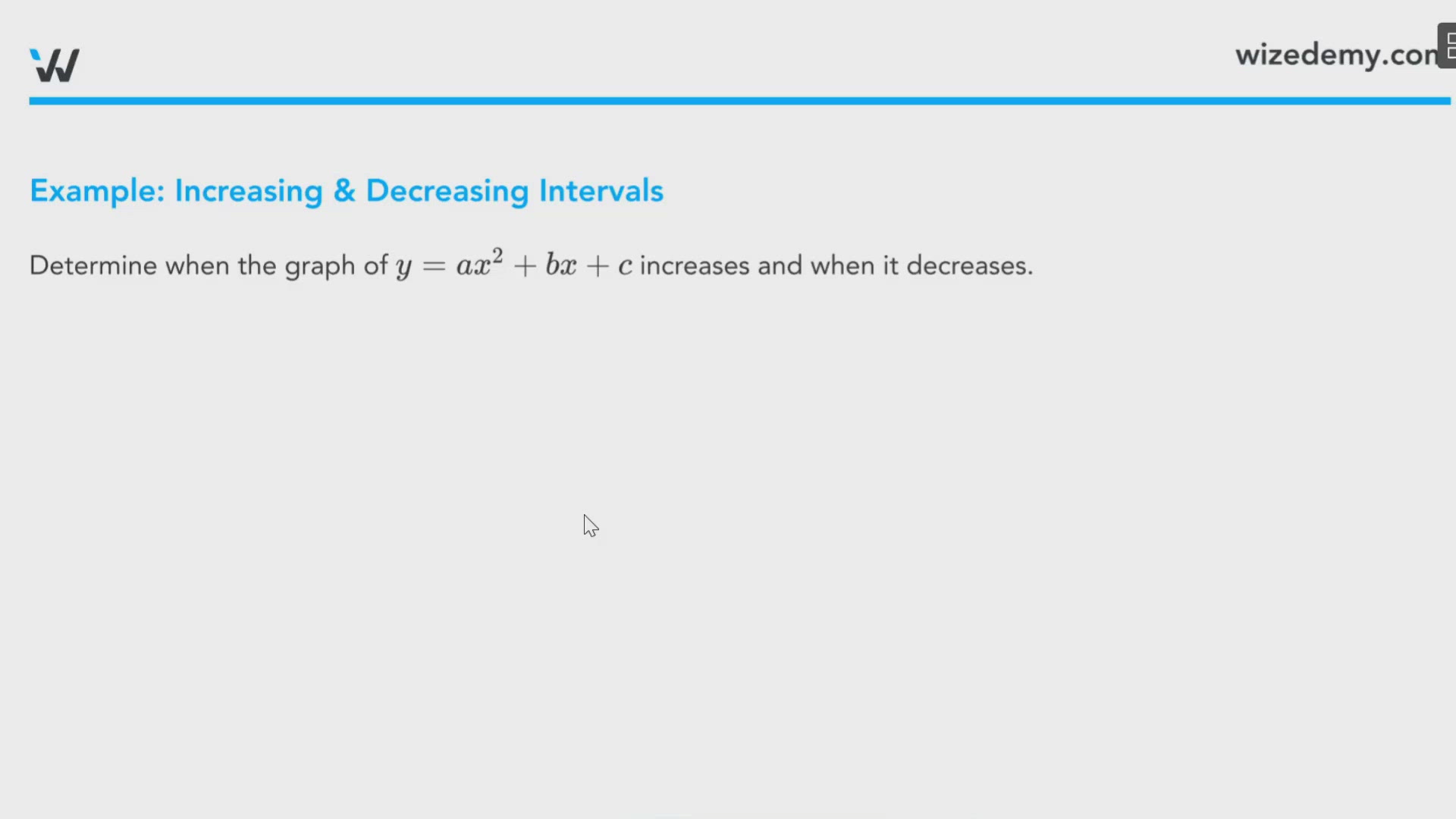
Example: Increasing & Decreasing Intervals
Determine when the graph of increases and when it decreases.
To determine the increasing and decreasing intervals, we need to find the derivative and set it equal 0:
When :
When :
Therefore, the quadratic graph is increasing when and it is decreasing when