Solving Linear Inequalities

Solving Linear Inequalities Algebraically
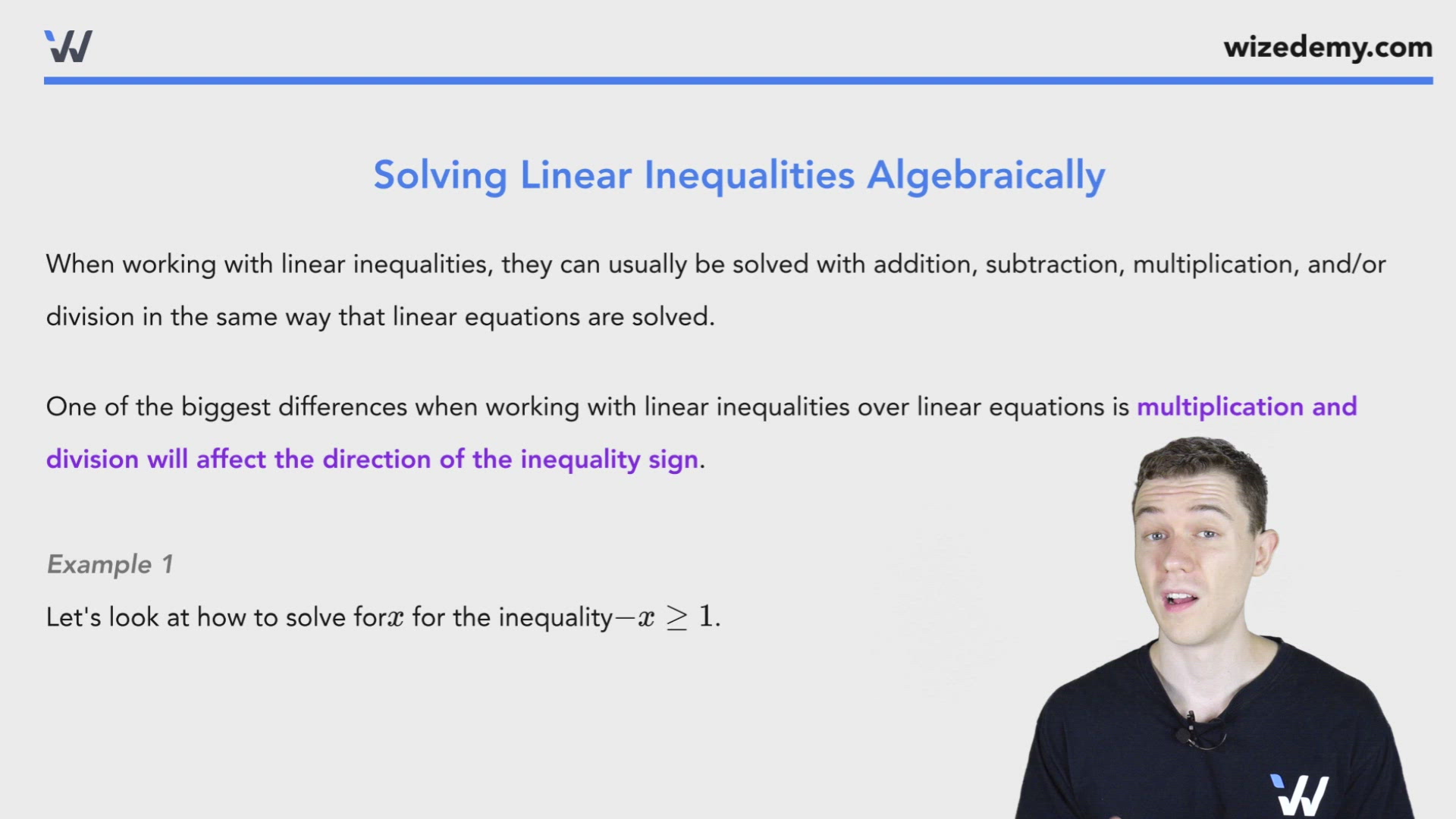
When working with linear inequalities, they can usually be solved with addition, subtraction, multiplication, and/or division in the same way that linear equations are solved.
One of the biggest differences when working with linear inequalities over linear equations is multiplication and division will affect the direction of the inequality sign.
Example 1
Let's look at how to solve forx for the inequality−x≥1.
−−1x≥−11x≤−1Divide by -1.Change the direction of the inequality sign.
Example 2
Solve 2x+3>−11. Represent the solution on a number line.

2x+32x∴ x>>>−11−14−7Isolate for x. Subtract 3 on both sides.Divide by 2.


Example: Solving Linear Inequalities
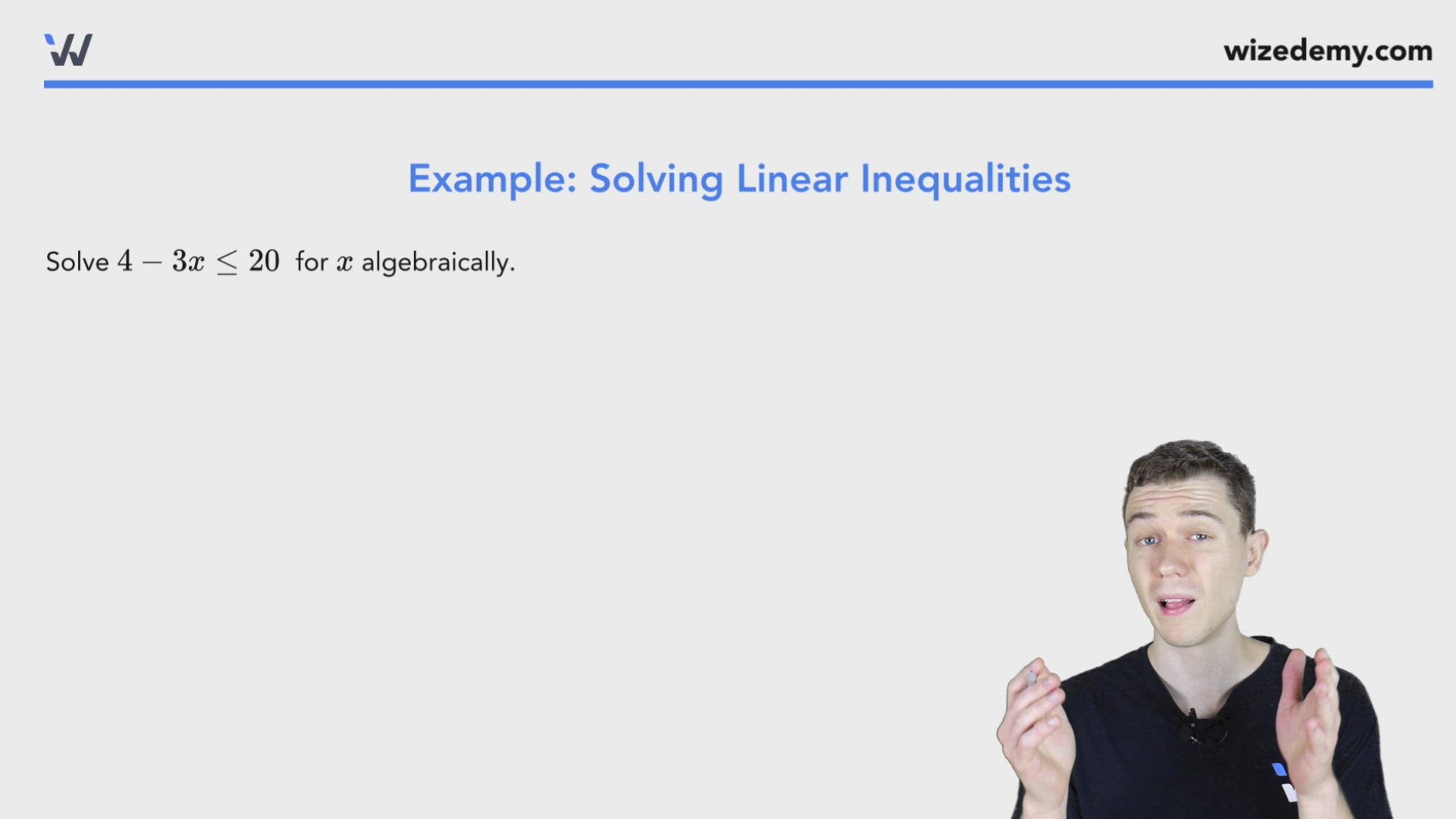
Solve 4−3x≤20 for x algebraically.
4−3x−3x∴ x≤≤≥2016−316Subtract 4 from both sides.Divide by -3. Change direction of inequality.

Example: Solving Linear Inequalities
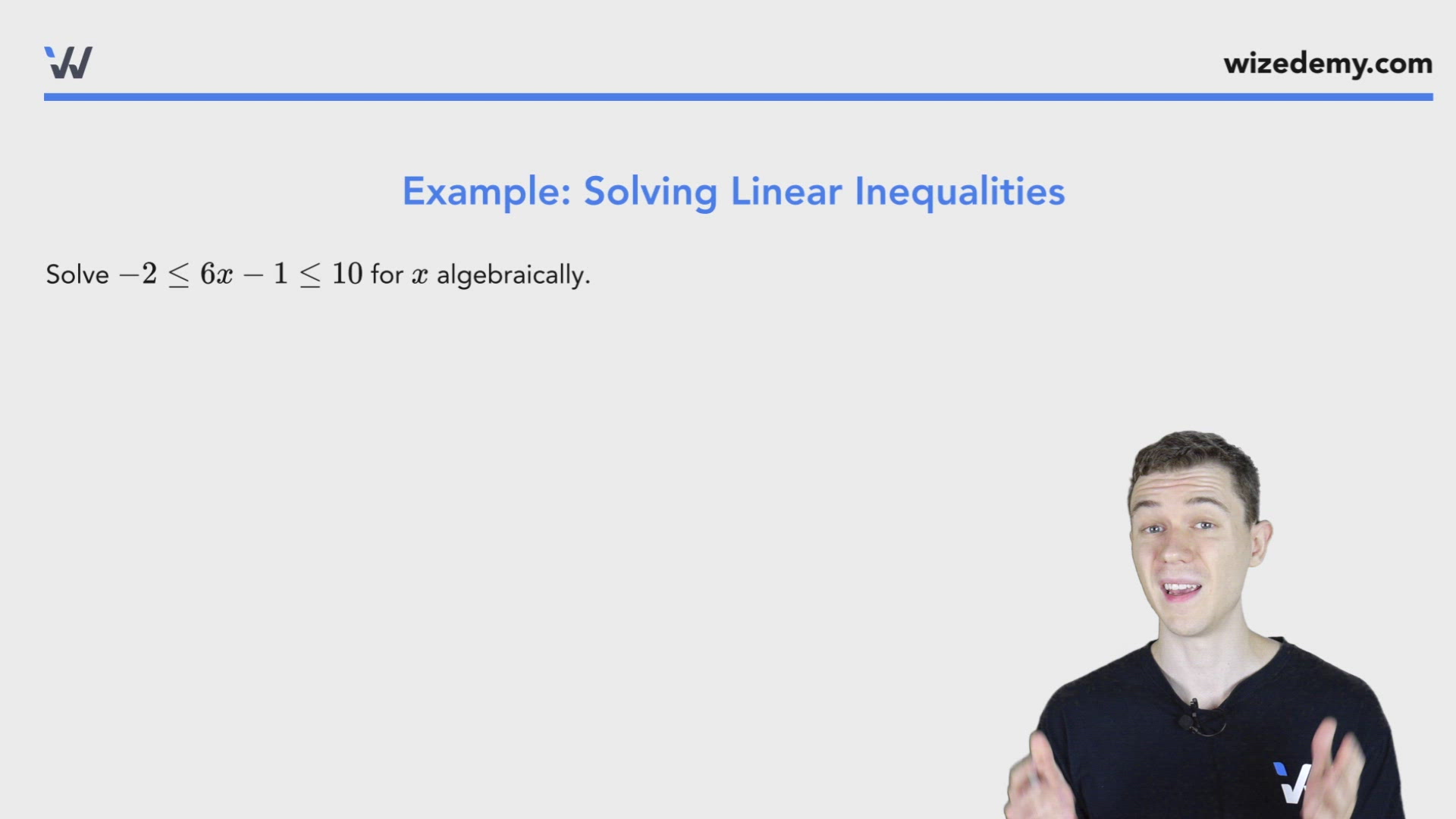
Solve −2≤6x−1≤10 for x algebraically.
−2−1−61≤≤≤6x−16xx≤≤≤1011611Add 1 to both sides of the inequality.Divide both sides by 6 to isolate for x.Final Answer.
Mark Yourself Question
- Grab a piece of paper and try this problem yourself.
- When you're done, check the "I have answered this question" box below.
- View the solution and report whether you got it right or wrong.
Practice: Solving Linear Inequalities
Solve −8≤−3(x−2)≤13 for x.
Practice: Solving Linear Inequalities
Solve ∣x−1∣≥2. Express the answer in interval notation.