Popular Courses
PHYSICS 1201A/B
Western University
Intro to Physics
University Study Guides
Grade 12 Physics
Ontario High School
PHYSICS 1D03
McMaster University
AP Physics C: Mechanics Exam Prep Course
AP Exam Prep
Physics
General Course
High School Physics
US High School
Grade 12 Physics
Canada High School
PHYS 211
University of Calgary
PCS 211
Toronto Metropolitan University
PHYS 204
Concordia University
PHYS*1300
University of Guelph
Intro to Physics
University Study Guides
Physics 30
Alberta High School
PHYS 131
McGill University
APSC 111
Queen's University
Physics 12
British Columbia High School
PCS 120
Toronto Metropolitan University
PHYS 110
University of Victoria
LE/PHYS 1800 3.00
York University

0:00 / 0:00
Cross Product
The cross product of 2 vectors is a VECTOR!
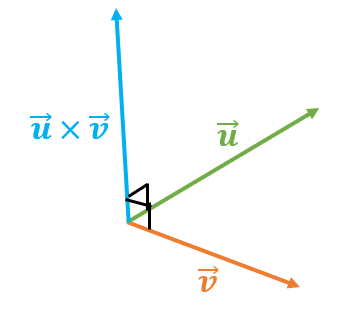
Wize Tip
The cross product is perpendicular to both Vectors. So, it could be used to find a vector perpendicular to two other vectors.
There are different ways we can find the cross product of two vectors:
- If we know the components of two vectors, we can put them in the following template:
- Alternatively, we can use the following determinant to memorize above template and calculate the cross product:
- Note that both templates produce the same vector with three components.
- Alternatively you can remember the result of cross product of unit vectors and find the cross product of a vector by finding the cross product of their components along different unit vectors directly (It usually takes much longer time than using above templates!)
- Sometimes we are only interested to find the magnitude of the resultant vector of a cross product. Then we can use the following formula:
where is the angle between vectors and
- Consequently, vectors and are parallel if:
Watch Out!
The order of vectors in a cross product is very important because :
0:00 / 0:00
Right Hand Rule
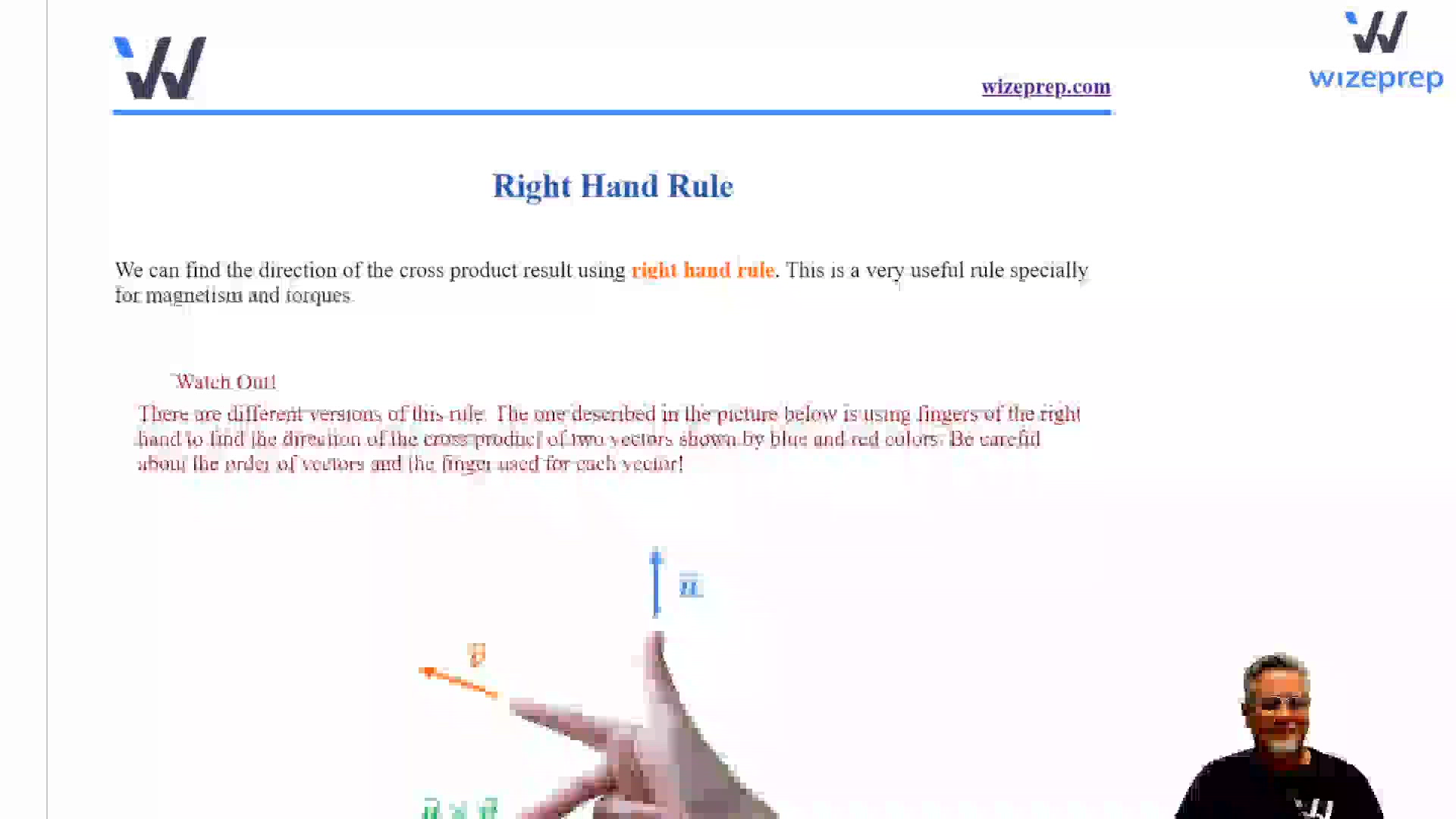
We can find the direction of the cross product result using right hand rule. This is a very useful rule specially for magnetism and torques.
Watch Out!
There are different versions of this rule. The one described in the picture below is using fingers of the right hand to find the direction of the cross product of two vectors shown by blue and red colors. Be careful about the order of vectors and the finger used for each vector!

Alternatively, to find the direction of , one can put the fingers of the right hand along the first vector and bend fingers toward the second vector direction . Then, the thumb should point along

For vectors pointing in or out of the page, we use a cross symbol () for "into the page" and a dot symbol () to indicate direction "out of the page", respectively.
0:00 / 0:00
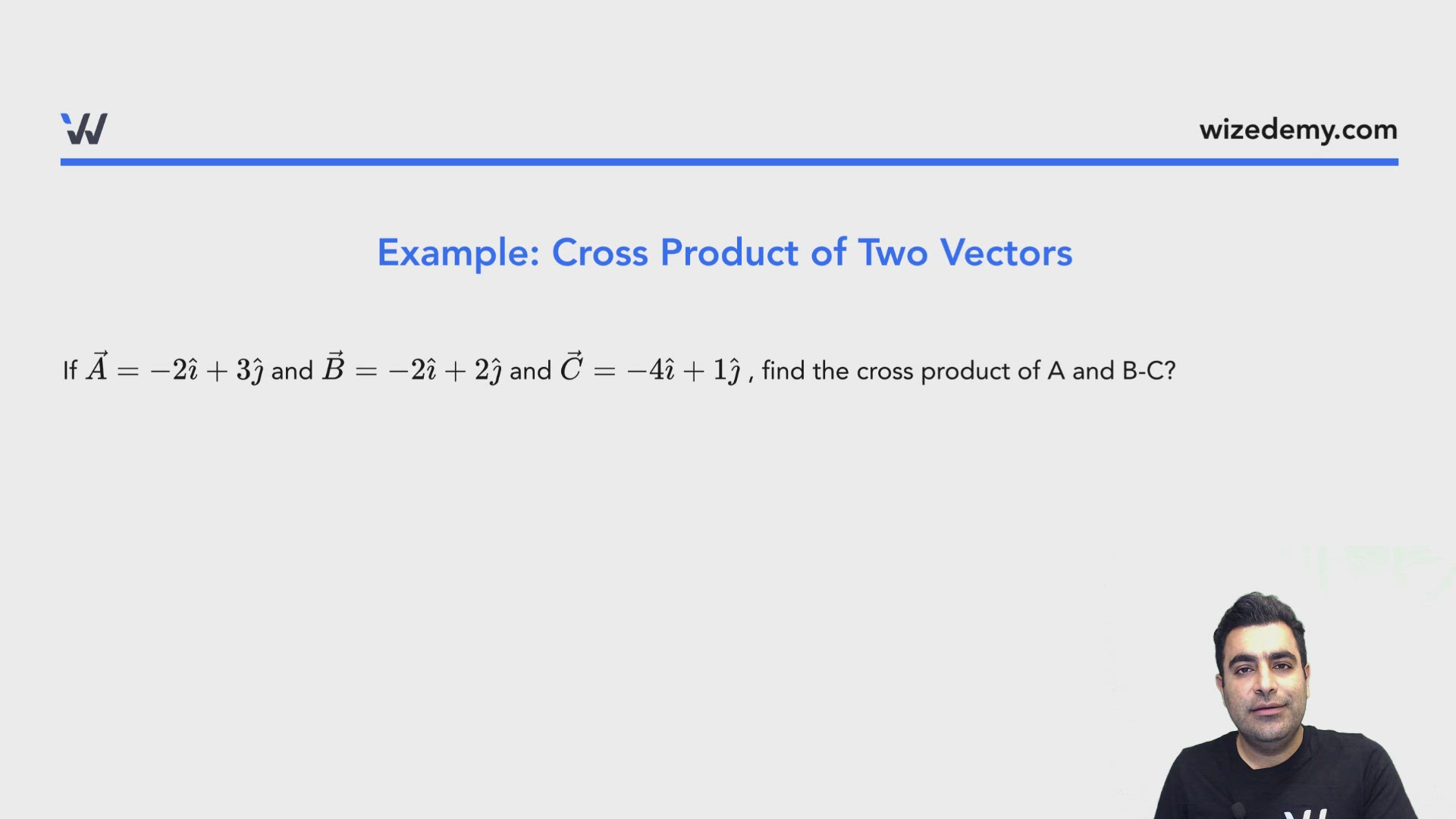
Example: Cross Product of Two Vectors
If and and , find the cross product of A and B-C?
Solution
cross-product
Practice: Orthogonal Vectors
Find a vector orthogonal to both and .
For extra practice, check your answer!
If A is and B is . Find the cross product of .