Create a free account to get started

Unlock full course notes by signing up

  • Video lessons taught by top educators
  • Practice questions with guided solutions
  • Written review notes for reference
  • Expert answers anytime from course tutors

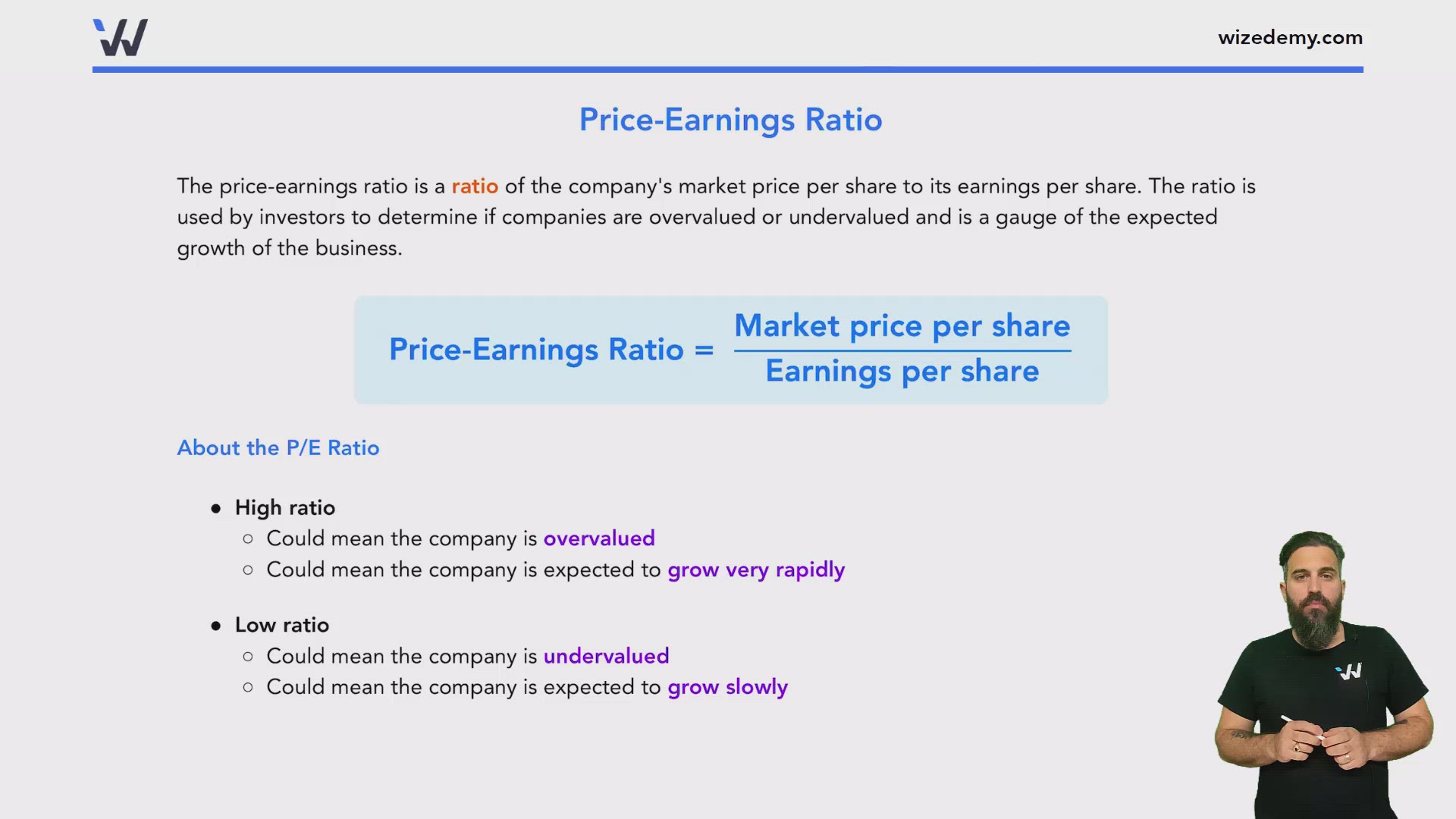
Price-Earnings Ratio

The price-earnings ratio is a ratio of the company's market price per share to its earnings per share. The ratio is used by investors to determine if companies are overvalued or undervalued and is a gauge of the expected growth of the business.


Image illustrating Price-Earnings Ratio


About the P/E Ratio

  • High ratio
  • Could mean the company is overvalued
  • Could mean the company is expected to grow very rapidly
  • Low ratio
  • Could mean the company is undervalued
  • Could mean the company is expected to grow slowly
Create a free account to get started

Unlock full course notes by signing up

  • Video lessons taught by top educators
  • Practice questions with guided solutions
  • Written review notes for reference
  • Expert answers anytime from course tutors

Example: Price-Earnings Ratio

In 2019, Apple Inc. reported EPS of $11.97 and paid $3.08 in dividends. The current market price of the stock is $364.11.


What is the company's price-earnings ratio?

Practice: Price-Earnings Ratio

Bank of Wize paid quarterly dividends of $0.77 to shareholders in 2020. The company reported net earnings of $124 million and had an average of 10 million shares outstanding. The market price per share is $75.55


Compute and interpret the company's price-earnings ratio?

Do not round your work, round final answer to 2 decimal places.

What is the company's price-earnings ratio?

Create a free account to get started

Unlock full course notes by signing up

  • Video lessons taught by top educators
  • Practice questions with guided solutions
  • Written review notes for reference
  • Expert answers anytime from course tutors