Create a free account to get started

Unlock full course notes by signing up

  • Video lessons taught by top educators
  • Practice questions with guided solutions
  • Written review notes for reference
  • Expert answers anytime from course tutors

Debt-to-Equity Ratio

The debt-to-equity (D/E) ratio indicates how much debt a company is using to finance its assets relative to the value of shareholders' equity.

  • A ratio above 50% means the company uses more debt than equity to finance its assets.
  • A ratio below 50% means the company uses more equity than debt to finance its assets.


Image illustrating Debt-to-Equity Ratio


Create a free account to get started

Unlock full course notes by signing up

  • Video lessons taught by top educators
  • Practice questions with guided solutions
  • Written review notes for reference
  • Expert answers anytime from course tutors

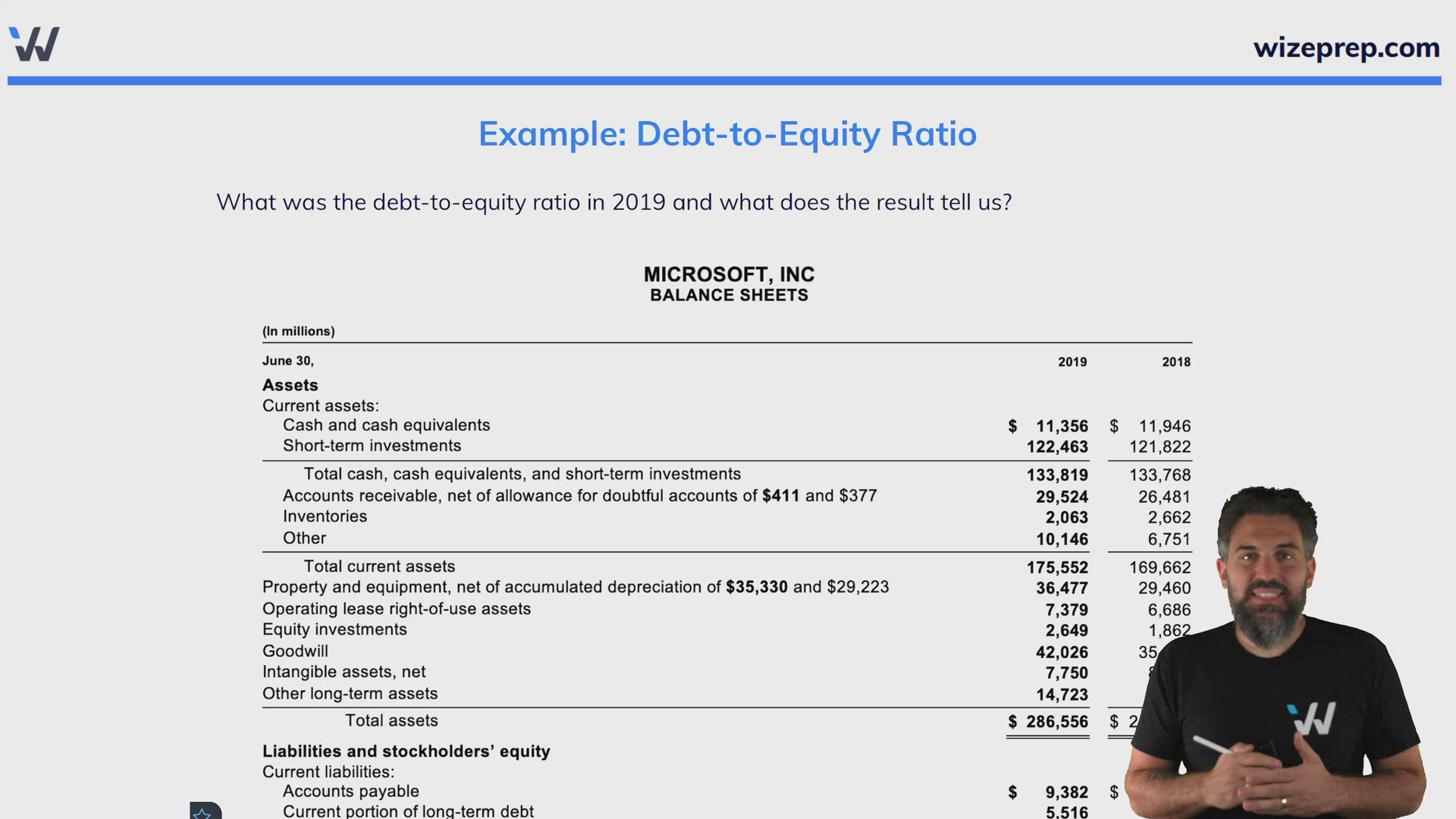
Example: Debt-to-Equity Ratio

What was the debt-to-equity ratio in 2019 and what does the result tell us?


Image illustrating Example


Practice: Debt-to-Equity Ratio

Compute the debt-to-equity ratio for the year 2020. Do not round your work, round your final answer to 4 decimal places and enter you answer in decimal form.


Illustration for practice question: Practice: Debt-to-Equity Ratio


Create a free account to get started

Unlock full course notes by signing up

  • Video lessons taught by top educators
  • Practice questions with guided solutions
  • Written review notes for reference
  • Expert answers anytime from course tutors