Popular Courses
COMM 217
Concordia University
ACCT 2301
The University of Texas at Dallas
Intro to Financial Accounting
General Course
Intro to Financial Accounting
University Study Guides
ACCT*1220
University of Guelph
Intro to Financial Accounting
University Study Guides
AP/ADMS 2500 3.00
York University
ACCTG 211
University of Alberta
ADM 1340
University of Ottawa
ACCT 2301
Houston
ACCT 2301
Houston
FINA 230
Concordia University
RSM219H1
University of Toronto
AFM 101
University of Waterloo
BUS 251
Simon Fraser University
AFA 100
Toronto Metropolitan University
BUSINESS 3321K
Western University
ACCT-1510
University of Windsor
ADMN 1221H
Trent University
ACC 110
Toronto Metropolitan University

0:00 / 0:00
Cash Coverage Ratio
The cash coverage ratio is a solvency ratio that measures a company's ability to pay its interest obligations using cash from operating activities.

What it Measures
How many times the company can pay its interest payments using operating cash.
Interest Paid
- The amount of cash paid in interest.
- Usually found at the bottom of a cash flow statement
- If not given, use formula to find it:

Income Tax Paid
- The amount of cash paid in income taxes.
- Usually found at the bottom of a cash flow statement
- If not given, use formula to find it:

Interpreting the ratio
- The higher the ratio is, the better.
- Ratio > 1: Means the company generated enough cash from its operations to pay for its interest.
- This is a sign of financial strength
- Ratio < 1: Means the company used non-operating cash to pay for its interest obligations.
- This is not a good sign
- Could mean trouble in the future
- Could mean company will have solvency issues in the future
0:00 / 0:00
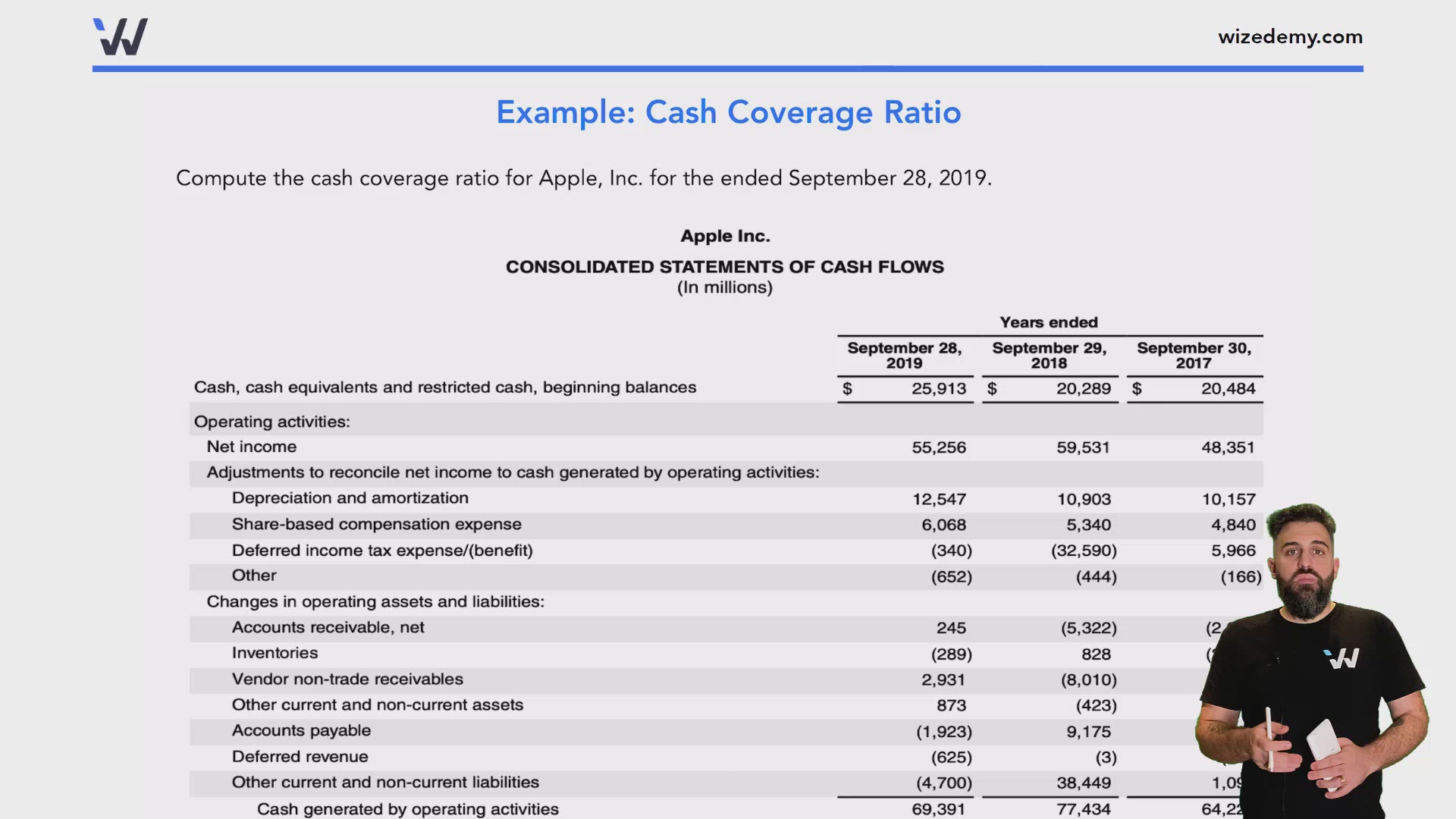
Example: Cash Coverage Ratio
Compute the cash coverage ratio for Apple, Inc. for the ended September 28, 2019.

Practice: Cash Coverage Ratio
Use the following financial information to compute the cash coverage ratio for the year 2020 and interpret your results.
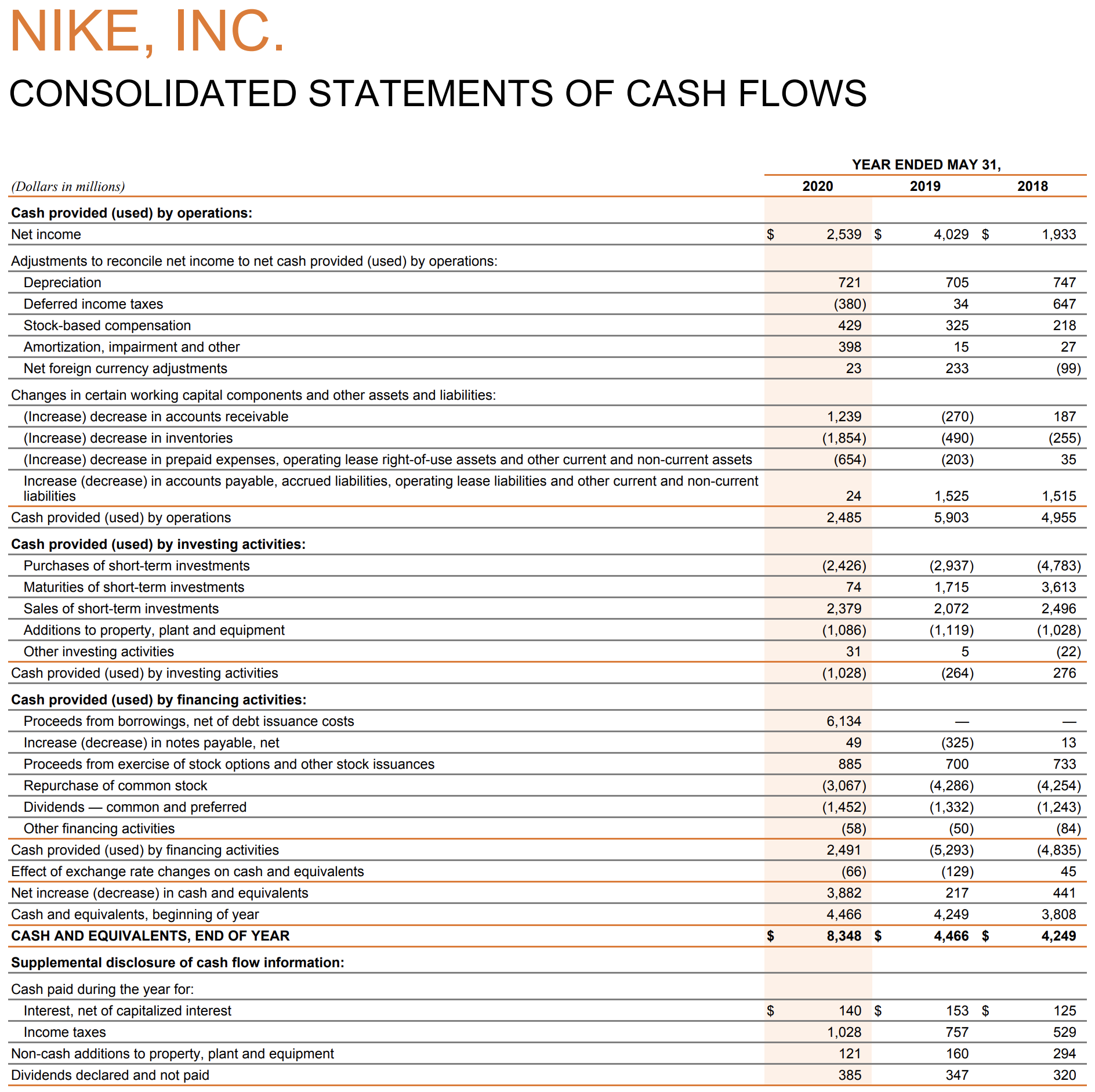
Cash coverage ratio
Do not round your work, round final answer to 2 decimal places.