Create a free account to get started

Unlock full course notes by signing up

  • Video lessons taught by top educators
  • Practice questions with guided solutions
  • Written review notes for reference
  • Expert answers anytime from course tutors

Average Cost Method (Perpetual)

Also called the weighted-average method, this costing method pools all the available units into a single batch with an average cost per unit.

Characteristics of the Average Cost Method

  • Average cost changes whenever new inventory is added
  • COGS is based on the average cost at the time of sale

Average Cost Formula

Image illustrating Average Cost Method (Perpetual Inventory)


Average Cost Table Method


Image illustrating Average Cost Method (Perpetual Inventory)


Create a free account to get started

Unlock full course notes by signing up

  • Video lessons taught by top educators
  • Practice questions with guided solutions
  • Written review notes for reference
  • Expert answers anytime from course tutors

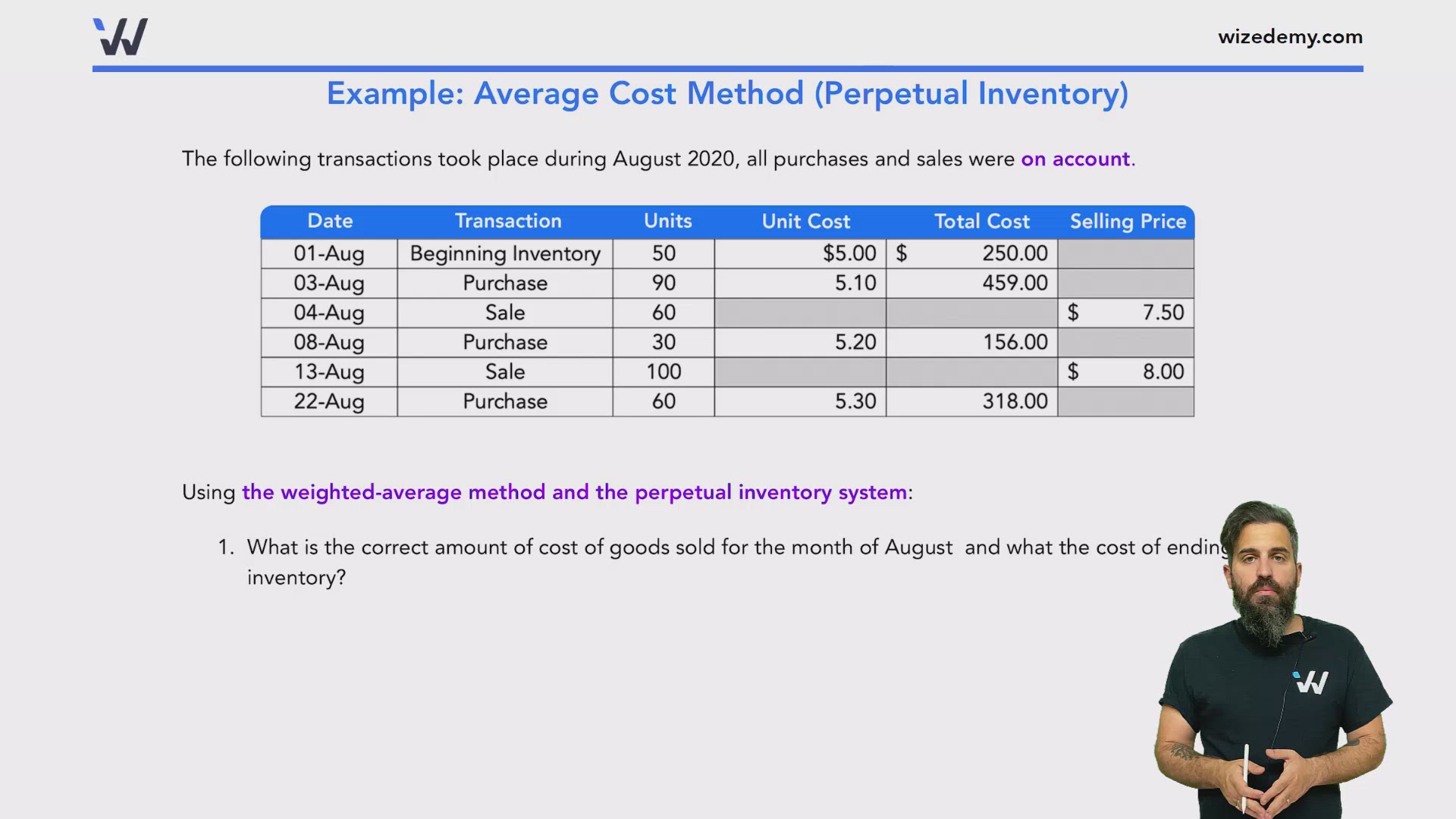
Example: Average Cost Method (Perpetual Inventory)

The following transactions took place during August 2020, all purchases and sales were on account.


Image illustrating Example


Using the weighted-average method and the perpetual inventory system:

  1. What is the correct amount of cost of goods sold for the month of August and what the cost of ending inventory?
  2. Prepare the journal entry to record the transaction on August 3rd.

Image illustrating Example


  1. Prepare the journal entry to record the transaction on August 4th.
Image illustrating Example


Practice: Average Cost (Perpetual Inventory)

ABC Inc. had the following transactions affecting inventory during 2020, the company uses the average cost method and the perpetual inventory system:


Illustration for practice question: Practice: Average Cost (Perpetual Inventory)


All transactions are on account.


In recording the journal entry for the sale on April 14th, what is the correct about that should be debited to cost of goods sold?

Round unit costs to 3 decimal places and final answer to the nearest cent.

Create a free account to get started

Unlock full course notes by signing up

  • Video lessons taught by top educators
  • Practice questions with guided solutions
  • Written review notes for reference
  • Expert answers anytime from course tutors