
Changes in Estimates
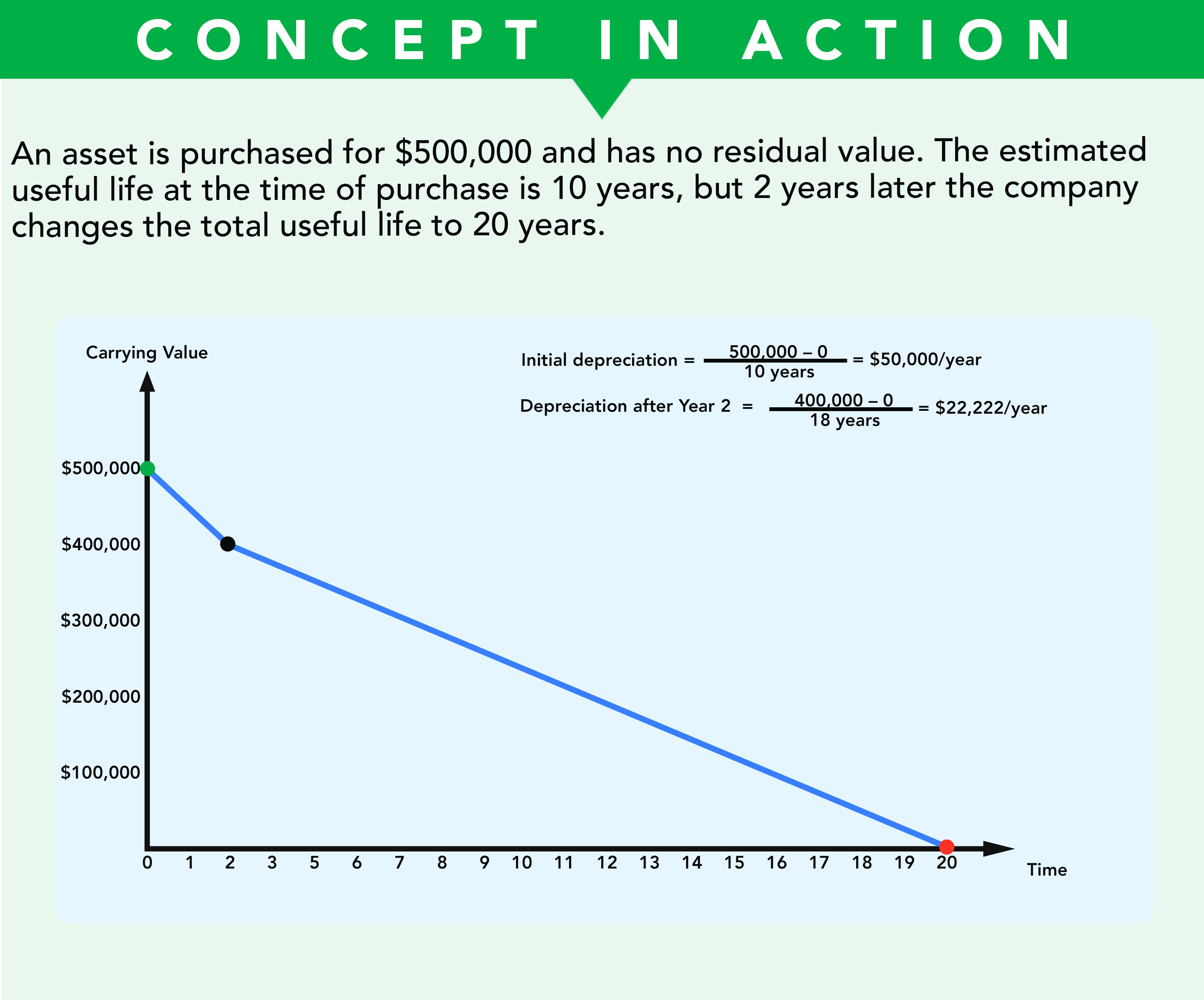
When an asset is first acquired, the estimates of the useful life and residual value determine the rate at which the asset will depreciate. When these estimates change during an asset's life, the depreciation over the remaining life must be adjusted to reflect these changes.
What Causes a Change in Estimate?
- Change in cost due to additional capital expenditures.
- Change of residual value
- Change of useful life
- Change of depreciation method
Steps to perform a change in estimate
- Determine the new cost of the asset by adding any additional capital expenditures.
- Determine the carrying value by subtracting any existing accumulated depreciation.
- Depreciate the carrying value over the remaining useful life of the asset.
Example: Changes in Estimates
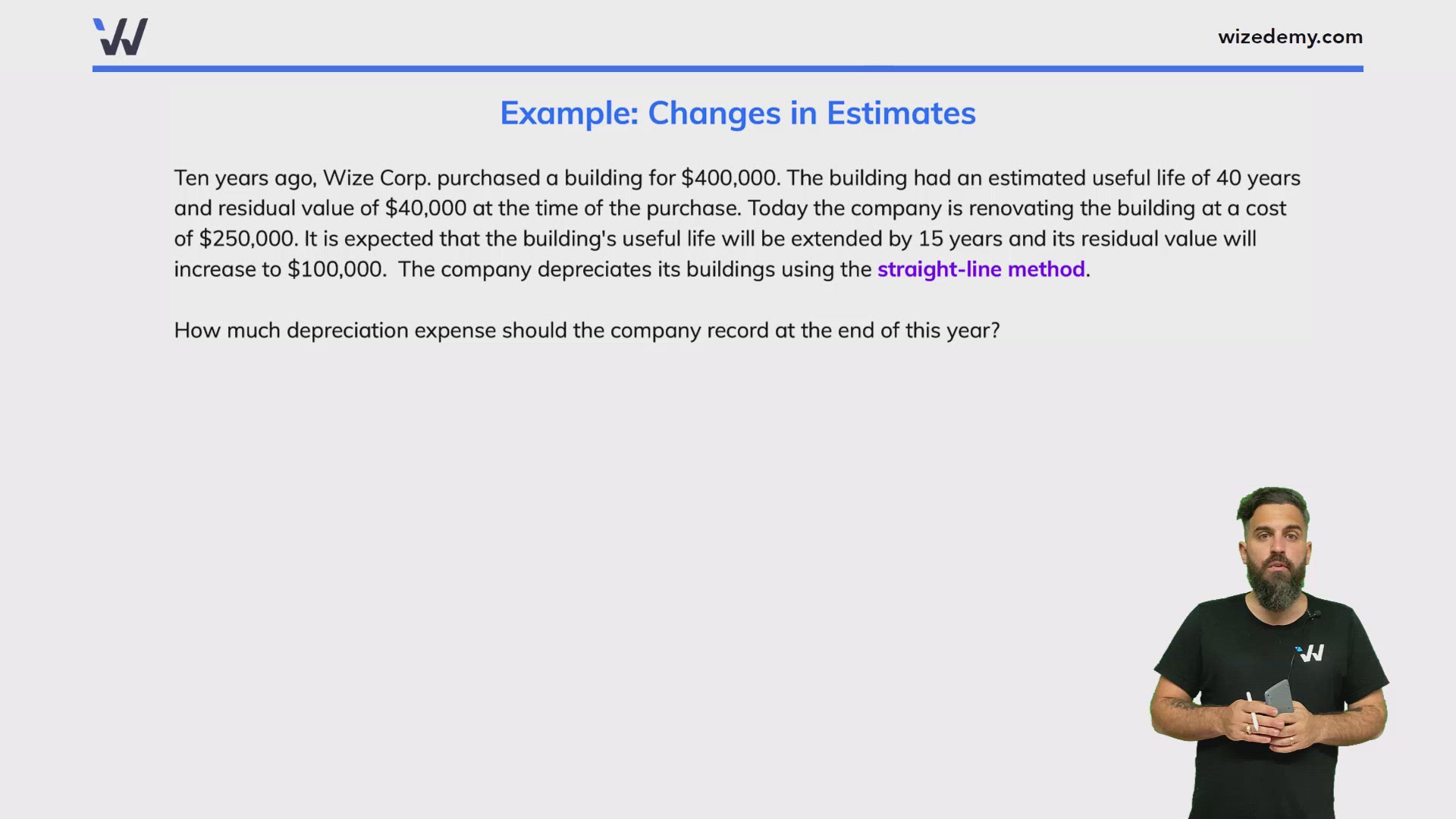
Ten years ago, Wize Corp. purchased a building for $400,000. The building had an estimated useful life of 40 years and residual value of $40,000 at the time of the purchase. Today the company is renovating the building at a cost of $250,000. It is expected that the building's useful life will be extended by 15 years and its residual value will increase to $100,000. The company depreciates its buildings using the straight-line method.
How much depreciation expense should the company record at the end of this year?
Example: Changes in Estimates
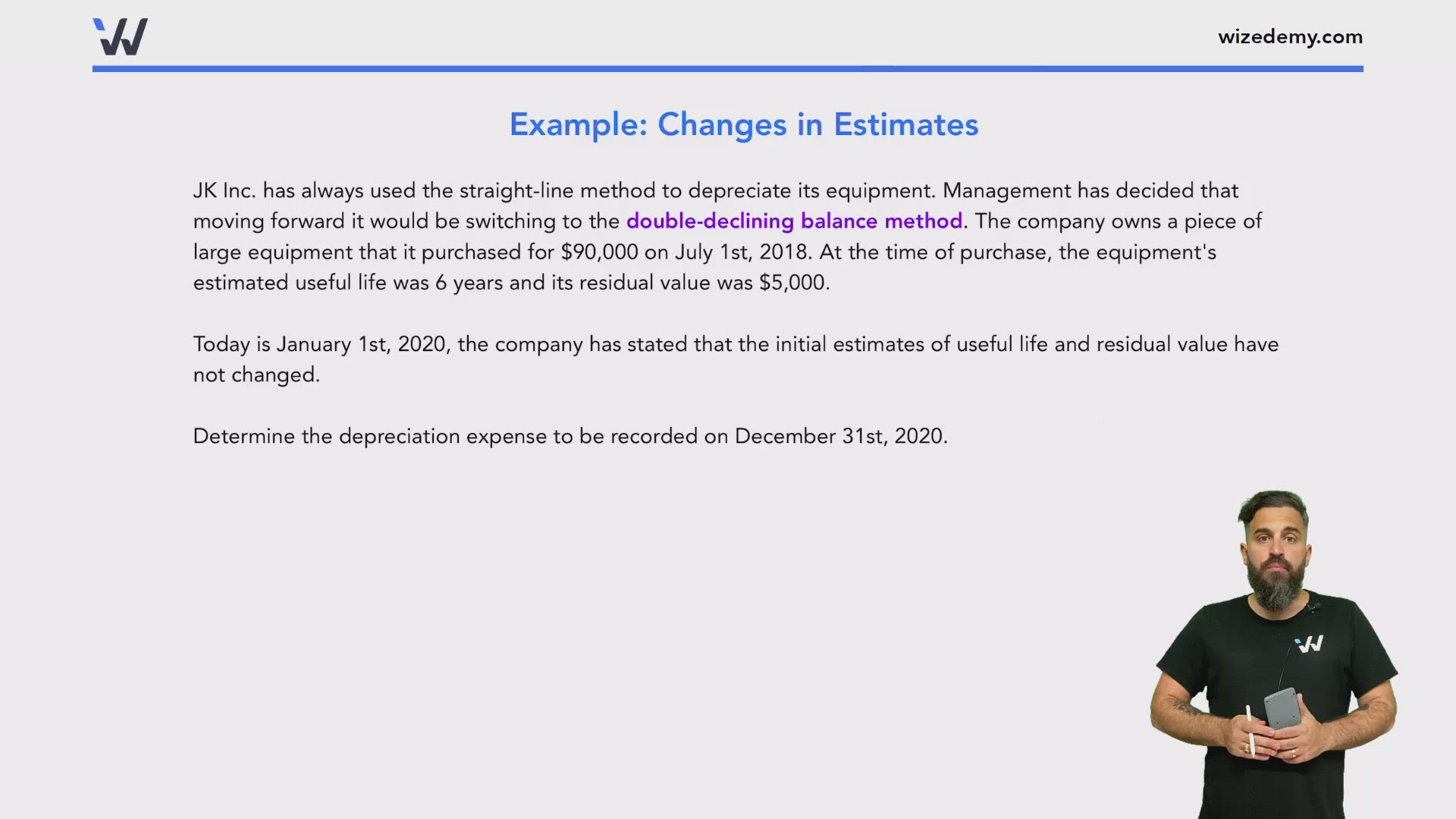
JK Inc. has always used the straight-line method to depreciate its equipment. Management has decided that moving forward it would be switching to the double-declining balance method. The company owns a piece of large equipment that it purchased for $90,000 on July 1st, 2018. At the time of purchase, the equipment's estimated useful life was 6 years and its residual value was $5,000.
Today is January 1st, 2020, the company has stated that the initial estimates of useful life and residual value have not changed.
Determine the depreciation expense to be recorded on December 31st, 2020.