Wize University Managerial Accounting Textbook > Process Costing
Weighted-Average Equivalent Units
Popular Courses
COMM 305
Concordia University
Managerial Accounting
University Study Guides
Managerial Accounting
University Study Guides
COMM 112
Queen's University
RSM222H1
University of Toronto
COMMERCE 2AB3
McMaster University
SB/ACTG 2020 3.00
York University
COMM 1102
Dalhousie University
ACC 312
The University of Texas at Austin
ACIS 2116
Virginia Tech
ACG 2071
University of Central Florida
BUS1 21
San José State University
BUS-A 306
Indiana University - Bloomington
ACCT 2102
Temple University
ACCTG-202
San Diego State University
ACCTMIS 2300
Ohio State University
MGMT 20100
Purdue University
ACG 2071
University of Florida
ACCT 210
University of Arizona
BCOR 2303
University of Colorado Boulder
0:00 / 0:00
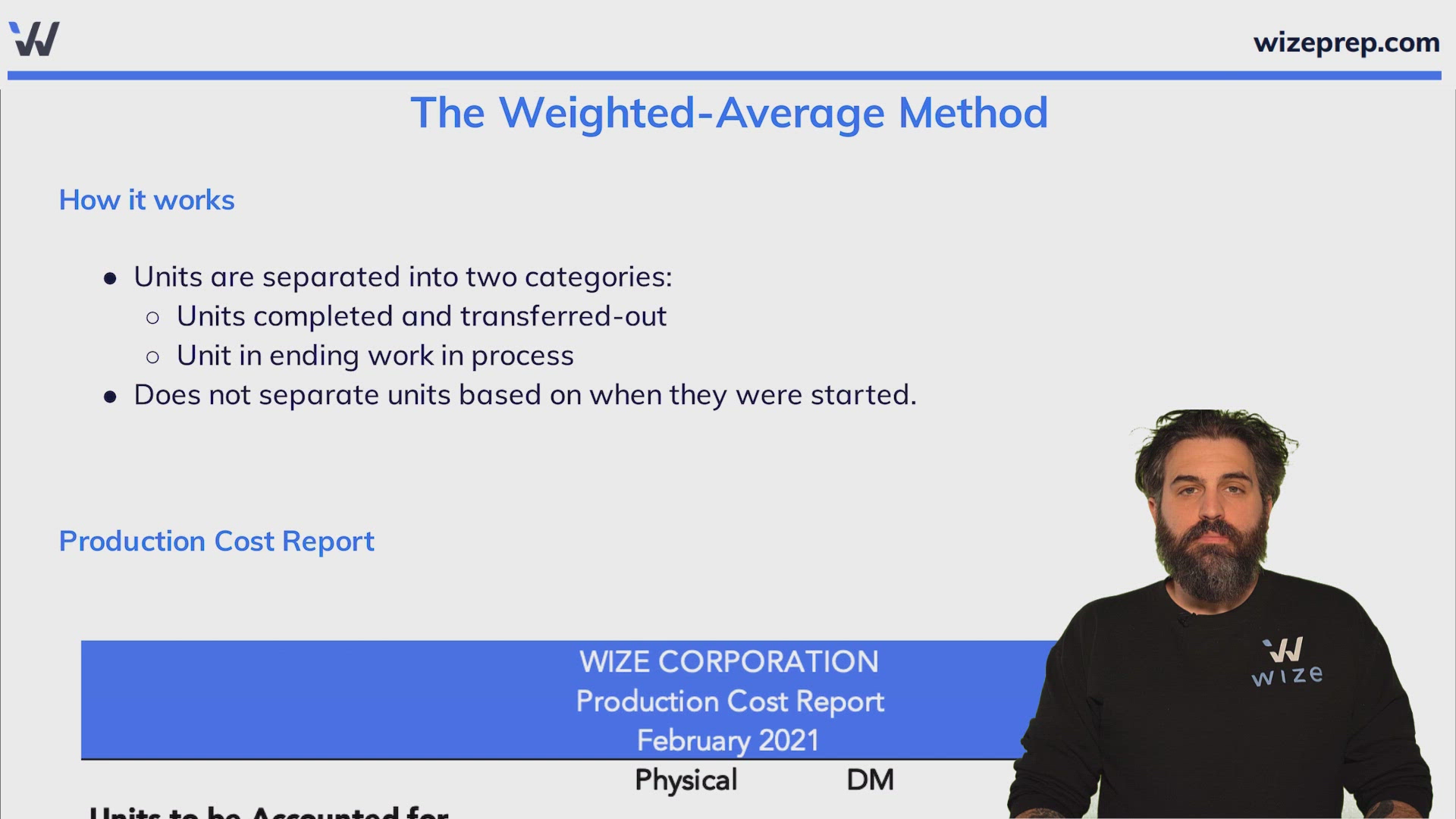
The Weighted-Average Method
How it works
- Units are separated into two categories:
- Units completed and transferred-out
- Unit in ending work in process
- Does not separate units based on when they were started.
Production Cost Report

0:00 / 0:00
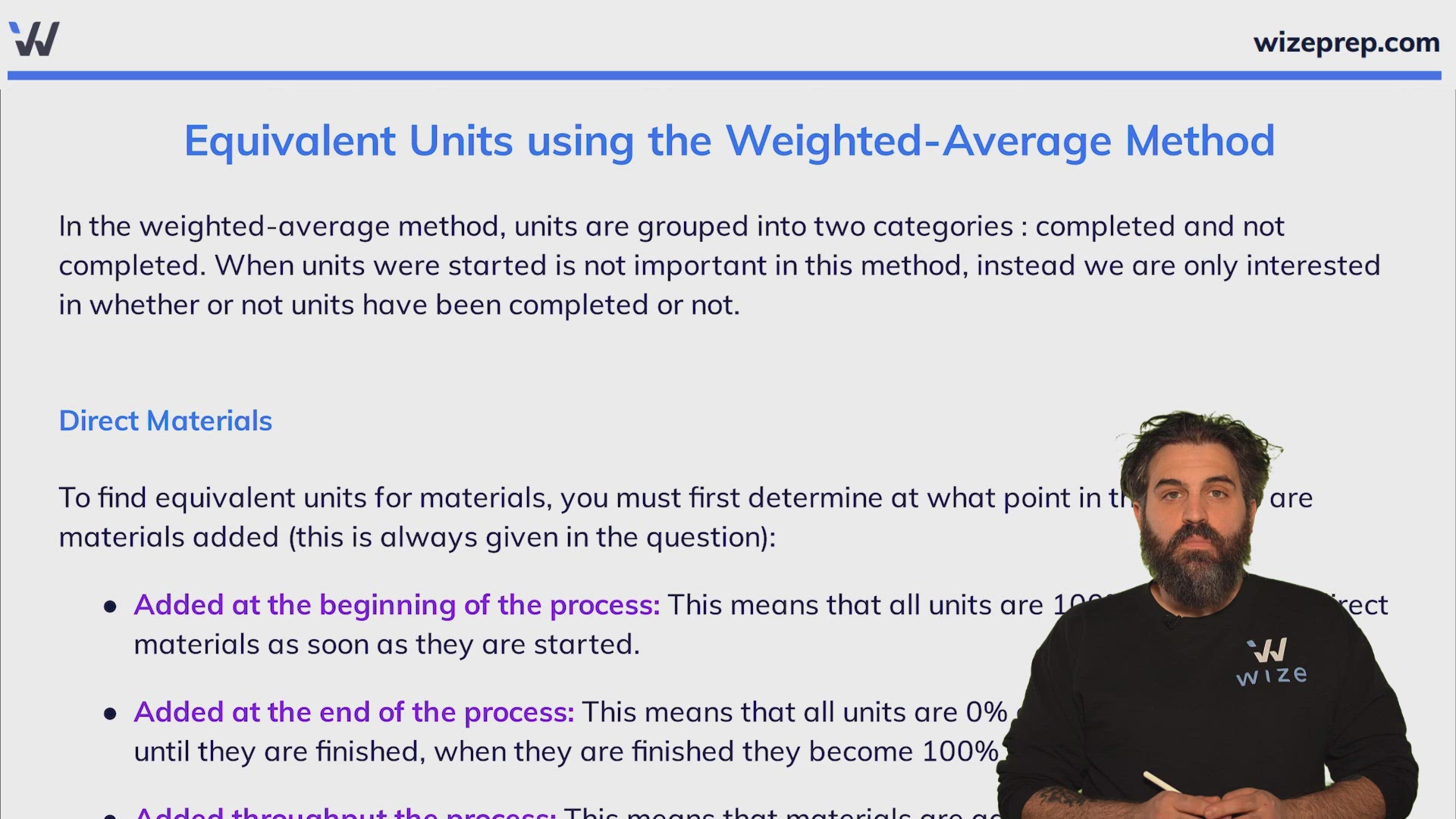
Equivalent Units using the Weighted-Average Method
In the weighted-average method, units are grouped into two categories : completed and not completed. When units were started is not important in this method, instead we are only interested in whether or not units have been completed or not.
Direct Materials
To find equivalent units for materials, you must first determine at what point in the process are materials added (this is always given in the question):
- Added at the beginning of the process: This means that all units are 100% complete for direct materials as soon as they are started.
- Added at the end of the process: This means that all units are 0% complete for direct materials until they are finished, when they are finished they become 100% complete for materials.
- Added throughput the process: This means that materials are added progressively throughout the process, equivalent units for materials are based on the percentage of completion.
- Added at x%: This means that all units are 0% complete for direct materials until they reach x%, when they reach x% they become 100% complete for materials.
Conversion Costs
- Indicates how many units have been completed with respect to the direct labor and manufacturing overhead.
- Equivalent units for conversion costs are equal to the physical units multiplied by the percentage of completion.
Transferred-in Costs
- These are costs incurred prior to the units arriving in the current process.
- Units are always treated as being 100% complete as to transferred-in costs.
- In the weighted-average method, equivalent units for transferred-in costs always equal the physical units.
0:00 / 0:00
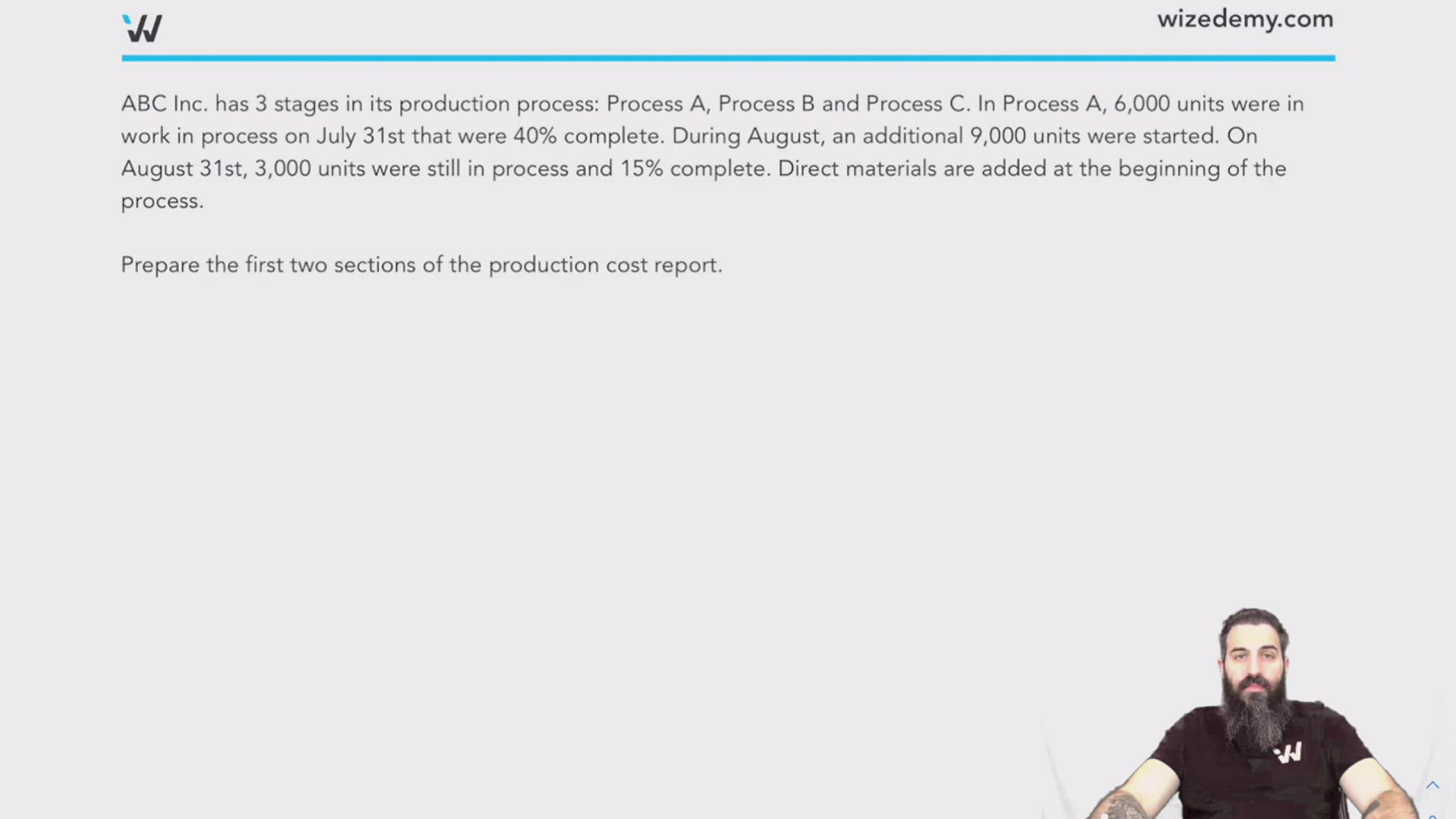
Example: Equivalent Units
ABC Inc. has 3 stages in its production process: Process A, Process B and Process C. In Process A, 6,000 units were in work in process on July 31st and are 40% complete. During August, an additional 9,000 units were started. On August 31st, 3,000 units are still in process and 15% complete. Direct materials are added at the beginning of the process.
Calculate the equivalent units for materials and conversion costs.
0:00 / 0:00
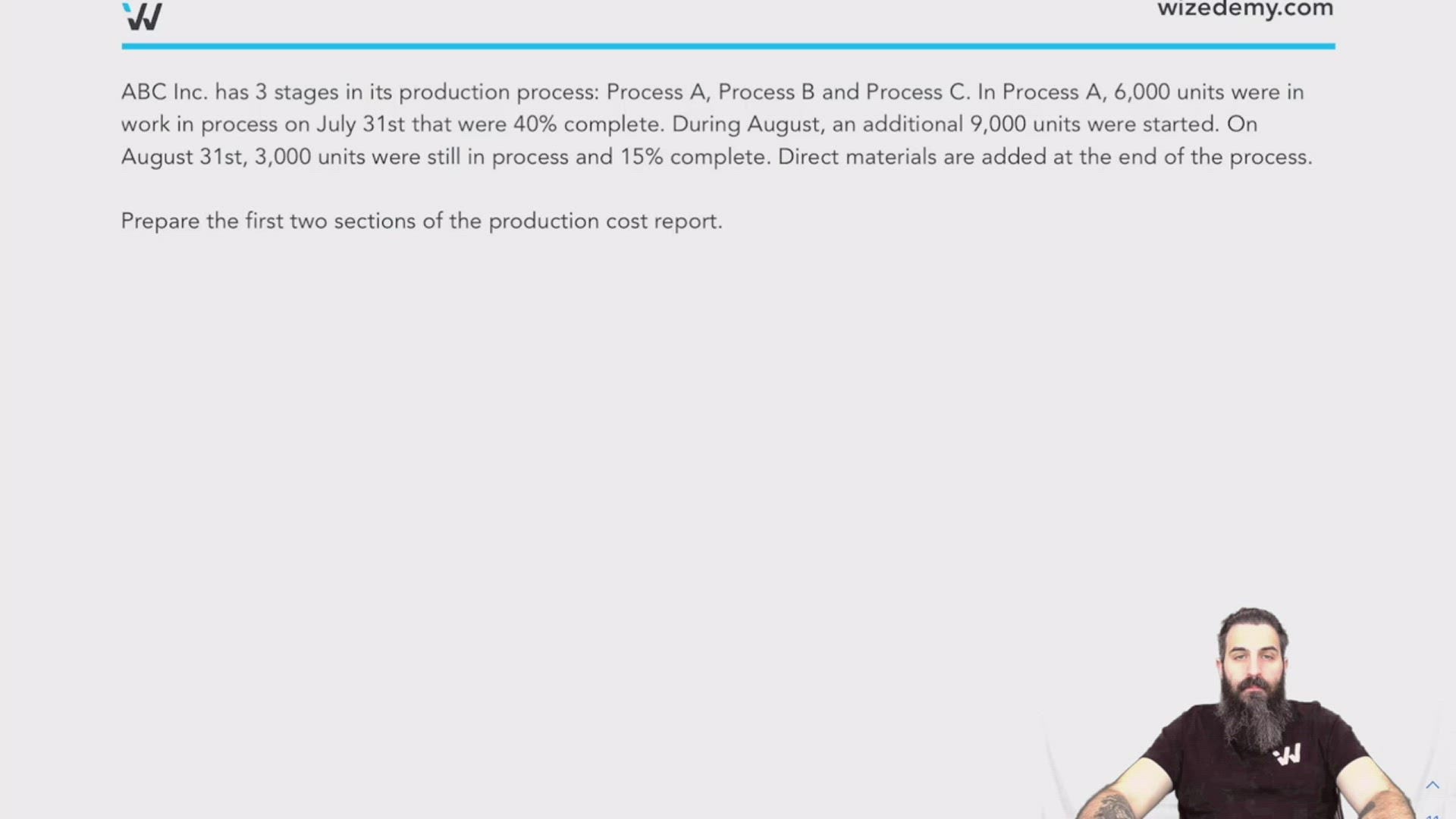
Example: Equivalent Units
ABC Inc. has 3 stages in its production process: Process A, Process B and Process C. In Process A, 6,000 units were in work in process on July 31st that are 40% complete. During August, an additional 9,000 units were started. On August 31st, 3,000 units are still in process and 15% complete. Direct materials are added at the end of the process.
Calculate the equivalent units for materials and conversion costs.
0:00 / 0:00
Example: Equivalent Units
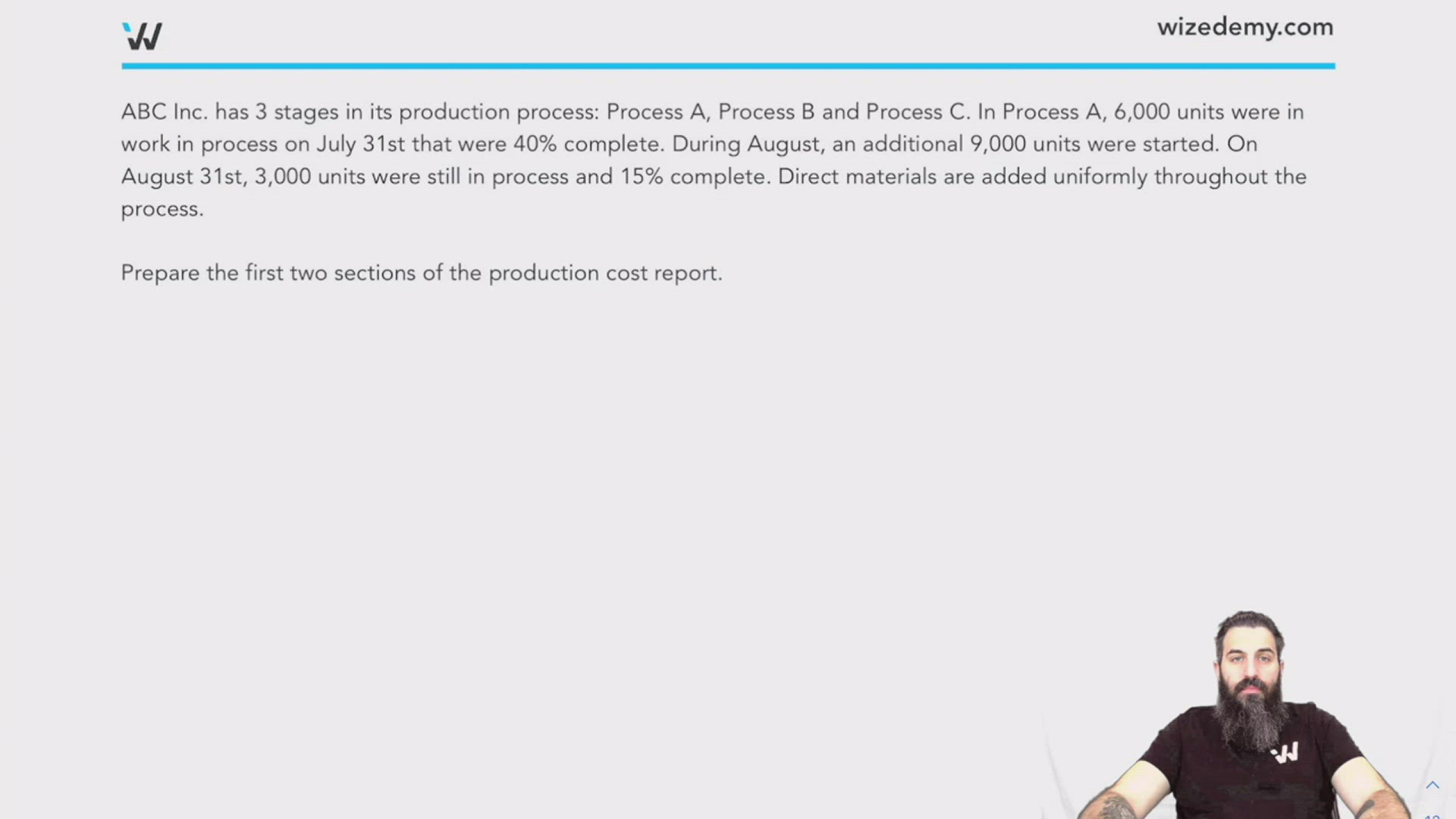
ABC Inc. has 3 stages in its production process: Process A, Process B and Process C. In Process A, 6,000 units were in work in process on July 31st that are 40% complete. During August, an additional 9,000 units were started. On August 31st, 3,000 units are still in process and 15% complete. Direct materials are added uniformly throughout the process.
Calculate the equivalent units for materials and conversion costs.
Practice: Equivalent Units
Beginning inventory totalled 5,000 units that were 50% complete. 23,000 additional units were transferred-in during the month from the previous process. 12,000 units were completed and transferred out and the remaining units were 40% complete.
What are the equivalent units for conversion costs?