Wize University Managerial Accounting Textbook > Incremental Analysis
Sell or Process Further
Popular Courses
COMM 305
Concordia University
Managerial Accounting
University Study Guides
Managerial Accounting
University Study Guides
ACC 406
Toronto Metropolitan University
ACCTG 322
University of Alberta
ACCT*2230
University of Guelph
ADM 2341
University of Ottawa
COMMERCE 2AB3
McMaster University
SB/ACTG 2020 3.00
York University
COMM 1102
Dalhousie University
ACC 312
The University of Texas at Austin
ACC 242
Arizona State University - Tempe
ACC 202
Michigan State University
ACIS 2116
Virginia Tech
ACG 2071
University of Central Florida
BUS1 21
San José State University
BUS-A 306
Indiana University - Bloomington
ACCT 2102
Temple University
ACCTG-202
San Diego State University
ACCTMIS 2300
Ohio State University
0:00 / 0:00
Sell or Process Further
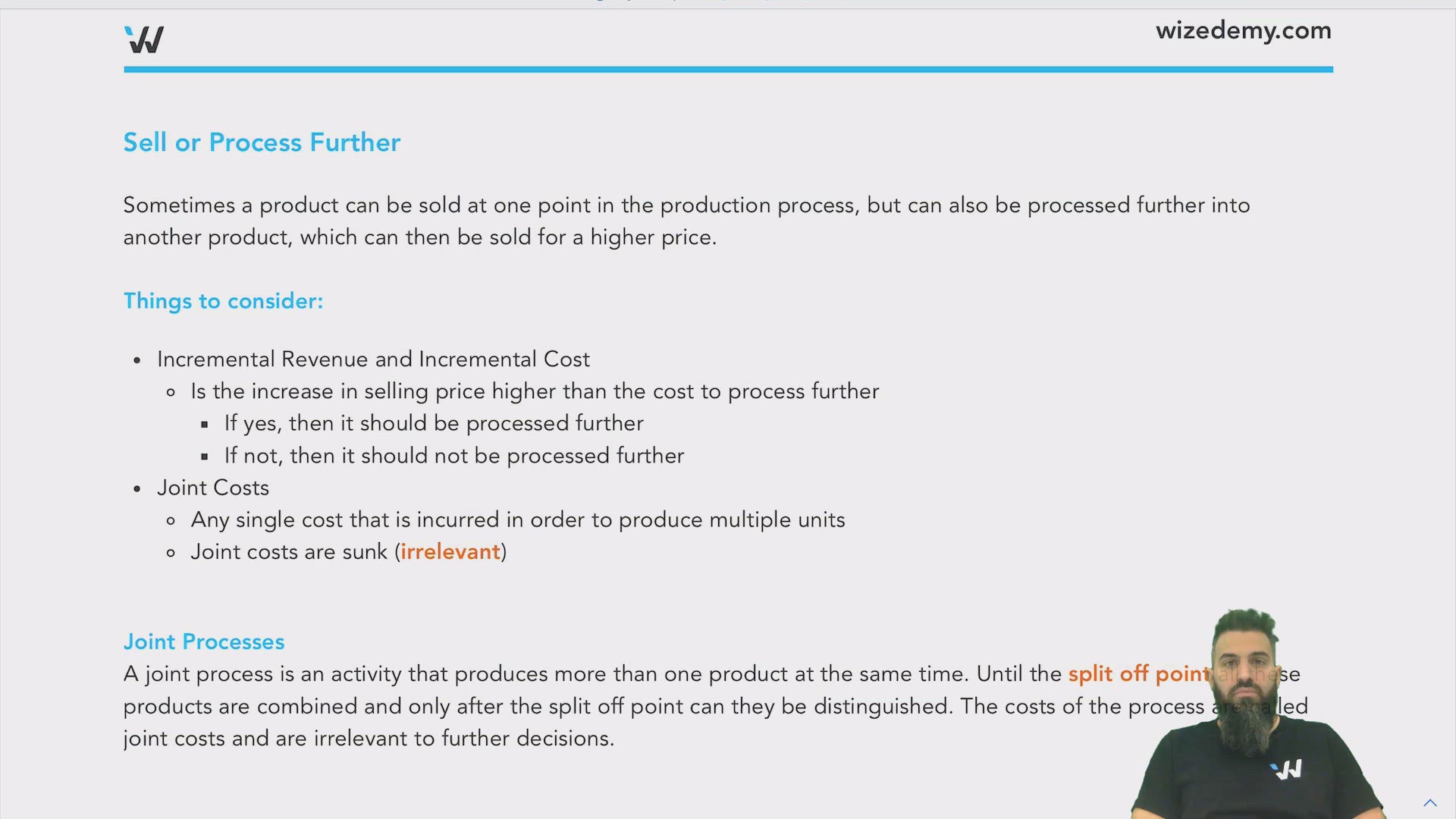
Sometimes a product can be sold at one point in the production process, but can also be processed further into another product, which can then be sold for a higher price.
Things to consider:
- Incremental Revenue and Incremental Cost
- Is the increase in selling price higher than the cost to process further
- If yes, then it should be processed further
- If not, then it should not be processed further
- Joint Costs
- Any single cost that is incurred in order to produce multiple units
- Joint costs are sunk (irrelevant)
Joint Processes
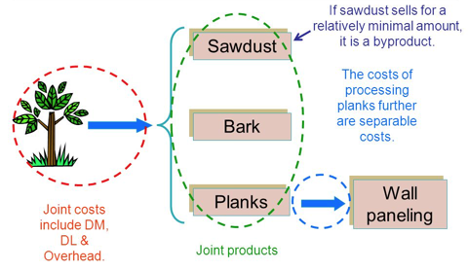
A joint process is an activity that produces more than one product at the same time. Until the split off point all these products are combined and only after the split off point can they be distinguished. The costs of the process are called joint costs and are irrelevant to further decisions.
0:00 / 0:00
Example: Sell-or-Process Further
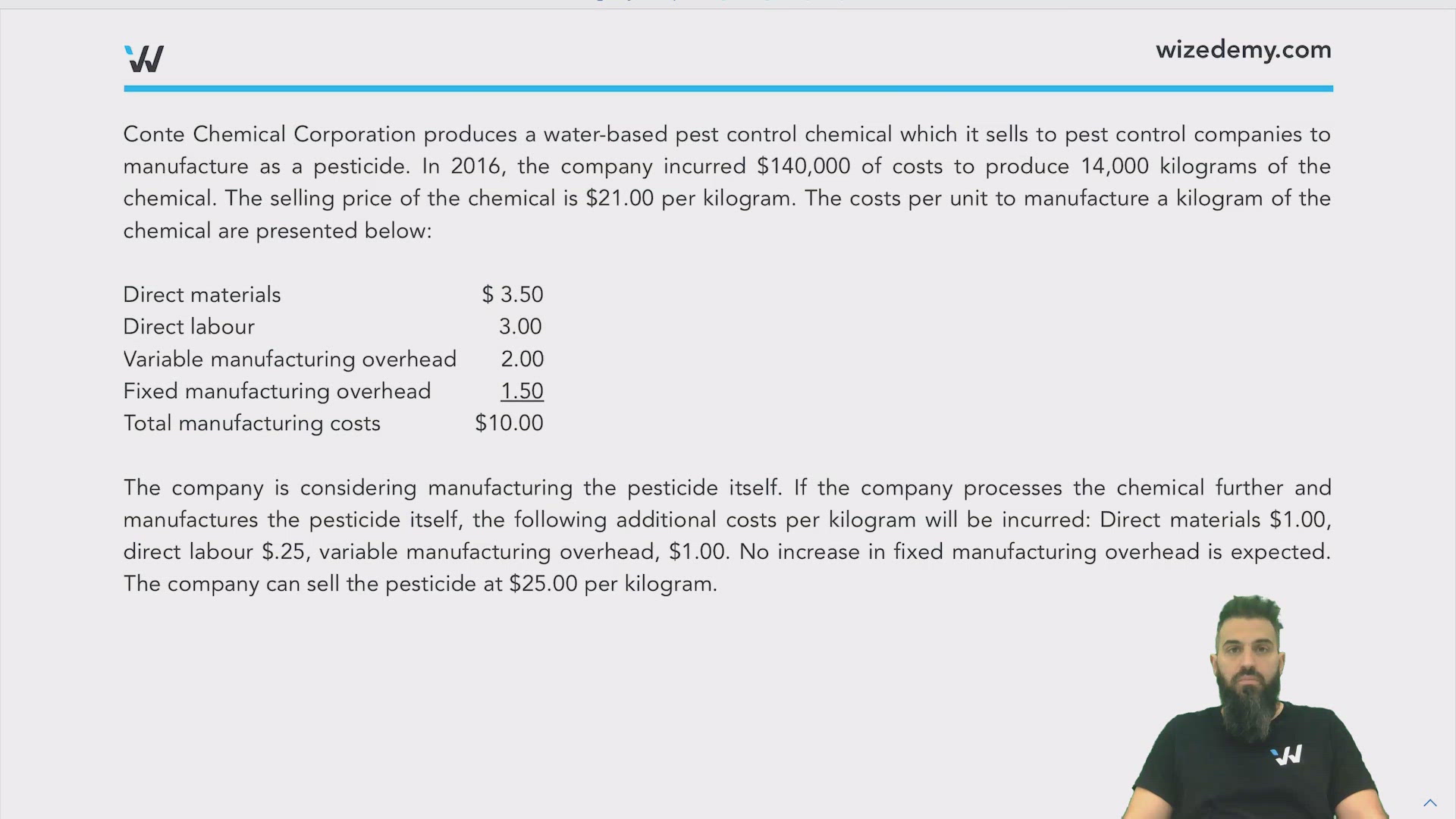
Conte Chemical Corporation produces a water-based pest control chemical which it sells to pest control companies to manufacture as a pesticide. In 2016, the company incurred $140,000 of costs to produce 14,000 kilograms of the chemical. The selling price of the chemical is $21.00 per kilogram. The costs per unit to manufacture a kilogram of the chemical are presented below:
Direct materials $ 3.50
Direct labour 3.00
Variable manufacturing overhead 2.00
Fixed manufacturing overhead 1.50
Total manufacturing costs $10.00
The company is considering manufacturing the pesticide itself. If the company processes the chemical further and manufactures the pesticide itself, the following additional costs per kilogram will be incurred: Direct materials $1.00, direct labour $.25, variable manufacturing overhead, $1.00. No increase in fixed manufacturing overhead is expected. The company can sell the pesticide at $25.00 per kilogram.
Practice: Sell-or-Process Further
A company manufactures three products using the same production process. The costs incurred up to the split-off point are $120,000. These costs are allocated to the products on the basis of their sales value at the split-off point. The number of units produced, the selling prices per unit of the three products at the split-off point and after further processing, and the additional processing costs are as follows.

Which product(s) should be processed further?